Spring Sale Special - Limited Time 70% Discount Offer - Ends in 0d 00h 00m 00s - Coupon code: mxmas70

Home > Guidewire > Guidewire Certified Associate > InsuranceSuite-Analyst

InsuranceSuite-Analyst Associate Certification - InsuranceSuite Analyst - Mammoth Proctored Exam Question and Answers

Question # 4

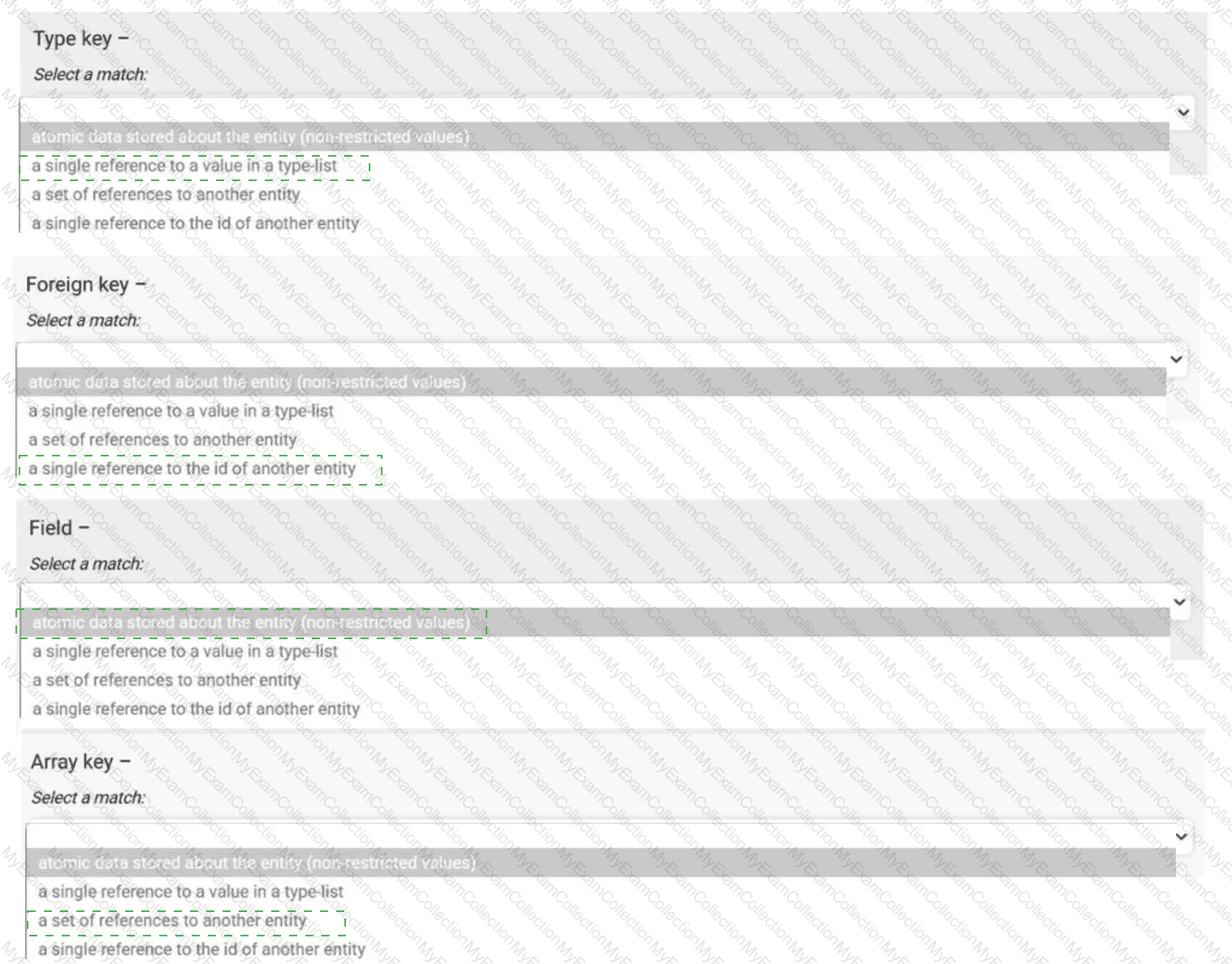
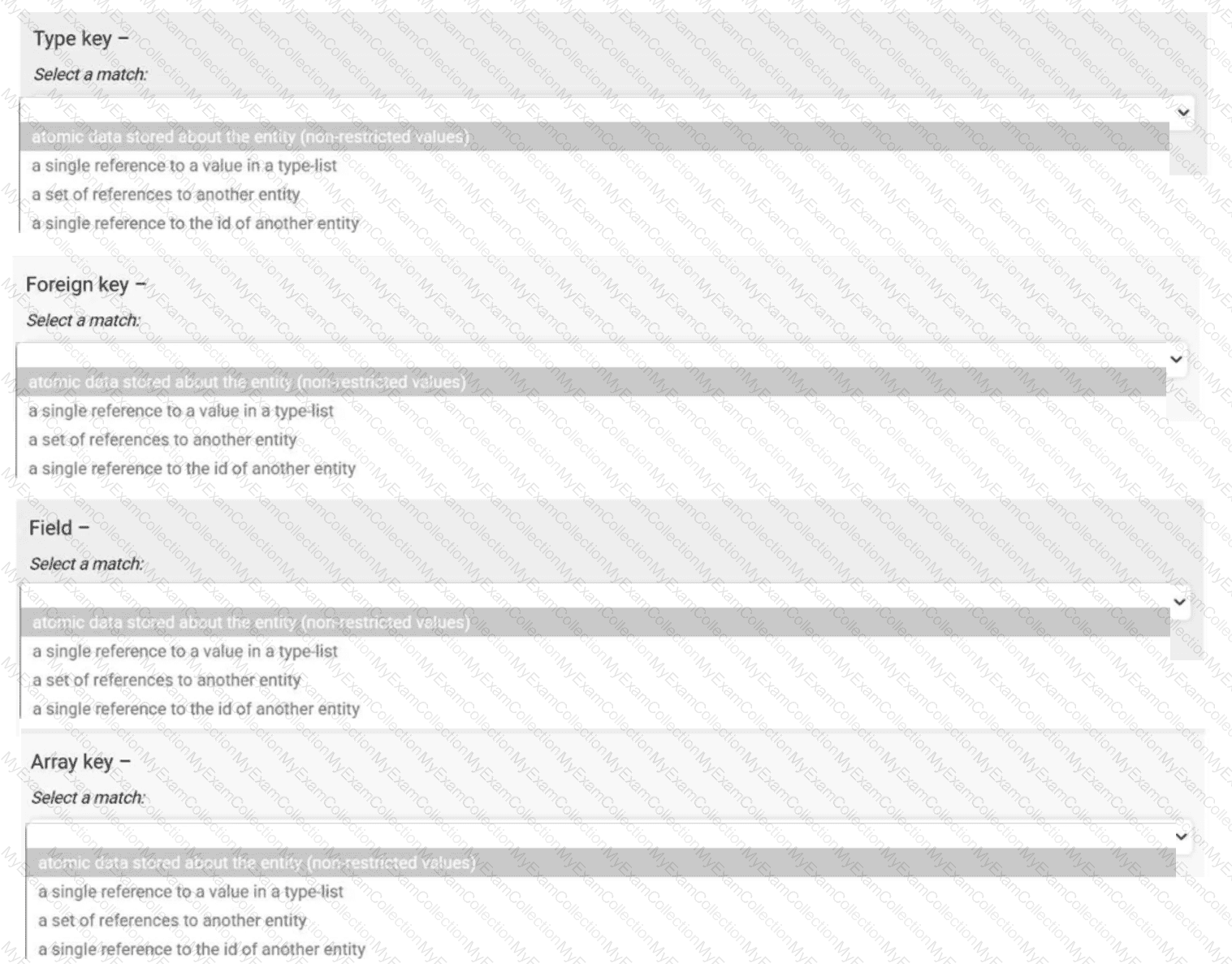
Data Model Entities: Match the entity type with the appropriate description.
Full Access
Question # 5

Elaborate Requirements, Confirm Scope, Plan Project / Sprints, and Infrastructure Sizing are all part of this project phase?

A.

Development

B.

Stabilization

C.

Pre-lnception

D.

Inception

Full Access
Question # 6

A cyber insurance project aims to automate core processes, including complex policy data validation and routing high-risk claims to specialized teams.

In what ways do Gosu rules contribute to these application behaviors?

A.

By managing external data exchange between InsuranceSuite and other systems.

B.

By triggering objects that can be assigned.

C.

By providing static lists of predefined values for dropdown menus.

D.

By handling complex logic

E.

By defining the visual layout and display of user interface screens.

F.

By organizing and storing dynamic information about entities like claims.

Full Access
Question # 7

Preparation Best Practices to complete prior to the elaboration workshop include: _________.

A.

Create demonstration data necessary to demo functionality

B.

Review deployment notes to ensure alignment

C.

Identify customer's key business requirements

D.

Write Acceptance Criteria for each story card used in the session

Full Access
Question # 8

A commercial general liability insurer is initiating a new Guidewire implementation.

What are the primary advantages of leveraging Guidewire's standard user story cards during the initial phases of this project?

Choose 2 options.

A.

Accelerating the requirements gathering process and expediting user story reviews

B.

Automating all data migration activities effectively

C.

Reducing overall development effort by maximizing functional alignment

D.

Finalizing detailed design specifications for integrations

E.

Providing definitive, unchangeable project estimates from day one

F.

Eliminating the need for custom configuration during the development sprint 0

Full Access
Question # 9

Which of the following describes what user story acceptance criteria are?

A.

They describe the role, the expected action, and the reason why the action is needed

B.

They tell when a user story is “done”

C.

They are a checklist of key activities that must be completed to accept a story

D.

They describe the value delivered to the end user

Full Access
Question # 10

Which of the activities below could assist an analyst in determining whether changes to application logic are needed? (Choose two)

A.

Identify if any objects or activities need to be created automatically to improve the process

B.

Consider whether validation is needed for entered data and if an alert or message should display

C.

Interrogate the widgets to inspect the accuracy of Gosu code

D.

Review the fields on each screen to identify data model entities to be added or removed

Full Access
Question # 11

A ________ key field stores a reference to a related object in another entity. It defines a unidirectional relationship. For example, AssignedUser in Claim is the name of a field that points to a specific user in the User entity.

A.

foreign

B.

field

C.

array

D.

type

Full Access
Question # 12

Why is it important for non-developers to have a basic understanding of the data model?

A.

It is necessary for analysts writing configuration scripts

B.

It helps them determine whether a field exists in the out-of-the-box product

C.

It helps them know the underlying data when documenting change requests

D.

It helps them complete product configuration

Full Access
Question # 13

According to the training, as a non-developer, what are the common activities you may be involved in related to integrations?

A.

Defining data mapping requirements between systems

B.

Defining UI screen requirements to support new data or processes

C.

Defining performance testing approaches for the integration

D.

Defining data architecture requirements (ETL)

E.

Defining batch process sequencing and error handling

Full Access
Question # 14

A project team for a new inland marine policy system needs to integrate their Guidewire application with a third-party document production vendor. They are evaluating the benefits of using a pre-built integration accelerator available on Guidewire Marketplace.

Beyond simply enabling the connection, which key advantages do these pre-built integration solutions offer to significantly reduce implementation effort and total cost of ownership?

Choose 2 options.

A.

The extension pack eliminates the need for in-house integration expertise.

B.

They require extensive custom coding for specific vendor APIs.

C.

They necessitate manual data mapping documentation for every new Cloud release.

D.

Partial solutions that provide a starting point for meeting the particular needs of the project.

E.

Promote faster implementation due to being pre-configured to meet a specific need.

Full Access
Question # 15

A project team is tasked with implementing several common integration patterns for their new Guidewire Cloud application. They want to maximize efficiency and leverage existing Guidewire resources to provide a strong starting point for development efforts. Which resources should the team prioritize utilizing as pre-built starting points for these solutions?

A.

Application logic configuration files

B.

RACI matrices for roles and responsibilities

C.

Guidewire Cloud Standards for compliance

D.

User Story Cards for requirements elaboration

E.

Accelerators

Full Access
Question # 16

From the answers below, select the option that best describes Guidewire Accelerators.

A.

Are always complete solutions ready and available for use on your project

B.

Are specific user stories developed early in the project to accelerate task completion

C.

Are available on https://education.guidewire.com

D.

Provide an extension to a core product to meet a specific need

Full Access
Question # 17

A Business Analyst on a Commercial Property insurance implementation is analyzing a complex underwriting workflow screen. To quickly pinpoint the screen's architectural location, including its underlying Page Configuration Format (PCF) files, which keyboard shortcut is designed to provide this specific information?

A.

ALT + CTRL + W

B.

ALT + CTRL + I

C.

ALT + CTRL + T

D.

ALT + SHIFT + W

E.

ALT + SHIFT + I

F.

ALT + SHIFT + T

Full Access
Question # 18

Which of the following describes what are User Story acceptance criteria?

Choose 2 options.

A.

They are a checklist of key activities that must be completed in order to accept a story

B.

They describe the value delivered to end-user

C.

They describe the role, the expected action, and the reason why the action is needed

D.

They tell when a user story is 'done'

Full Access
Question # 19

Knowing application logic helps non-developers define and document the business logic requirements for: (Choose two)

A.

Data dictionaries

B.

Application processing flow

C.

APIs

D.

Rule conditions and actions

Full Access
Question # 20

Why is it important for non-developers to have a basic understanding of UI components and architecture?

A.

It leads to better decisions about changes to UI

B.

It helps them when writing test scripts

C.

It helps them in making UI change requests that are consistent with the architecture

D.

They will need to configure the product

Full Access
Question # 21

Guidewire Marketplace is a website designed for browsing and downloading ____________ and product add-ons.

A.

User story cards

B.

End-user documentation

C.

Detailed requirements documentation

D.

Accelerators

Full Access
Question # 22

All of the following are characteristics of a good requirement except:

A.

Feature

B.

Verifiable

C.

Clear

D.

Traceable

Full Access
Question # 23

Select each phase of the project lifecycle that reference User Story Cards in some manner: choose two

A.

Pre-lnception

B.

Support and Success

C.

Deployment

D.

Inception

Full Access
Question # 24

An analyst is defining the requirements for a new UI screen in ClaimCenter that needs to display related information, such as incidents associated with a claim and the policy a claim is attached to.

Based on the Data Model, which two concepts are MOST critical for correctly identifying and specifying the required data relationships for this screen?

A.

Subtypes and Supertypes.

B.

Foreign Key relationships.

C.

Application logic execution order and rules.

D.

Typelist definitions and allowed values.

E.

Ability to read and understand .TTX files

F.

Ability to navigate the Data Dictionary.

Full Access
Question # 25

The screen location information can be interrogated by selecting the following keys on your keyboard:

A.

ALT + CTRL + W

B.

ALT + CTRL + I

C.

ALT + CTRL + T

D.

ALT + SHIFT + W

E.

ALT + SHIFT + I

F.

ALT + SHIFT + T

Full Access
Question # 26

A project team is elaborating requirements for a new policy administration process. During a requirements workshop, a senior stakeholder insists on replicating a complex data entry screen from their legacy system, which requires multiple redundant fields and deviates significantly from the standard Guidewire user interface flow. This approach is preferred by the stakeholder because it is familiar to existing agents.

Based on Guidewire principles and strategies for maximizing InsuranceSuite value, which two actions should the Business Analyst prioritize during requirements elaboration to address this request?

A.

Document the requested screen layout and workflow precisely as described to ensure stakeholder satisfaction.

B.

Create detailed screen mockups of the requested legacy design for documentation purposes, prior to completing any analysis.

C.

Review the standard Guidewire process flows and user interface for the relevant business activity to understand the out-of-the-box capabilities.

D.

Engage a developer to build a prototype of the legacy screen layout for stakeholder review.

E.

Focus on the underlying business need and challenge whether the legacy design is necessary, using Guidewire-standard approaches where possible.

Full Access
Question # 27

During the elaboration of requirements for a new regulatory-driven liability calculation in Guidewire ClaimCenter, an analyst should challenge the assumption of replicating a complex legacy module by considering which of the following approaches?

A.

Documenting the legacy module's exact functionality as a requirement, ensuring no scope creep for future iterations.

B.

Investigating whether Guidewire Cloud Standards or available pre-built content offers alternative, compliant methods for liability calculations.

C.

Proposing a thorough review of the updated regulatory interpretation to identify potential simplified solutions within standard Guidewire application logic or business rules.

D.

Prioritizing the development of a custom Gosu rule to mirror the legacy module's behavior precisely, ensuring continuity for adjusters.

E.

Assuming the legacy system's complex module fully met all previous regulatory requirements without error.

Full Access
Question # 28

An analyst is preparing for a requirements elaboration workshop where the business has historically expressed a strong desire to retain many legacy system functionalities.

Which strategies should the analyst employ to follow best practices? choose two

A.

Review the project's strategic business objectives to align all proposed changes with value-driven goals.

B.

Focus primarily on technical feasibility, leaving value alignment for later project phases.

C.

Avoid consulting inception notes or previous workshop recordings, as they may contain outdated information.

D.

Prepare by thoroughly understanding the InsuranceSuite standard functionality and being ready to demonstrate it.

E.

Allow stakeholders to dictate solutions based solely on their familiarity with past systems.

Full Access