Spring Sale Special - Limited Time 70% Discount Offer - Ends in 0d 00h 00m 00s - Coupon code: mxmas70

Home > Cisco > Cisco Certified Specialist - Threat Hunting and Defending > 300-220

300-220 Conducting Threat Hunting and Defending using Cisco Technologies for Cybersecurity 300-220 CBRTHD Question and Answers

Question # 4

During an investigation, analysts observe that attackers consistently avoid PowerShell logging, disable AMSI, and prefer WMI for execution. Why is this information critical for attribution?

A.

It identifies the malware family used

B.

It reveals the attacker’s IP infrastructure

C.

It reflects the attacker’s operational preferences

D.

It confirms the exploit used for initial access

Full Access
Question # 5

After a multi-week threat hunting exercise, a security team confirms that an attacker gained access using valid credentials, moved laterally, and exfiltrated data without deploying malware. Senior leadership asks how the hunting program reduced organizational risk. Which outcome BEST demonstrates the value of threat hunting?

A.

Identification of the attacker’s IP addresses and domains

B.

Discovery of unknown attacker behaviors and closure of detection gaps

C.

Removal of malicious files from compromised hosts

D.

Resetting credentials for affected users

Full Access
Question # 6

What is a limitation of automated dynamic malware analysis tools?

A.

Vulnerabilities in runtime environments cannot be found.

B.

They produce false positives and false negatives.

C.

All programming languages are not supported.

D.

They are time consuming when performed manually.

Full Access
Question # 7

A mature SOC notices that several incidents over the past year involved attackers abusing legitimate administrative tools rather than deploying custom malware. Leadership asks the threat hunting team to improve detection coverage in a way that increases attacker cost rather than relying on easily replaceable indicators. Which detection strategy best aligns with this objective?

A.

Blocking known malicious file hashes at the endpoint

B.

Correlating attacker behavior across multiple MITRE ATT&CK techniques

C.

Ingesting additional commercial threat intelligence feeds

D.

Creating alerts for newly registered domains

Full Access
Question # 8

A threat hunter usesCisco Secure Endpointto investigate a suspected credential-harvesting attack that does not involve dropping files to disk. Which capability is MOST critical for detecting this activity?

A.

File hash reputation scoring

B.

Endpoint process ancestry tracking

C.

Email attachment sandboxing

D.

URL category filtering

Full Access
Question # 9

After completing a threat hunt that uncovered previously undetected credential abuse, the SOC wants to ensure long-term improvement in detection and response capabilities. Which action BEST represents the final and most critical phase of the threat hunting lifecycle?

A.

Immediately blocking all related IP addresses

B.

Documenting findings and updating detection logic

C.

Resetting affected user credentials

D.

Conducting additional unstructured hunts

Full Access
Question # 10

A security operations team is transitioning from alert-driven investigations to a mature threat hunting program. The team wants to focus on detecting adversaries who intentionally evade signature-based tools and traditional SIEM alerts by using legitimate credentials and native system utilities. Which hunting focus best supports this objective?

A.

Tracking known malicious IP addresses and domains from threat intelligence feeds

B.

Monitoring endpoint antivirus alerts for malware detections

C.

Analyzing abnormal behavior patterns across identity, endpoint, and network telemetry

D.

Blocking files with known malicious hashes at the firewall

Full Access
Question # 11

A Cisco-focused SOC wants to move detection coverage higher on thePyramid of Pain. Which hunting outcome BEST supports this objective?

A.

Blocking known malicious domains using Cisco Secure Web Appliance

B.

Detecting abnormal authentication behavior across VPN and cloud access

C.

Creating alerts for malware hashes from Talos feeds

D.

Quarantining infected endpoints automatically

Full Access
Question # 12

Refer to the exhibit.

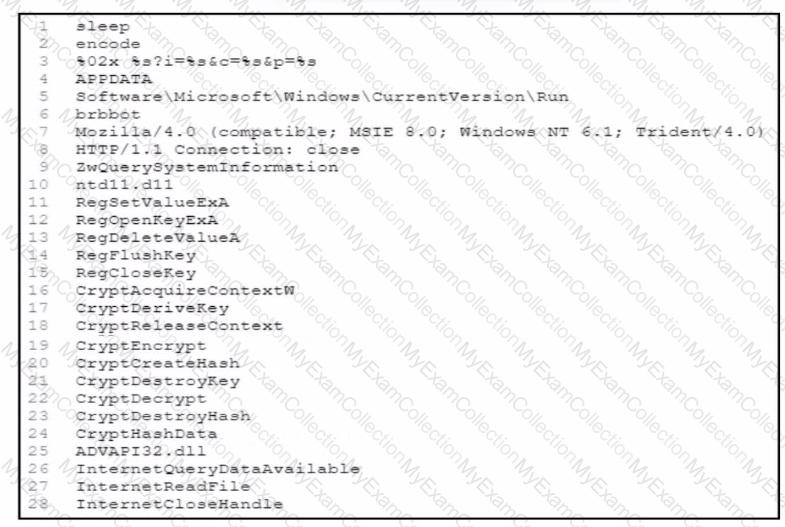
A security engineer notices that a Windows Batch script includes calls to suspicious APIs. How will the script affect the system when it is executed?

A.

The internet connection is disabled.

B.

The host version is retrieved.

C.

The host is put in sleep mode.

D.

Files are encrypted.

Full Access
Question # 13

Refer to the exhibit.

A company went through several rounds of restructuring and the previous security team has been let go A new engineer joins and rediscovers all the tools thatthe previous team left behind.One of the tools Is a Bash script related to monitoring AWS accounts for threats What is the purpose of the script?

A.

monitoring failed AWS console login attempts

B.

automating connection to AWS accounts

C.

monitoring for AWS instance errors

D.

archiving records from the ConsoleLogin source

Full Access
Question # 14

A SOC team using Cisco security technologies wants to distinguishIndicators of Attack (IOAs)fromIndicators of Compromise (IOCs)during threat hunting. Which scenario BEST represents an IOA rather than an IOC?

A.

Detection of a known malicious file hash on an endpoint

B.

Identification of a domain listed in a threat intelligence feed

C.

Observation of repeated failed logins followed by a successful login from a new location

D.

Blocking an IP address associated with previous malware campaigns

Full Access
Question # 15

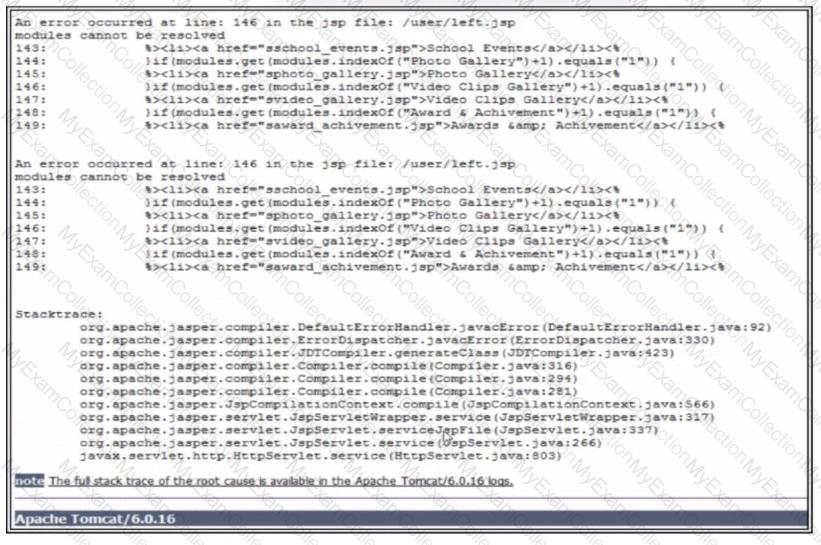
Refer to the exhibit. A penetration test performed against a web application generates the error message. Which two pieces of information are exposed? (Choose two.) Q Internal paths of the web server

A.

service and version of the web server

B.

Apache Jasper is vulnerable to path injection.

C.

technology used by the application

D.

version of the web browser

Full Access
Question # 16

A SOC analyst using Cisco security tools wants to differentiatethreat huntingfromtraditional detection engineering. Which activity BEST represents threat hunting rather than detection engineering?

A.

Creating a SIEM rule to alert on known malicious domains

B.

Tuning EDR alerts to reduce false positives

C.

Formulating a hypothesis to search for credential misuse without alerts

D.

Blocking IP addresses based on Talos intelligence

Full Access
Question # 17

Refer to the exhibit.

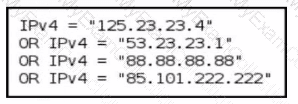
A threat-hunting team makes an EDR query to detect possible C2 outbound communication across all endpoints. Which level of the Pyramid of Pain is being used?

A.

Tough

B.

Challenging

C.

Easy

D.

Simple

Full Access
Question # 18

Refer to the exhibit.

A forensic team must investigate how the company website was defaced. The team isolates the web server, clones the disk, and analyzes the logs. Which technique was used by the attacker initially to access the website?


A.

exploit public-facing application

B.

external remote services

C.

command and scripting interpreter

D.

drive-by compromise

Full Access