Question # 4
The surgical technologist removes the top basket of instruments from a metal container containing two instrument trays and notices a pen mixed with the instruments in the bottom tray. The instrument tray has not touched the surgical technologist ' s sterile gown. What should the surgical technologist do?
A.
Pass the basket of instruments to the circulating nurse, remove the gown and gloves, and perform another surgical scrub before donning a new sterile gown and gloves.
B.
Place the first tray on the sterile field and request a new metal container to obtain the bottom tray of instruments.
C.
Continue as planned because the pen is also sterile.
D.
Hand the basket of instruments to the circulating nurse and change gloves.
Full Access
Answer:
D
Explanation:
The appropriate response is to hand the instrument basket to the circulating nurse and change sterile gloves . Discovering an unexpected pen within a sterilized instrument container represents a significant breach in instrument preparation and raises concerns regarding the integrity of the entire instrument set.
All surgical instruments must undergo appropriate cleaning, inspection, assembly, packaging, and sterilization before clinical use. An ordinary pen is not an approved surgical instrument and may contain materials or internal components unsuitable for the validated sterilization cycle. Its presence indicates a failure in instrument inspection and assembly, making the entire container unsuitable for use.
The Association of Surgical Technologists ' guidelines for establishing the sterile field recommend that when an instrument basket is considered contaminated, the surgical technologist should transfer it to the circulator and change gloves. Because the basket did not contact the sterile gown, gown replacement and repetition of the surgical scrub are not automatically required.
ast.org+1
Option A includes unnecessary additional measures unless the gown or another sterile area has also been contaminated. Option B is incorrect because the upper tray cannot be assumed sterile when the integrity of the container ' s contents is compromised. Option C incorrectly assumes that an unintended foreign object has been adequately processed for surgical use.
A replacement sterile instrument set should be obtained and inspected before proceeding.
[References:, NCCT Tech in Surgery–Certified: Preoperative Care and Preparation; Sterile Field Preparation; Instrument Inspection and Sterilization., Association of Surgical Technologists: Guidelines for Best Practices in Establishing the Sterile Field., AORN: Sterile Technique Questions Answered., ]
Question # 5
When a specimen is surgically removed, what should the surgical technologist do?
A.
Obtain permission from the surgeon to pass off the specimen.
B.
Place the specimen in a saline-soaked sponge.
C.
Hand off the specimen to the circulating nurse on a Raytec sponge.
D.
Allow the specimen to dry completely before passing it off.
Full Access
Answer:
A
Explanation:
The surgical technologist must obtain permission from the surgeon before transferring a surgical specimen off the sterile field . This requirement ensures that the surgeon has completed the necessary examination, orientation, identification, or preparation of the specimen before it is sent for pathological evaluation.
The Association of Surgical Technologists explicitly establishes this responsibility in its Standards of Practice for Handling and Care of Surgical Specimens , Standard III, Item 6.
Standard_Handling_Care_Surgical_Specimens
Specimens may require orientation sutures, anatomical identification, immediate frozen-section examination, microbiological culture, or specific preservation conditions. Premature transfer may compromise diagnostic accuracy or interfere with the surgeon ' s intended evaluation.
Option B is not the best answer because placing tissue in saline-soaked material may be appropriate temporarily for selected specimens, but it does not replace obtaining permission before transfer. Specimen-specific handling instructions must also be followed.
Option C is incorrect because Raytec sponges are counted radiopaque surgical sponges and must not be used to transfer specimens off the sterile field.
Option D is incorrect because tissue dehydration can damage cellular structures and compromise pathological examination.
Following authorization, the surgical technologist transfers the specimen aseptically to the circulating nurse, confirms its identification, and facilitates the prescribed preservation method.
[References: NCCT TS-C Detailed Test Plan — Intraoperative Care and Preparation; Section 3B8, Appropriate Specimen Handling; Surgical Counts; Tissue Preservation., Supporting standard: AST — Standards of Practice for Handling and Care of Surgical Specimens, Standard III.]
Question # 6
Which of the following should the surgical technologist have available in the event of a laser fire during surgery?
A.
Balanced salt solution (BSS)
B.
Normal saline
C.
Sterile water
D.
Lactated Ringer ' s solution
Full Access
Answer:
C
Explanation:
Sterile water is the specifically identified answer in the Association of Surgical Technologists ' laser safety standards.
Laser procedures carry a significant fire risk because laser energy can ignite combustible materials in the presence of oxygen or other oxidizers. Surgical drapes, sponges, towels, and selected airway equipment may function as fuels.
AST ' s Standards of Practice for Laser Safety direct the surgical technologist to maintain a basin of sterile water on the sterile field for immediate use if sponges, drapes, or towels ignite.
ast.org
Option A is not the conventional emergency fire-extinguishing fluid because balanced salt solution is primarily used for specialized irrigation, particularly ophthalmic procedures.
Option B is clinically acceptable for extinguishing some operative-field fires. AORN guidance recognizes either sterile saline or water for immediate availability during laser procedures. Therefore, normal saline is not inherently an unsafe alternative.
AORN Periop Today | AORN
Option D is not conventionally identified as the primary prepared fire-extinguishing solution for laser procedures.
Beyond having sterile water available, the surgical technologist must understand operating room fire prevention, assist in removing burning materials, and support immediate cessation of the ignition source and oxidizer supply.
For airway fires, prompt coordination with the anesthesia provider is critical because combustion may produce severe airway and pulmonary injury.
[References:, NCCT TS-C Detailed Test Plan — Perioperative Care and Preparation; Section 1C2, Emergency Preparedness; Section 1C3, Laser Safety., AST — Standards of Practice for Laser Safety, Guideline II, Item 11., AORN — Guideline for Laser Safety, Recommendation 3.7., Question validation: C is the AST-specific examination answer. However, AORN accepts both water and saline, so the wording should specify the AST-recommended sterile-field provision if only one answer is permitted., , ]
Question # 7
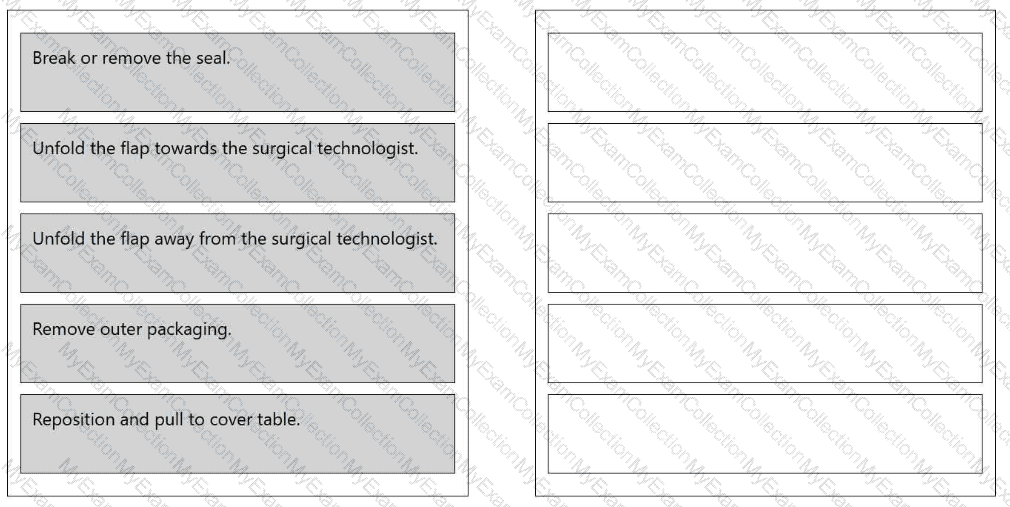
A surgical technologist is opening the operating room for a surgical procedure. Arrange the following steps for opening the sterile back-table pack in the correct sequence.
Full Access
Answer:
Answer: 
Explanation:
1
Remove outer packaging.
2
Break or remove the seal.
3
Unfold the flap away from the surgical technologist.
4
Unfold the flap toward the surgical technologist.
5
Reposition and pull to cover the table.
Establishing the sterile back table requires a systematic opening sequence that preserves packaging integrity and prevents contamination. The surgical technologist must follow aseptic technique while ensuring that the sterile table covering is fully extended before instruments and supplies are introduced.
First, remove the outer packaging after inspecting it for damage, moisture, and expiration information. The protective outer covering is considered nonsterile and must be discarded without contaminating the inner sterile package.
Second, break or remove the seal securing the inner package. The seal should be opened carefully to avoid tearing the sterile material.
Third, unfold the flap away from the surgical technologist. This prevents the operator from reaching across exposed sterile surfaces.
Fourth, unfold the flap toward the surgical technologist, handling only the designated nonsterile edges of the wrapper.
Fifth, reposition and pull the remaining covering over the table. The technologist moves around the table as necessary, extending the drape over its surfaces without reaching across the sterile field or allowing the drape to contact unsterile objects.
The Association of Surgical Technologists emphasizes inspection of packaging integrity, correct placement of sterile supplies, and strict aseptic technique when establishing the sterile field.
ast.org+1
Following this sequence helps maintain sterile-field integrity and minimizes the risk of surgical site contamination.
[References:, NCCT Tech in Surgery–Certified (TS-C) — Preoperative Care and Preparation; Operating Room Setup; Establishment of the Sterile Field; Aseptic Technique., Association of Surgical Technologists — Guidelines for Best Practices in Establishing the Sterile Field, Guideline III., Journal of Medical Insight — Surgical Technologist Prepares the Operating Room for a Case., , , , ]
Question # 8
During an open cholecystectomy, the surgeon exposes the gallbladder in the routine manner. The surgeon asks the surgical technologist to apply traction to the gallbladder while retracting the liver. Which of the following instrument combinations should the surgical technologist be prepared to use?
A.
Kocher clamp and Army-Navy retractor
B.
Pean clamp and Army-Navy retractor
C.
Kocher clamp and Harrington retractor
D.
Pean clamp and Harrington retractor
Full Access
Answer:
D
Explanation:
The Pean clamp and Harrington retractor provide the most appropriate instrument combination for gallbladder traction and liver retraction during an open cholecystectomy.
The Pean clamp, also known as the Rochester-Pean forceps, is a relatively large hemostatic instrument with transverse serrations and no terminal teeth. It can provide controlled traction on appropriate tissue structures during abdominal surgery. The surgeon must select the grasping site carefully to avoid tearing the gallbladder wall.
The Harrington retractor, commonly called the Sweetheart retractor, features a broad, heart-shaped blade designed for deep abdominal retraction. It is particularly useful for gently elevating the liver and improving exposure of the gallbladder and surrounding biliary structures.
Open cholecystectomy techniques describe positioning a Harrington retractor against the liver while using a large clamp to manipulate the gallbladder.
Basicmedical Key
Option A is incorrect because the Army-Navy retractor is intended primarily for superficial or moderately deep tissue retraction.
Option B is incorrect because the Army-Navy does not provide the same deep liver exposure as the Harrington.
Option C is less appropriate because the Kocher clamp has terminal teeth that can penetrate and injure delicate gallbladder tissue.
The surgical technologist should anticipate appropriate traction and retraction while maintaining safe visualization of the hepatocystic triangle.
[References: NCCT TS-C Detailed Test Plan — Intraoperative Care and Preparation, Section 3B3: Assess the Need for Retraction; Instrumentation; Hepatobiliary Surgery., , Additional reference: StatPearls — Open Cholecystectomy., ]
Question # 9
The surgical technologist is setting up for a hip hemiarthroplasty. If it is not listed on the surgeon ' s preference card, which of the following handheld retractors should the surgical technologist have available?
A.
Retractor shown in Option A.
B.
Retractor shown in Option B.
C.
Retractors shown in Option C.
D.
Hibbs retractor shown in Option D.
Full Access
Answer:
D
Explanation:
The Hibbs retractor , illustrated in Option D, is an appropriate handheld orthopedic retractor for hip hemiarthroplasty. Its broad blade and toothed working end provide controlled retraction of substantial soft tissues, allowing the surgeon to obtain adequate exposure of the hip joint.
Hip hemiarthroplasty involves replacing the femoral head with a prosthetic component while preserving the native acetabulum. Effective retraction is necessary during surgical exposure, capsular dissection, femoral head removal, and preparation of the proximal femur.
The Hibbs retractor has a characteristic double-ended configuration, with a toothed blade and a curved end. It is particularly useful for retracting muscular and fascial tissues surrounding the hip.
Published orthopedic techniques describe the use of Hibbs retractors during hip arthroplasty, including anterior approaches to hemiarthroplasty, where the instrument helps retract the rectus femoris and expose the underlying joint capsule.
PubMed Central (PMC)+1
Option A does not represent the most appropriate instrument for the specified application.
Option B depicts another handheld retraction instrument, but it is not the best selection in this exhibit.
Option C depicts smaller double-ended retractors more suitable for superficial tissue exposure.
The surgical technologist should anticipate appropriate retractors, verify instrument availability, and ensure that deep tissue retraction is performed without excessive pressure on neurovascular structures.
[References:, NCCT TS-C Detailed Test Plan — Preoperative Care and Preparation; Surgical Instrument Selection; Orthopedic Surgery; Operating Room Setup., Johnson & Johnson MedTech — Hibbs Retractor for Hip Arthroplasty., Cementing Without Trialing Is Safe and Efficient for Hip Hemiarthroplasty — Surgical Technique., Aspen Surgical — Hibbs Double-Ended Retractor., , ]
Question # 10
Which of the following is the MOST common retraction instrument found in gynecological surgical trays?
A.
Wright speculum
B.
Pederson speculum
C.
Graves speculum
D.
Lucy speculum
Full Access
Answer:
C
Explanation:
The Graves vaginal speculum is a commonly used gynecological retraction instrument designed to separate the vaginal walls and provide visualization of the cervix and vaginal canal.
The Graves speculum is a bivalve instrument featuring relatively broad, curved blades and an adjustable self-retaining mechanism. Its configuration provides exposure for gynecological examination and selected procedures involving the cervix or vagina.
The instrument is frequently used for cervical examination, tissue sampling, and gynecological procedures requiring vaginal exposure.
The MSD Manual identifies the Graves and Pederson specula as the two principal vaginal speculum designs. Graves specula have broader curved blades, whereas Pederson specula have narrower, relatively straight blades.
MSD Manual Professional Edition
Option A is not the conventional general-purpose gynecological speculum selected for this scenario.
Option B is also commonly used, particularly when a narrower instrument is appropriate. Therefore, it is a clinically reasonable alternative depending on patient anatomy.
Option D is not the standard general-purpose speculum represented by the examination ' s expected answer.
The surgical technologist must select the correct instrument size and configuration according to the operative procedure, patient anatomy, surgeon preference, and required exposure.
[References:, NCCT TS-C Detailed Test Plan — Intraoperative Care and Preparation; Surgeon Support; Retraction Instruments; Gynecological Surgical Procedures., MSD Manual Professional — Pelvic Examination and Vaginal Speculum Types., NCBI Bookshelf — Gynecologic Pelvic Examination., Question validation: C is the likely intended answer, but published references recognize both Graves and Pederson as common instruments. The question would benefit from describing the required blade configuration or clinical indication.]
Question # 11
When disposing of sharps after surgery, in which of the following locations should the sharps be placed FIRST?
A.
Kidney basin
B.
Metal basin
C.
Sharps book
D.
Sent to central processing on the back table
Full Access
Answer:
C
Explanation:
The sharps book , also called a needle counter or sharps holder, is the appropriate initial location for securing used surgical needles and other compatible sharp items during postoperative cleanup.
A sharps book generally contains designated compartments, foam, or magnetic surfaces that permit controlled containment and accurate accounting of surgical needles and blades. Its use minimizes the risk of accidental needlestick injuries and prevents sharps from becoming mixed with contaminated instruments or discarded materials.
Before final disposal, the surgical technologist and circulating nurse must reconcile all countable sharps according to the established surgical counting protocol. Retained surgical needles can cause significant patient injury; therefore, accurate accounting remains essential throughout the procedure and during closure.
Option A is incorrect because placing loose needles or blades in a kidney basin creates an avoidable sharps injury risk.
Option B is incorrect because a metal basin provides no dedicated sharps-securing mechanism.
Option D is incorrect because sharps should not be sent loose with reusable instruments to the sterile processing department.
After count reconciliation, the sharps book or its contents must be discarded into an approved puncture-resistant sharps container according to institutional policy and the device ' s instructions for use.
The World Health Organization recommends that surgical needles be secured in a needle counter, appropriate container, or another controlled holding arrangement.
NCBI+1
[References:, NCCT TS-C Detailed Test Plan — End of Procedure Tasks and Postoperative Care; Instrument Preparation; Occupational Safety; Management of Contaminated Surgical Materials., WHO — Prevention of Retained Instruments and Sponges in Surgical Wounds., AORN — Five Retained Surgical Items Questions Answered.]
Question # 12
What degree of laparoscope is commonly used in laparoscopic cholecystectomy?
A.
70 degrees
B.
10 degrees
C.
30 degrees
D.
5 degrees
Full Access
Answer:
C
Explanation:
A 30-degree laparoscope is commonly used during laparoscopic cholecystectomy because its angled optical system improves visualization of the gallbladder, hepatocystic triangle, and surrounding biliary anatomy.
Laparoscopic cholecystectomy involves removal of the gallbladder through small abdominal incisions using a camera, laparoscopic instruments, and carbon dioxide insufflation.
A 30-degree laparoscope provides an oblique viewing angle that allows the surgeon to inspect anatomical structures from different perspectives by rotating the scope. This is useful when identifying the cystic duct, cystic artery, and the anatomical landmarks necessary to establish the critical view of safety.
The angled lens permits visualization around tissues without requiring excessive movement of the trocar or additional manipulation of vulnerable structures.
Option A is incorrect because 70-degree optics are primarily associated with other endoscopic applications and are not the conventional choice for laparoscopic cholecystectomy.
Options B and D are incorrect because 10-degree and 5-degree laparoscopes are not standard viewing angles for this procedure.
A 0-degree laparoscope may also be used, but the 30-degree scope is a frequently selected instrument. Both approaches are recognized in published surgical guidance.
NCBI+1
The surgical technologist must confirm the correct scope, camera head, light cable, insufflation equipment, and optical compatibility before the procedure begins.
[References:, NCCT TS-C Detailed Test Plan — Intraoperative Care and Preparation; Surgical Instrumentation; Laparoscopic Equipment; General Surgical Procedures., StatPearls — Laparoscopic Cholecystectomy., Expert Consensus — Prevention and Management of Biliary Injuries During Laparoscopic Cholecystectomy., , , , , , ]
Question # 13
When is the proper time to complete the FIRST surgical count for a surgical case?
A.
When all items are opened on the back table.
B.
After the first incision is made.
C.
When the patient enters the room.
D.
When closing the incision.
Full Access
Answer:
A
Explanation:
The initial surgical count should be completed after the required instruments, sponges, sharps, and other countable supplies have been opened and organized, but before the surgical procedure begins .
This count establishes the baseline inventory against which subsequent counts are reconciled. The surgical technologist and circulating nurse perform the count together, visually and verbally confirming each accountable item.
The Association of Surgical Technologists ' Standards of Practice for Surgical Counts requires an initial count before the start of surgery. Items introduced subsequently must be counted and added to the recorded totals.
Standard Counts
Option B is incorrect because performing the first count after incision increases the potential for surgical items to enter the operative wound before their quantities have been documented.
Option C is incorrect because patient arrival does not establish that instruments and supplies are ready for counting.
Option D is incorrect because counting during wound closure is an additional reconciliation step rather than the initial count.
The initial count should be completed in a controlled environment with minimal distractions. Count discrepancies must be investigated and resolved according to institutional policy.
[References:, NCCT TS-C Detailed Test Plan — Perioperative Care and Preparation, Section 1D2: Perform the Count With a Nurse at Appropriate Times., AST — Standards of Practice for Surgical Counts., AORN — Surgical Counts: Prevention of Retained Surgical Items (2026).]
Question # 14
Which of the following items should the surgical technologist ensure remain sterile until the patient leaves the operating room? (Select the three correct answers.)
A.
Back table
B.
Mayo stand
C.
Light handles
D.
Operative drape
E.
Double basin
Full Access
Answer:
A, B, E
Explanation:
The sterile back table, Mayo stand, and basin set should remain sterile until the patient has been transferred out of the operating room.
The Association of Surgical Technologists specifically establishes this requirement in its Guidelines for Best Practices for Breaking Down the Sterile Field . The purpose is to preserve immediate access to surgical instruments and equipment if an unexpected complication occurs during emergence from anesthesia.
ast.org
Option A — Back table: The sterile back table contains instruments and supplies that may be required for urgent surgical intervention.
Option B — Mayo stand: The Mayo stand should remain sterile and contain essential instruments for emergency procedures, including hemostats, scissors, retractors, and needle holders.
Option E — Double basin: The sterile basin set remains part of the prepared surgical equipment. The supplied double basin corresponds to this equipment category.
Option C is not included in the three specified items. Sterile light-handle covers may be removed during appropriate equipment breakdown, provided sterile readiness is maintained.
Option D is incorrect because patient drapes may be removed following completion of the procedure and application of the surgical dressing.
Premature removal of sterile equipment may delay the surgical team ' s response to postoperative hemorrhage, airway compromise, or other emergencies.
[References: NCCT TS-C Detailed Test Plan — End of Procedure Tasks and Postoperative Care, Section 4B1: Maintain Sterility of Back Table and Mayo Stand Until the Patient Leaves the Room., Supporting standard: AST — Guidelines for Best Practices for Breaking Down the Sterile Field, Guideline I.]
Question # 15
Upon opening a double peel-pack pouch containing hemostats, the surgical technologist ' s finger touches the inside of the packaging. Which of the following should the surgical technologist do?
A.
Open the inner wrapped package onto the sterile field.
B.
Flash-sterilize the inner wrapped package of hemostats.
C.
Send the package to the Sterile Processing Department (SPD) for reprocessing.
D.
Discard both wrappers and the instruments.
Full Access
Answer:
A
Explanation:
The most appropriate examination answer is to continue with the intact inner sterile package , provided the finger contacted only the inside of the outer packaging and did not contaminate the inner pouch or its contents.
Double peel packaging consists of an inner sterilization pouch enclosed within an outer pouch. When validated by the manufacturer, this packaging arrangement can facilitate aseptic presentation of instruments to the sterile field.
If the outer pouch becomes contaminated during opening, the intact inner pouch can continue to provide a sterile barrier. However, the person opening the package must avoid transferring contamination to the exterior of the inner pouch during removal and presentation.
Option B is incorrect because immediate-use steam sterilization is not indicated simply because the outer packaging has been touched, provided the inner sterile barrier remains uncompromised.
Option C becomes appropriate if the inner package is contaminated or its integrity cannot be established.
Option D is incorrect because reusable hemostats generally undergo validated reprocessing rather than disposal.
STERIS explains that double-pouch packaging may be used to facilitate aseptic presentation, but the arrangement must comply with the manufacturer ' s validated instructions.
steris.com
Important distinction: The question does not specify whether the finger contacted the inner pouch. If it did, the inner pouch should not automatically be considered sterile. Safe use requires confirmation that the remaining sterile barrier is intact and uncontaminated.
[References:, NCCT TS-C Detailed Test Plan — Preoperative Care and Preparation; Sterile Technique; Packaging Integrity; Recognition of Contamination., STERIS — Guide to Sterilization Pouches in Sterile Processing., CDC — Sterilizing Practices and Packaging Integrity.]
Question # 16
Which of the following procedures requires the use of a phacoemulsification machine?
A.
Total pelvic exenteration
B.
Thyroidectomy
C.
Cataract extraction
D.
Blepharoplasty
Full Access
Answer:
C
Explanation:
A phacoemulsification machine is used during cataract extraction to fragment and remove the eye ' s clouded natural crystalline lens using ultrasonic energy.
A cataract develops when the crystalline lens becomes progressively opaque, impairing the transmission of light to the retina and reducing visual acuity. Phacoemulsification is a widely used surgical technique for cataract removal because it allows lens extraction through a relatively small corneal incision.
During the procedure, the surgeon creates a capsulorrhexis in the anterior lens capsule. The phacoemulsification handpiece delivers controlled ultrasonic energy to break up the cataractous lens nucleus. An integrated irrigation and aspiration system maintains anterior chamber stability and removes fragmented lens material.
After removal, a foldable intraocular lens is commonly implanted within the remaining capsular bag. The American Academy of Ophthalmology recognizes phacoemulsification as a principal technique for modern cataract surgery.
AAO Journal
Option A is incorrect because total pelvic exenteration involves extensive removal of pelvic organs for selected advanced malignancies.
Option B is incorrect because thyroidectomy involves excision of thyroid tissue using conventional surgical and energy-based instruments.
Option D is incorrect because blepharoplasty involves reconstructive or cosmetic surgery of the eyelids.
The surgical technologist should prepare the phaco handpiece, tubing, irrigation solution, aspiration components, and compatible ophthalmic instruments according to the surgeon ' s preference card.
[References:, NCCT TS-C Detailed Test Plan — Intraoperative Care and Preparation; Specialized Surgical Equipment; Ophthalmic Surgical Procedures., American Academy of Ophthalmology — Cataract in the Adult Eye, Preferred Practice Pattern.]
Question # 17
When preparing dressings for the end of the surgical case, what should the surgical technologist do FIRST?
A.
Remove overgloves.
B.
Cut the dressing to the size of the wound.
C.
Begin breaking down the instrument setup.
D.
Remove the surgical drapes.
Full Access
Answer:
A
Explanation:
The surgical technologist should remove the outer pair of sterile gloves before handling the clean postoperative dressing , assuming double gloving has been used during the procedure.
During surgery, the outer gloves may become contaminated with blood, tissue debris, irrigation fluid, and other biological materials. Removing the outer gloves before dressing application reduces the likelihood of transferring these contaminants to the freshly closed incision or sterile dressing materials.
The Association of Surgical Technologists specifically recommends removing the outer gloves before assisting with dressing application when the surgical technologist is double gloved.
FlipHTML5
Option B is not the best immediate response under the question ' s intended sequence. Dressing materials may be sized or arranged beforehand using appropriate sterile technique, but potentially contaminated outer gloves should be removed before handling the final wound dressing.
Option C is incorrect because the sterile instrument setup must remain available until the patient has been transported out of the operating room.
Option D is incorrect because surgical drapes should generally remain in place while the incision is protected with the prescribed dressing.
The incision and surrounding skin should be cleaned and dried appropriately before dressing application. The sterile team then applies the prescribed dressing while protecting drains and maintaining aseptic technique.
[References:, NCCT TS-C Detailed Test Plan — End of Procedure Tasks and Postoperative Care; Section 4A2, Prepare Dressing Materials for Application., AST — Guidelines for Best Practices for Breaking Down the Sterile Field., AORN Journal — Incision Closure Bundle for Colorectal Surgery., Clinical qualification: Removing outer gloves is the appropriate first step before handling the wound dressing, not necessarily before every preliminary activity involved in preparing dressing materials.]
Question # 18
The surgeon has completed the reanastomosis of the femoral artery using a 6-0 Prolene suture. The surgeon is preparing to tie the knot. Which of the following should the surgical technologist anticipate NEXT?
A.
Gelfoam and thrombin
B.
Another stitch
C.
Suture scissors to cut the stitch
D.
Wet the surgeon ' s hands with saline
Full Access
Answer:
D
Explanation:
The surgical technologist should anticipate moistening the surgeon ' s gloved fingers with sterile saline before the surgeon ties the vascular suture.
Prolene is a nonabsorbable polypropylene monofilament suture widely used for vascular anastomoses because of its strength, durability, low tissue reactivity, and favorable handling characteristics.
A 6-0 Prolene suture has a relatively small diameter and requires careful manipulation. Excessive traction, friction, or abrasion during knot formation can weaken the suture and increase the risk of breakage.
Moistening the surgeon ' s gloves and suture with sterile saline reduces friction during knot tying. This allows the suture to move more smoothly across the gloved fingers and helps prevent microscopic abrasion, fraying, and suture failure.
A vascular surgery reference specifically describes moistening polypropylene sutures and surgical gloves before knot tying to reduce damage and breakage.
Clinical Tree
Option A is incorrect because Gelfoam and thrombin are adjunctive hemostatic products and are not the immediate preparation required for tying the suture.
Option B is incorrect because the completed anastomosis does not automatically require another stitch.
Option C is incorrect as the next immediate action because suture scissors are generally needed after the knot has been secured.
The surgical technologist must anticipate delicate suture-handling requirements and maintain the availability of sterile saline, appropriate scissors, and vascular instruments.
Reference Topics: NCCT TS-C Detailed Test Plan — Intraoperative Care and Preparation, Sections 3B2, 3B5, and 3B6: Intraoperative Assistance; Suture Handling; Passing and Cutting Suture Materials.
Question # 19
Which of the following describes proper technique for transferring a sterile item enclosed in a peel-pack pouch onto the sterile field?
A.
Slide the item across the peel pack to drop it onto the back table.
B.
Use sterile forceps to remove the item and place it on the back table.
C.
Project the item to avoid reaching over the sterile back table.
D.
Hold the peel pack over the sterile field to drop the item onto the back table.
Full Access
Answer:
B
Explanation:
Using sterile forceps to remove an item from an opened peel-pack pouch and transfer it onto the sterile back table represents the most controlled aseptic technique among the available options.
Peel-pack pouches provide a sterile barrier that protects surgical instruments until they are needed. During package opening, the circulating nurse must prevent the sterile contents from contacting the exterior packaging, adhesive margins, or other potentially contaminated surfaces.
The scrubbed surgical technologist may use sterile forceps to retrieve the item from the correctly presented pouch, provided the instrument and forceps do not contact the nonsterile packaging edges.
Option A is incorrect because sliding an instrument across the packaging may cause contact with the nonsterile seal or pouch edges.
Option C is inappropriate because projecting an item toward the sterile field can result in uncontrolled placement, contamination, or instrument damage.
Option D is incorrect because positioning an opened nonsterile package directly over the sterile field creates a contamination risk.
AORN guidance favors presenting opened peel pouches to scrubbed personnel for controlled retrieval. Some AST guidance permits aseptic flipping of suitable lightweight items, but that does not justify uncontrolled throwing or package contact with the sterile field.
PLOS One+1
Proper transfer technique preserves sterile integrity and reduces the potential for surgical site infection.
[References:, NCCT TS-C Detailed Test Plan — Preoperative Care and Preparation; Sterile Technique; Opening Sterile Supplies; Prevention of Contamination., PLOS ONE — Reducing Levels of Medical Device Contamination Through Package Redesign and Opening Technique., Association of Surgical Technologists — Standards of Practice for Establishing the Sterile Field.]
Question # 20
When passing an " armed " needle holder, the surgical technologist must do which of the following?
A.
Pass it to the surgeon when the circulating nurse says the surgeon is ready.
B.
Pass it to the surgeon so that the surgeon may reposition it for its intended use.
C.
Pass it to the surgeon so that the needle does not have to be repositioned.
D.
Pass it to the surgeon only when the surgeon is looking and ready.
Full Access
Answer:
C
Explanation:
An armed needle holder is a needle-driving instrument loaded with a surgical suture needle. The surgical technologist must ensure that the needle is correctly positioned and securely grasped within the jaws of the needle holder before transferring it for surgical use.
The needle should be oriented according to the surgeon ' s handedness, operative approach, and intended direction of suturing. Correct positioning enables the surgeon to begin the suturing maneuver immediately without unnecessary manipulation or repositioning.
The Association of Surgical Technologists specifically emphasizes correct needle positioning and secure clamping to prevent the surgeon from having to reposition the needle holder. This improves procedural efficiency and reduces avoidable handling of sharp instruments.
Guideline_Neutral_Zone
Option A is incorrect because the circulating nurse ' s announcement does not independently establish readiness for a safe transfer. Option B is incorrect because unnecessary repositioning increases instrument handling and potential needlestick exposure. Option D describes an important safety consideration for direct hand-to-hand transfer, but visual attention alone does not address the correct preparation and orientation of the armed needle holder.
Current sharps-safety guidance favors using a designated neutral zone whenever clinically feasible. When direct transfer is necessary, clear communication and appropriate instrument orientation are essential.
[References: NCCT TS-C Detailed Test Plan — Intraoperative Care and Preparation, Section 3A2 (Necessary Instruments and Supplies), Section 3A5 (Suture Preparation), and Section 3C4 (Sutures and Needles); Association of Surgical Technologists, Guideline Statement for the Implementation of the Neutral Zone in the Perioperative Environment. , , ]
Question # 21
Which of the following sterilization methods used in hospitals is preferred for heat-sensitive instruments and materials?
A.
Flash
B.
Sterrad
C.
Ionizing radiation
D.
Steam
Full Access
Answer:
B
Explanation:
STERRAD is a low-temperature sterilization system designed for medical devices and surgical instruments that cannot tolerate the elevated temperatures or moisture associated with conventional steam sterilization.
STERRAD systems use hydrogen peroxide vapor and, in applicable systems, a gas-plasma phase to achieve microbial inactivation. Hydrogen peroxide produces oxidative damage to essential microbial components, enabling the sterilization of compatible medical devices without exposing them to conventional high-temperature steam conditions.
The Centers for Disease Control and Prevention recommends low-temperature sterilization technologies, including hydrogen peroxide gas plasma, for critical patient-care equipment that is sensitive to heat or moisture.
CDC
Option A is incorrect because flash sterilization, now generally termed immediate-use steam sterilization, uses elevated temperatures and is not intended as a routine substitute for properly planned instrument processing.
Option C is incorrect because ionizing radiation is primarily used for industrial sterilization of packaged medical products rather than routine hospital instrument reprocessing.
Option D is incorrect in this scenario because steam sterilization may damage heat-sensitive materials, although it remains the preferred method for compatible, heat-stable surgical instruments.
The surgical technologist must recognize instrument compatibility, follow the manufacturer ' s validated instructions for use, and verify sterilization indicators before instruments enter the sterile field.
STERRAD compatibility cannot be assumed for every heat-sensitive device.
ASP+1
[References:, NCCT TS-C Detailed Test Plan — Perioperative Care and Preparation, Section 1B1: Identify Various Methods of Sterilization; Instrument Sterilization and Package Integrity., CDC — Recommendations for Disinfection and Sterilization in Healthcare Facilities., Advanced Sterilization Products — STERRAD Hydrogen Peroxide Sterilization Systems., , , ]
Question # 22
A surgical technologist accidentally hits their head while cleaning up after a surgical procedure. No one witnesses the incident, and the surgical technologist does not appear to be injured immediately. Later that day, the technologist begins vomiting and develops a severe headache. The technologist presents to the emergency department for a head CT and is diagnosed with a concussion. The following day, the technologist notifies their supervisor of the incident. When should the surgical technologist have reported the incident?
A.
After obtaining documentation from the emergency department
B.
Immediately after hitting their head
C.
Once symptoms began
D.
Immediately before going to the emergency department
Full Access
Answer:
B
Explanation:
The surgical technologist should have reported the workplace head injury immediately after the incident, even though there were no obvious symptoms at the time.
Prompt occupational injury reporting is essential because serious neurological injuries may initially produce minimal or no observable symptoms. Concussion-related manifestations, including headache, nausea, vomiting, dizziness, confusion, and impaired concentration, can develop after the initial trauma.
Immediate reporting allows the supervisor to arrange appropriate medical assessment, document the circumstances, and investigate environmental hazards that contributed to the incident.
Option A is incorrect because medical documentation is not required before initially notifying the employer.
Option C is incorrect because delaying notification until symptoms develop may postpone clinical evaluation and workplace safety interventions.
Option D is incorrect because seeking emergency treatment should not be the first occasion on which an earlier workplace injury is disclosed, when immediate reporting was reasonably possible.
OSHA requires employers to establish reasonable procedures for reporting occupational injuries and illnesses. OSHA also recognizes that employees should not be penalized for reporting delays when they could not reasonably recognize or report an injury earlier.
Occupational Safety and Health Administration+1
A severe headache accompanied by vomiting after head trauma warrants urgent medical assessment because it may indicate a significant intracranial injury.
[References:, NCCT TS-C Detailed Test Plan — Perioperative Care and Preparation; Communication and Reporting; Incident Documentation; Occupational Safety., OSHA — Employee Involvement and Occupational Injury Reporting., MIT Environmental Health and Safety — Occupational Injury Reporting.]
Question # 23
After attempting to apply indirect cautery to a blood vessel, the surgical technologist realizes that nothing happens. Which of the following actions should be performed FIRST?
A.
Put the Bovie tip in saline.
B.
Open a new Bovie tip.
C.
Ask the circulating nurse to restart the machine.
D.
Ask the circulating nurse to check the grounding pad.
Full Access
Answer:
D
Explanation:
When indirect electrosurgical cautery fails to produce the expected coagulation effect, the surgical technologist should request that the circulating nurse check the patient return electrode, commonly called the grounding pad.
Monopolar electrosurgery operates through an electrical circuit consisting of the electrosurgical generator, active electrode, patient tissue, and dispersive return electrode. During indirect cautery, the active electrode contacts a conductive surgical instrument, allowing electrical energy to pass through the instrument to the target tissue.
An improperly attached, disconnected, or poorly positioned return electrode can interrupt the circuit. Modern electrosurgical generators incorporate return-electrode monitoring systems that may inhibit energy delivery when contact quality is inadequate.
The Association of periOperative Registered Nurses (AORN) identifies poor dispersive-electrode contact and circuit problems as important causes of ineffective electrosurgical coagulation.
Recommended Practices for Electrosurgery
Option A is incorrect because immersing the active electrode in saline is not an appropriate initial troubleshooting procedure.
Option B is premature because replacing the electrode tip will not correct a faulty return-electrode connection.
Option C is inappropriate because restarting the generator without investigating the malfunction could leave an electrical safety hazard unresolved.
The technologist should discontinue activation while the circulator assesses the return electrode, cable connections, generator indicators, and equipment integrity.
[References: NCCT TS-C Detailed Test Plan — Intraoperative Care and Preparation, Section 3B4: Apply Indirect Cautery; Essential Knowledge Base: Safety Equipment and Instrumentation., , Additional reference: AORN — Recommended Practices for Electrosurgery, Recommendations II and V., ]
Question # 24
When assisting the surgeon during fascial closure following an exploratory laparotomy, which of the following retractors should the surgical technologist have ready to facilitate retraction?
A.
Senn
B.
Deaver
C.
Richardson
D.
Gelpi
Full Access
Answer:
C
Explanation:
The Richardson retractor is the most appropriate choice among the listed instruments for retracting abdominal wall tissues during fascial closure following an exploratory laparotomy.
The Richardson is a handheld retractor characterized by a broad, right-angled blade. It provides controlled retraction of relatively deep tissue layers, including abdominal wall musculature and fascia, and allows the surgeon to visualize tissue margins during suturing.
Fascial closure requires accurate approximation of the abdominal wall ' s supporting connective tissue. Adequate exposure is essential to ensure appropriate suture placement and avoid accidental injury to underlying structures.
Option A is incorrect because the Senn retractor is primarily intended for superficial tissue retraction and small operative wounds.
Option B is a reasonable alternative for deep abdominal retraction because the Deaver provides a broad curved blade. However, the Richardson ' s right-angled configuration makes it a more characteristic instrument for retracting abdominal wall margins in the described examination scenario.
Option D is incorrect because the Gelpi is a self-retaining retractor generally used to maintain exposure in smaller or deeper operative wounds.
The surgical technologist should anticipate the surgeon ' s requirements for retraction, tissue protection, needle holders, and appropriate fascial sutures. Retraction must remain controlled to minimize tissue trauma.
[References:, NCCT TS-C Detailed Test Plan — Intraoperative Care and Preparation, Section 3B3: Assess the Need for Retraction to Facilitate Proper Operative Exposure., NCCT — Tech in Surgery–Certified Detailed Test Plan., Vanderbilt University Medical Center — Closure of Laparotomy Wound Dehiscence., Clinical qualification: A malleable retractor may also be used to protect underlying viscera during fascial closure. The question requests the best choice among four named retractors, not the only acceptable instrument.]
Question # 25
What is the MINIMUM distance a sterile field should be maintained from any nonsterile object?
A.
6 inches
B.
18 inches
C.
12 inches
D.
24 inches
Full Access
Answer:
C
Explanation:
A minimum separation of 12 inches is a commonly taught surgical asepsis requirement for maintaining an appropriate distance between a sterile field and nonsterile personnel, furniture, or equipment.
The Association of Surgical Technologists (AST), in its guidelines for establishing the sterile field, recommends positioning furniture intended for sterile setup approximately 12–18 inches from walls and other nonsterile objects. This separation helps prevent accidental contact and limits contamination risks associated with operating room traffic.
Association of Surgical Technologists+1
Option A is incorrect because six inches provides insufficient separation from potentially contaminating surfaces under the referenced conventional guideline.
Option B represents an acceptable distance but is not the minimum specified in the question.
Option D provides greater separation than necessary under the conventional minimum-distance requirement.
The surgical technologist must maintain awareness of nonsterile surfaces, recognize the boundaries of sterile equipment, and prevent nonsterile personnel from reaching over or making contact with the sterile field.
Additional precautions include maintaining sufficient clearance around the back table, positioning sterile equipment away from excessive operating room traffic, and protecting sterile drapes against accidental contact.
The 12-inch requirement is an operational safety guideline rather than a guarantee against airborne or contact contamination. Sterility depends on maintaining the entire aseptic environment.
[References:, NCCT TS-C Detailed Test Plan — Preoperative Care and Preparation; Establishment of the Sterile Field; Recognition of Contamination., NCBI Bookshelf — Sterile Technique., Association of Surgical Technologists — Guidelines for Best Practices for Establishing the Sterile Field in the Operating Room.]
Question # 26
The patient is undergoing a total knee arthroplasty. Which of the following items of specialty equipment should the surgical technologist ensure is in the operating room?
A.
Pneumatic tourniquet
B.
Midas Rex
C.
Fusion pump
D.
ArthroWand
Full Access
Answer:
A
Explanation:
A pneumatic tourniquet is a commonly used specialty device during total knee arthroplasty (TKA). It temporarily restricts blood flow to the operative extremity, which can improve visualization of anatomical structures and facilitate selected stages of prosthetic implantation.
A typical pneumatic tourniquet system consists of an inflatable cuff, pressure-regulating equipment, connecting tubing, and safety-monitoring features. The cuff is usually positioned around the proximal thigh, with appropriate padding and positioning to minimize tissue injury.
The surgical technologist should verify that the required tourniquet equipment is available, functioning correctly, and consistent with the surgeon ' s preference card. The cuff size, placement, inflation pressure, and duration are determined according to the patient ' s condition and institutional protocols.
Option B is incorrect because the Midas Rex is a high-speed surgical drill system commonly associated with neurosurgical and other specialized bone procedures.
Option C is incorrect because a Fusion pump is not the characteristic equipment requirement for conventional total knee arthroplasty.
Option D is incorrect because ArthroWand is a radiofrequency device used primarily in selected arthroscopic soft-tissue procedures.
Although pneumatic tourniquets are frequently used in knee replacement surgery, current evidence does not support mandatory use in every case. The Association of Surgical Technologists states that the surgeon and anesthesia provider determine whether a tourniquet is appropriate.
ast.org+1
Reference Topics: NCCT TS-C Detailed Test Plan — Preoperative Care and Preparation; Surgical Procedure Setup; Equipment Preparation; Orthopedic Surgery; Patient Safety.
Question # 27
Applying a wound dressing at the end of a surgical procedure helps prevent which of the following?
A.
Dehiscence
B.
Surgical site infection (SSI)
C.
Adhesion
D.
Hemostasis
Full Access
Answer:
B
Explanation:
Applying an appropriate sterile wound dressing at the completion of surgery provides a protective barrier that reduces exposure of the surgical incision to environmental contamination and supports the prevention of surgical site infection.
Following surgical closure, the incision remains vulnerable to microorganisms from the patient ' s skin, healthcare personnel, clothing, bedding, and surrounding environment. A properly applied dressing protects the wound, absorbs drainage, and helps maintain conditions favorable to tissue healing.
The National Institute for Health and Care Excellence (NICE) recommends covering surgical incisions with an appropriate interactive dressing at the end of an operation.
NICE
Option A is incorrect because wound dehiscence is the separation of previously approximated wound edges. It is principally influenced by factors such as wound tension, closure integrity, infection, and impaired healing. A dressing alone does not reliably prevent dehiscence.
Option C is incorrect because adhesions generally involve fibrous connections between internal tissues and are not prevented by external wound dressings.
Option D is incorrect because hemostasis refers to stopping bleeding, usually through coagulation, ligation, cauterization, or other established techniques. A dressing may absorb drainage or apply limited pressure but is not a substitute for surgical hemostasis.
The surgical technologist must prepare the prescribed dressing, maintain aseptic technique during application, and protect drains or other devices associated with the incision.
[References:, NCCT TS-C Detailed Test Plan — End of Procedure Tasks and Postoperative Care; Section 4A2, Preparation of Dressing Materials., NICE NG125 — Surgical Site Infections: Prevention and Treatment., CDC — Surgical Site Infection Prevention.]
Question # 28
The circulating nurse accidentally leans on the sterile back table with their hand before the surgical procedure begins. What should be done NEXT?
A.
Avoid opening items on that area, but continue opening supplies.
B.
Stop opening and ask the surgeon how to proceed.
C.
Continue opening supplies and cover the contaminated area with a sterile towel.
D.
Break down the setup and restart.
Full Access
Answer:
D
Explanation:
The appropriate action is to break down the contaminated sterile setup and establish a new sterile field . When an unsterile individual touches the prepared sterile back table, the affected area is considered contaminated, compromising the integrity of the surgical environment.
The circulating nurse is not scrubbed, gowned, and gloved as a sterile member of the surgical team. Consequently, direct contact between the nurse ' s unsterile hand and the prepared sterile field introduces potential microbial contamination.
The Association of periOperative Registered Nurses (AORN) recommends removing compromised instruments and supplies and reestablishing the sterile field when significant contamination is identified before surgery begins.
Aorn.org
Option A is incorrect because simply avoiding the affected area does not reliably address contamination of the prepared table.
Option B is incorrect because the contamination must be addressed immediately according to established aseptic protocols rather than waiting for the surgeon to determine whether sterile technique should be maintained.
Option C is incorrect because covering an already contaminated surface with another sterile towel does not restore the underlying sterile barrier.
The surgical technologist should promptly communicate the contamination, remove affected supplies and draping, and prepare replacement sterile materials. A new sterile setup must be verified before the procedure proceeds.
[References: NCCT TS-C Detailed Test Plan — Preoperative Care and Preparation, Section 2C1: Apply Principles of Aseptic Technique; Section 2C6: Recognize and Respond to Breaks in Sterile Technique., Supporting professional standard: AORN — Dealing with Instrument Contamination and Speaking Up.]
Question # 29
What instrument is used to remove a split-thickness skin graft?
A.
Weitlaner retractor
B.
Lighted retractor
C.
Dermatome
D.
Skin hooks
Full Access
Answer:
C
Explanation:
A dermatome is the specialized surgical instrument used to harvest a split-thickness skin graft from a donor site.
A split-thickness skin graft consists of the entire epidermis and a portion of the dermis. It is commonly used to cover wounds resulting from burns, trauma, extensive tissue loss, or surgical excision.
Dermatomes are available in manual, electric, and pneumatic configurations. Powered dermatomes are widely used because they allow controlled harvesting of skin at a predetermined thickness. The device ' s blade setting determines the approximate depth of the harvested graft.
The surgeon advances the dermatome across the prepared donor site, maintaining an appropriate blade angle and consistent movement. The harvested skin may subsequently be meshed to increase its surface area and permit drainage beneath the graft.
Clinical surgical references identify powered dermatomes as the most commonly used instruments for split-thickness skin graft harvesting.
NCBI+1
Option A is incorrect because the Weitlaner is a self-retaining retractor.
Option B is incorrect because a lighted retractor provides illumination and tissue retraction rather than controlled skin harvesting.
Option D is incorrect because skin hooks are used to grasp and retract skin edges.
The surgical technologist must prepare the dermatome, compatible blades, power source, and appropriate donor-site dressing materials.
[References:, NCCT TS-C Detailed Test Plan — Intraoperative Care and Preparation; Preparation of Surgical Instruments; Plastic and Reconstructive Surgery., NCBI Bookshelf — Split-Thickness Skin Grafts., NCBI Bookshelf — Wound Grafts.]
Question # 30
Which of the following situations would be classified as a sentinel event? (Select the three correct answers.)
A.
An injury following discharge against medical advice.
B.
A needle missing during the initial count.
C.
A patient who falls off the operating room table.
D.
A medication error.
E.
Surgery on the wrong body part.
Full Access
Answer:
C, D, E
Explanation:
A sentinel event is a serious patient-safety occurrence requiring prompt investigation, analysis, and corrective action to prevent recurrence. The Joint Commission defines sentinel events primarily by outcomes involving death, permanent harm, or severe harm, while also identifying certain events that qualify regardless of outcome.
Option C — Patient falling from the operating table: This is a potentially serious preventable safety event. It qualifies as a sentinel event when it results in the required degree of patient harm.
Option D — Medication error: Incorrect medication administration, dosing, or route may cause severe injury or death. Medication errors meeting the applicable harm criteria are classified as sentinel events.
Option E — Wrong-site surgery: Surgery performed on the wrong anatomical location is an explicitly recognized sentinel event, regardless of the resulting harm.
Joint Commission+1
Option A does not automatically constitute a sentinel event because an injury occurring after discharge against medical advice requires further assessment of its relationship to healthcare delivery.
Option B is not automatically a sentinel event because a missing needle discovered during the initial count is a discrepancy requiring reconciliation, not evidence of an item retained inside a patient.
The surgical technologist contributes to prevention through accurate counts, patient positioning, medication verification, participation in time-outs, and immediate reporting of safety concerns.
[References:, NCCT TS-C Detailed Test Plan — Perioperative Care and Preparation; Documentation of Unusual Events; Incident Reporting; Patient Safety., The Joint Commission — Sentinel Event Policy and Procedures., The Joint Commission — Sentinel Event FAQs., Question validation: C, D, and E are the intended three selections, but the question is technically incomplete. A fall from the operating table or a medication error does not automatically constitute a sentinel event without the required harm or other qualifying conditions. Wrong-site surgery is the only unconditionally established sentinel event among these choices. The Joint Commission has also announced updated classification guidance effective January 1, 2027. , Joint Commission International, , ]
Question # 31
During a low anterior colon resection, the surgeon requests a circular stapler to complete the anastomosis. Which stapling device should the surgical technologist give to the surgeon?
A.
GIA stapler
B.
Endo GIA stapler
C.
TA stapler
D.
EEA stapler
Full Access
Answer:
D
Explanation:
The EEA (End-to-End Anastomosis) stapler is the appropriate instrument for constructing a circular colorectal anastomosis following a low anterior resection.
Low anterior resection involves removing a segment of the rectum or rectosigmoid colon while preserving intestinal continuity when clinically feasible. Following resection, the remaining proximal colon is connected to the distal rectal segment.
The EEA stapler contains a circular stapling mechanism and a detachable anvil. During a typical double-stapled colorectal reconstruction, the anvil is secured within the proximal bowel, and the stapler is introduced transanally. Once the components are connected and appropriately approximated, the device deploys circular staple rows and removes tissue rings to establish the anastomosis.
Published surgical techniques specifically describe EEA circular staplers for colorectal reconstruction following low anterior resection.
PubMed
Option A is incorrect because the GIA stapler is a linear cutting stapler.
Option B is incorrect because the Endo GIA is a laparoscopic linear cutting stapling system rather than a circular anastomotic device.
Option C is incorrect because the TA stapler places linear staple rows without performing the specified circular anastomosis.
The surgical technologist must verify device size, anvil compatibility, and cartridge specifications. After firing, the surgeon assesses the tissue rings and performs appropriate anastomotic integrity testing.
[References:, NCCT TS-C Detailed Test Plan — Intraoperative Care and Preparation; Section 3A4, Identify and Prepare Appropriate Stapling Devices; Gastrointestinal Surgery., Low Anterior Resection of the Rectum Using a Double Stapling Technique., European Expert Consensus on Circular Stapling Anastomosis in Colorectal Resection., , , , ]
Question # 32
Which of the following is necessary to have on the sterile field when assisting with a gynecological procedure using an Nd:YAG laser?
A.
Normal saline
B.
Matte-finished instruments
C.
Surgical-grade titanium instruments
D.
Reflective instruments
Full Access
Answer:
B
Explanation:
Matte-finished surgical instruments are specifically recommended for laser procedures because their nonreflective surfaces reduce the potential for unintended laser beam reflection.
The neodymium-doped yttrium aluminum garnet (Nd:YAG) laser produces concentrated optical energy that may be used for tissue coagulation and other selected surgical applications. When laser energy strikes polished metallic instruments, reflected energy can potentially injure adjacent tissues or surgical personnel.
Matte, anodized, or appropriately coated instruments reduce specular reflection. AORN ' s laser safety guidelines recommend nonreflective instruments near the laser application site.
content.yudu.com
Option A is not inherently incorrect clinically because sterile saline or water should be readily available for laser fire response and protection of adjacent tissues. However, it does not address the specific instrument-surface requirement.
Option C is incorrect because surgical-grade titanium alone does not guarantee a nonreflective surface. Material composition and surface finish must both be evaluated.
Option D is incorrect because highly reflective instruments increase the potential for unintended laser energy reflection.
The surgical technologist must verify instrument compatibility, inspect protective coatings, confirm laser-specific eye protection, and ensure that appropriate fire-safety precautions are established.
[References:, NCCT TS-C Detailed Test Plan — Perioperative Care and Preparation, Section 1C3: Laser Safety., AORN — Guidelines for Perioperative Practice, Laser Safety, Recommendation 6.2., Sklar — Nonreflective Instruments for Gynecological Laser Surgery., Question validation: B is the intended instrument-safety answer. Normal saline is also a legitimate laser-safety supply, so the question should specify that it is asking about instruments rather than all necessary sterile-field items.]
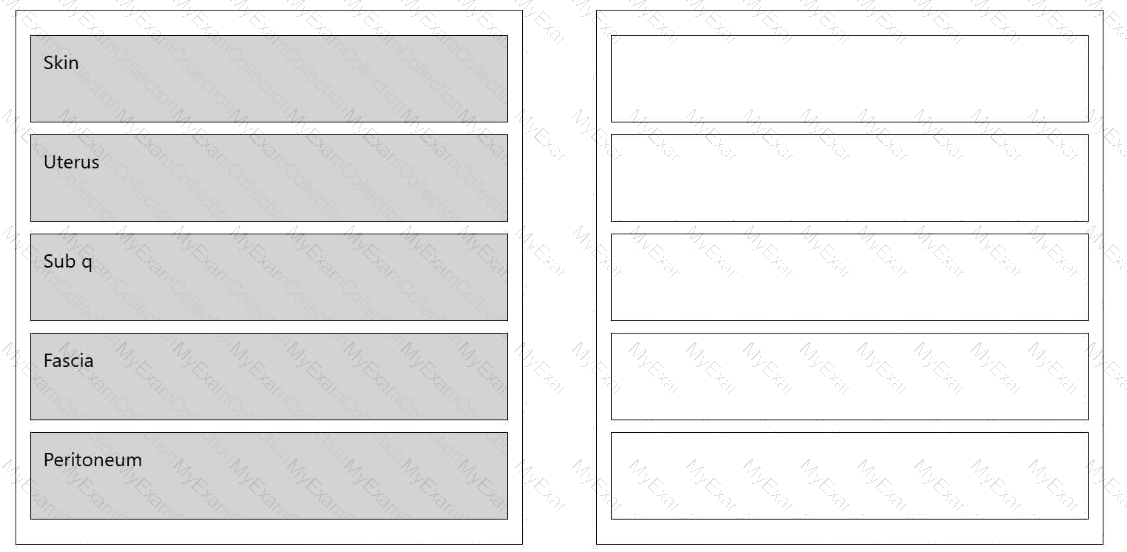
Question # 33
Place the following structures in the correct order of tissue closure for a cesarean section performed through a Pfannenstiel incision, proceeding from the innermost layer to the outermost layer of the abdominal cavity.
Available options: Uterus, Skin, Subcutaneous Tissue (Sub-Q), Peritoneum, Fascia.
Full Access
Answer:
Answer: 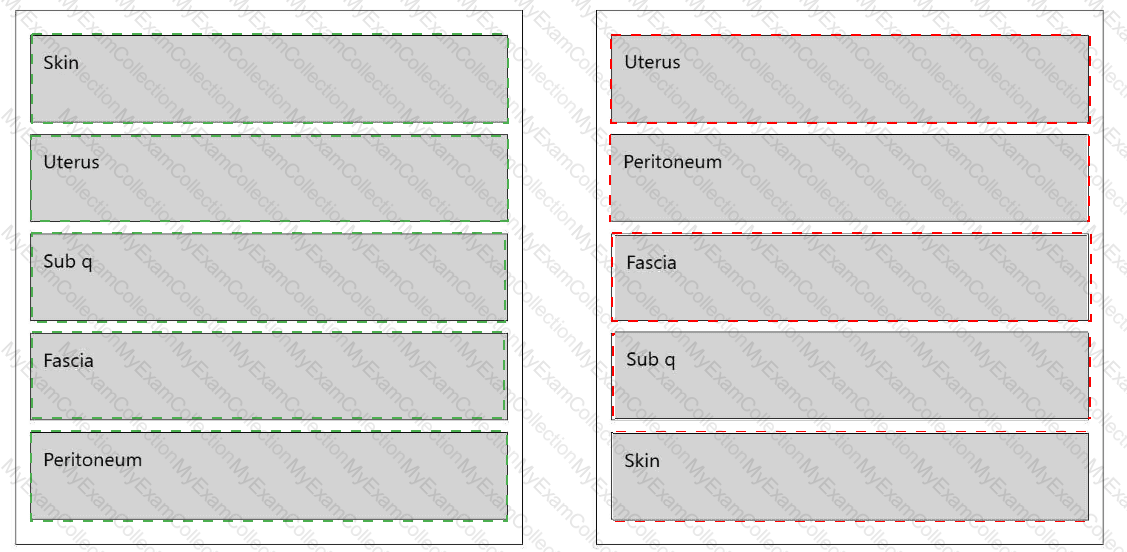
Explanation:
1
Uterus
2
Peritoneum
3
Fascia
4
Subcutaneous Tissue (Sub-Q)
5
Skin
During a cesarean section performed through a Pfannenstiel incision, surgical closure proceeds from the deepest operative structures toward the superficial abdominal wall. Understanding this anatomical sequence is essential for anticipating surgical instruments, suture materials, and tissue-handling requirements.
First, the uterus is repaired following delivery of the infant and placenta. The uterine incision is typically closed using absorbable sutures, with single-layer or double-layer closure selected according to clinical circumstances. Adequate hemostasis is essential to prevent postpartum hemorrhage.
Second, the peritoneum is the next anatomical layer in the examination sequence. When peritoneal closure is performed, it follows uterine repair. However, contemporary evidence-based guidelines recommend leaving the visceral and parietal peritoneum unsutured during routine cesarean delivery.
NICE+1
Third, the fascia is reapproximated using appropriate absorbable sutures. Fascial closure restores abdominal wall integrity and helps prevent wound dehiscence and incisional herniation.
Fourth, the subcutaneous tissue may be approximated to reduce dead space, particularly when subcutaneous fat thickness exceeds approximately 2 cm.
Finally, the skin is closed using an appropriate technique, commonly subcuticular sutures.
This inside-to-outside progression supports proper wound approximation, hemostasis, and postoperative wound integrity.
[References:, NCCT TS-C Detailed Test Plan — Intraoperative Care and Preparation; Surgical Anatomy; Closure Assistance., NICE NG192 — Caesarean Birth: Surgical Techniques and Closure., , , , , , , ]
Question # 34
What is the standard flash sterilization cycle for an instrument containing a lumen?
A.
4 minutes at 270°F
B.
4 minutes at 270°F and 1 minute of drying time
C.
3 minutes at 270°F and 1 minute of drying time
D.
3 minutes at 270°F
Full Access
Answer:
B
Explanation:
The intended examination answer is 4 minutes at 270°F (132°C), followed by a 1-minute drying or exhaust phase , corresponding to a commonly described prevacuum immediate-use steam sterilization cycle.
Instruments containing lumens present additional sterilization challenges because air may remain trapped within internal channels, preventing adequate steam penetration. Dynamic-air-removal sterilizers use vacuum-assisted conditioning to improve air removal and facilitate contact between saturated steam and internal surfaces.
The CDC ' s sterilization guidance identifies a four-minute exposure at 270°F for lumened instruments processed in an appropriate prevacuum cycle. STERIS additionally describes a one-minute drying phase during the exhaust portion of certain prevacuum immediate-use cycles.
CDC+1
Option A specifies the correct exposure time and temperature but omits the one-minute phase included in the examination ' s expected cycle description.
Options C and D are incorrect because three-minute cycles at 270°F are conventionally associated with appropriate nonporous, nonlumened instruments.
Important technical distinction: The one-minute drying phase is not a universal requirement for all sterilizers or lumened instruments. CDC guidance specifies 10 minutes at 270°F for comparable lumened loads in gravity-displacement sterilizers . Processing must follow the validated instructions for the instrument, sterilizer, and containment system.
Immediate-use steam sterilization should not replace routine sterilization merely for convenience.
[References:, NCCT TS-C Detailed Test Plan — Perioperative Care and Preparation; Sterilization Methods; Instrument Processing; Sterilization Monitoring., CDC — Table 8: Examples of Flash Steam Sterilization Parameters., STERIS — Immediate-Use Steam Sterilization Cycles and Monitoring., , , , , ]
Question # 35
A prevacuum steam sterilizer ' s printout indicates that the temperature, pressure, and exposure-time requirements were met during instrument sterilization. The Bowie-Dick test also showed satisfactory results. Four hours after the load was processed, the biological indicator reveals a positive result. Which action should the surgical technologist take?
A.
Treat the biological indicator as defective and use a different lot number of biological indicators during the next sterilization cycle.
B.
Treat the biological indicator as accurate and use the sterilized supplies from the load.
C.
Treat the biological indicator as defective and use the sterilized supplies from the load.
D.
Treat the biological indicator as accurate and recall the sterilized items from the load.
Full Access
Answer:
D
Explanation:
A positive biological indicator must be treated as a potentially significant sterilization failure. Option D represents the conservative examination response , requiring the implicated load to be identified and withheld from use while the sterilization failure is investigated.
Biological indicators contain resistant bacterial spores, commonly Geobacillus stearothermophilus for steam sterilization, that provide direct evidence of microbial inactivation.
Mechanical indicators confirm that specified time, temperature, and pressure values were achieved. The Bowie-Dick test evaluates air removal and steam penetration in prevacuum sterilizers. Neither measurement independently establishes successful microbial killing.
Options A and C are incorrect because a positive biological indicator must not be dismissed as defective without investigation.
Option B is inappropriate because the positive result requires immediate assessment before the implicated load can be considered acceptable.
The CDC recommends removing the sterilizer from service, notifying the appropriate personnel, investigating processing conditions, and repeating biological indicator testing.
CDC
Important distinction: CDC guidance does not automatically require recall of every nonimplantable item following a single positive steam biological indicator when no sterilizer or procedural defect is identified. Implantable devices require stricter precautions, and additional positive tests can necessitate broader recall and reprocessing.
[References:, NCCT TS-C Detailed Test Plan — Perioperative Care and Preparation; Sterilization Monitoring; Biological Indicators; Instrument Recall., CDC — Management of a Positive Biological Indicator in a Steam Sterilizer., CDC — Recommendations for Disinfection and Sterilization., Question validation: D is the safest examination selection but overstates the universal recall requirement. The appropriate recall scope depends on the findings of the sterilization failure investigation.]
Question # 36
During a surgical cataract extraction, the surgical technologist should anticipate assisting the surgeon by irrigating the cornea with:
A.
Balanced salt solution (BSS).
B.
Sterile water.
C.
Lidocaine.
D.
DuraTears.
Full Access
Answer:
A
Explanation:
Balanced salt solution (BSS) is an ophthalmic irrigation solution formulated to maintain an appropriate physiological environment during cataract extraction and other intraocular procedures.
Cataract extraction involves removing the opacified crystalline lens, commonly using phacoemulsification, followed by implantation of an intraocular lens. Throughout the procedure, the surgeon must protect delicate ocular structures, particularly the corneal endothelium.
BSS contains electrolytes, including sodium, potassium, calcium, and magnesium, in concentrations designed for ophthalmic compatibility. It is used to irrigate ocular tissues, remove surgical debris, and assist in maintaining suitable conditions during intraocular manipulation.
The FDA-approved prescribing information identifies BSS as an ophthalmic irrigating solution. BSS PLUS is also specifically indicated for intraocular procedures, including phacoemulsification and cataract extraction.
DailyMed+1
Option B is incorrect because sterile water is hypotonic and may damage delicate ocular cells through osmotic imbalance.
Option C is incorrect because lidocaine is a local anesthetic rather than an ophthalmic irrigation solution.
Option D is incorrect because DuraTears is an ocular lubricating preparation, not the standard solution for intraoperative corneal irrigation.
The surgical technologist must verify the ophthalmic solution, inspect container integrity, maintain sterile technique, and ensure compatibility with the planned procedure.
[References:, NCCT TS-C Detailed Test Plan — Intraoperative Care and Preparation; Ophthalmic Surgery; Selection of Procedure-Specific Irrigation Fluids., FDA DailyMed — BSS Sterile Irrigating Solution., FDA DailyMed — BSS PLUS Intraocular Irrigation.]
Question # 37
The surgical technologist is scheduled to scrub for a Dupuytren ' s contracture procedure. Which of the following is the standard bandage the surgical technologist should have ready for exsanguinating the extremity?
A.
Esmarch bandage
B.
Sterile Kerlix bandage
C.
Elastoplast bandage
D.
ACE bandage
Full Access
Answer:
A
Explanation:
The Esmarch bandage is an elastic compression bandage designed to exsanguinate an extremity before inflation of a pneumatic tourniquet. Exsanguination involves displacing venous blood from the operative extremity to establish a relatively bloodless surgical field.
During surgical treatment of Dupuytren ' s contracture, the surgeon may perform a fasciectomy to remove or release diseased palmar fascia responsible for progressive finger flexion deformity. Clear visualization is particularly important because the procedure involves delicate digital nerves, arteries, tendons, and fascial structures.
The Esmarch bandage is typically applied from the distal portion of the extremity toward the proximal tourniquet cuff. Once adequate exsanguination has been achieved, the pneumatic tourniquet is inflated to the prescribed pressure and the bandage is removed. The Association of Surgical Technologists identifies the Esmarch bandage as an established method of extremity exsanguination.
ast.org
Option B is incorrect because Kerlix is primarily used for wound dressings and bandage retention. Option C is incorrect because Elastoplast is an elastic adhesive bandage principally used for support and compression. Option D is incorrect because an ACE bandage provides general compression but is not the standard purpose-designed exsanguination device in this scenario.
Exsanguination must be avoided or modified in patients with certain vascular conditions, infections, or traumatic injuries.
[References:, NCCT TS-C Detailed Test Plan — Preoperative Care and Preparation; Patient Safety; Surgical Equipment; Orthopedic and Hand Surgery., AST — Guidelines for Best Practices for Safe Use of Pneumatic Tourniquets., The Esmarch Bandage in Hand Surgery: Clinical Utility and Associated Risks (2025).]
Question # 38
Which of the following are purposes of pressure dressings? (Select the three correct answers.)
A.
To eliminate dead space
B.
To prevent dehiscence of an abdominal wound
C.
To dress a wound around a drain
D.
To seal a colostomy bag
E.
To reduce the formation of hematomas
Full Access
Answer:
A, B, E
Explanation:
Pressure dressings provide external compression over selected surgical wounds to support tissue approximation, minimize fluid accumulation, and reduce postoperative bleeding complications.
Option A — Eliminate dead space: Controlled compression may bring adjacent tissue planes into closer contact, reducing potential spaces where blood or serous fluid can accumulate. Pressure dressings are particularly useful following extensive tissue dissection.
Option B — Prevent abdominal wound dehiscence: An appropriately selected supportive dressing can provide supplementary external support, reduce movement-related tension, and help protect the healing incision. However, a conventional pressure dressing does not reliably prevent fascial dehiscence, which depends primarily on secure surgical closure and patient-related factors.
Option E — Reduce hematoma formation: External compression may help reduce low-volume postoperative bleeding and limit the accumulation of blood within operative spaces.
Clinical wound-management literature supports the use of compressive dressings to reduce hematoma formation and dead space.
Clinical Gate+1
Option C is not a conventional primary indication for a pressure dressing. Drain sites are generally covered using appropriate drain sponges or other dressings that permit drainage without obstructing the device.
Option D is incorrect because colostomy appliances require an appropriate adhesive skin barrier and pouching system rather than a pressure dressing.
Excessive compression must be avoided because it can compromise perfusion and increase the risk of tissue injury.
[References: NCCT TS-C Detailed Test Plan — End of Procedure Tasks and Postoperative Care, Section 4A2: Prepare Dressing Materials; Essential Knowledge Base: Dressings and Bandages., , Question validation: A and E are clearly supported. B is the likely third examination answer but is clinically overstated. Pressure dressings should not be considered definitive prevention for abdominal fascial dehiscence., ]
Question # 39
After an adenotonsillectomy, while the patient is still waking up in the operating room, the surgical technologist is:
A.
Spraying instrument cleaner onto the dirty instruments.
B.
Waiting until the patient leaves to break down the sterile field.
C.
Disposing of the sharps book.
D.
Breaking down the sterile field.
Full Access
Answer:
B
Explanation:
Following an adenotonsillectomy (surgical removal of the adenoids and palatine tonsils), the surgical technologist must maintain the sterile field until the patient has been transported out of the operating room . This precaution ensures that sterile instruments and supplies remain immediately available if an emergency develops during emergence from general anesthesia.
Adenotonsillectomy carries particular postoperative risks, including oropharyngeal hemorrhage, airway obstruction, laryngospasm, aspiration, and respiratory compromise. During anesthetic emergence, coughing, agitation, or airway manipulation may precipitate complications requiring urgent surgical intervention. Maintaining the sterile back table, Mayo stand, and essential instruments allows the surgical team to respond without delays associated with establishing another sterile setup.
The Association of Surgical Technologists (AST), in its Guidelines for Breaking Down the Sterile Field , specifically recommends maintaining sterile readiness until the patient leaves the operating room. Its guidance identifies emergency airway intervention following tonsillectomy and adenoidectomy as a relevant clinical consideration.
ast.org+1
Option A is incorrect because instrument decontamination activities must not compromise an active sterile environment. Option C is incorrect because sharps must remain accounted for and be disposed of according to established safety and counting protocols. Option D is incorrect because premature dismantling eliminates immediate access to sterile instruments during potential emergencies.
Once the patient leaves the operating room, the surgical technologist can safely dismantle the sterile field, segregate contaminated instruments, and facilitate environmental turnover.
[References:, NCCT Tech in Surgery–Certified (TS-C): End of Procedure Tasks and Postoperative Care; Maintenance of Sterile Technique; Surgical Instrument Management; Patient Safety., Association of Surgical Technologists: Guidelines for Breaking Down the Sterile Field — Standard of Practice I., Association of Surgical Technologists: Position Statement on Maintaining the Sterile Back Table and Mayo Stand Until Patient Transfer., , , ]
Question # 40
Which of the following retractors requires someone to physically hold it?
A.
Gelpi
B.
Weitlaner
C.
Senn
D.
Spring
Full Access
Answer:
C
Explanation:
The Senn retractor is a handheld surgical instrument that requires continuous manual support to maintain tissue retraction. It is commonly used for superficial incisions and small operative fields, particularly during orthopedic, plastic, and general surgical procedures.
The instrument typically has two functional ends: a three-pronged rake and a small right-angled blade. The rake may have sharp or blunt tips, depending on the design, allowing the surgical assistant to retract skin, subcutaneous tissue, or superficial fascia.
Handheld retractors require the surgeon or surgical assistant to maintain the appropriate position and degree of tension throughout their use. The surgical technologist must recognize these instruments and anticipate the need for assistance with operative exposure.
Option A is incorrect because a Gelpi retractor uses a self-retaining ratchet mechanism to maintain tissue separation.
Option B is incorrect because the Weitlaner is also self-retaining and typically uses multiple prongs with a locking mechanism.
Option D is incorrect because spring retractors use spring tension to maintain retraction, depending on their design.
Unlike these self-retaining instruments, the Senn does not maintain its position independently.
The Egyptian Health Council ' s surgical instrumentation material distinguishes Senn retractors as handheld instruments and Gelpi and Weitlaner retractors as self-retaining devices.
Egyptian Health Council
[References:, NCCT TS-C Detailed Test Plan — Intraoperative Care and Preparation; Surgeon Support; Assessment of Retraction Requirements., Egyptian Health Council — Surgical Instruments: Handheld and Self-Retaining Retractors.]
Question # 41
The surgical technologist is setting up for a laparoscopic cholecystectomy and notices a small crack in the insulating coating on the shaft of the L-hook. What is the potential implication of this finding?
A.
The instrument is unsterile and will contaminate the procedure.
B.
The instrument could become stuck in the trocar.
C.
The instrument could burn the patient.
D.
The instrument could interfere with visualization.
Full Access
Answer:
C
Explanation:
A crack in the insulating coating of a laparoscopic L-hook electrosurgical electrode creates a significant risk of unintended electrical energy transfer and patient burns .
Laparoscopic monopolar electrosurgical instruments contain an electrically conductive central shaft surrounded by an insulating coating. This insulation confines current delivery to the exposed active electrode tip.
When the insulation is cracked or otherwise damaged, electrical energy may escape at an unintended location along the shaft. This phenomenon, called insulation failure, can cause thermal injury to adjacent tissue, including bowel, blood vessels, and other internal structures that may not be directly visible to the surgeon.
The Association of periOperative Registered Nurses (AORN) recommends inspecting electrosurgical electrodes for insulation failure before, during, and after procedures. Its updated surgical energy guidance also discusses active electrode monitoring as a protection against unintended energy transfer during laparoscopy.
Association of | AORN+1
Option A is incorrect because an insulation defect does not automatically indicate microbiological contamination.
Option B is incorrect because a small insulation crack does not necessarily obstruct trocar passage.
Option D is incorrect because impaired visualization is not the primary hazard associated with insulation failure.
The instrument must be removed from service and replaced with an intact, compatible electrode before use.
[References:, NCCT TS-C Detailed Test Plan — Intraoperative Care and Preparation; Electrosurgical Equipment; Instrument Inspection; Patient Safety., AORN — Electrosurgical Safety: Prevention of Insulation-Failure Burns., AORN — 2026 Guideline Update: Safe Use of Surgical Energy Devices.]
Question # 42
When exposing the abdominal cavity during a right hemicolectomy, which of the following should the surgical technologist anticipate the surgeon needing?
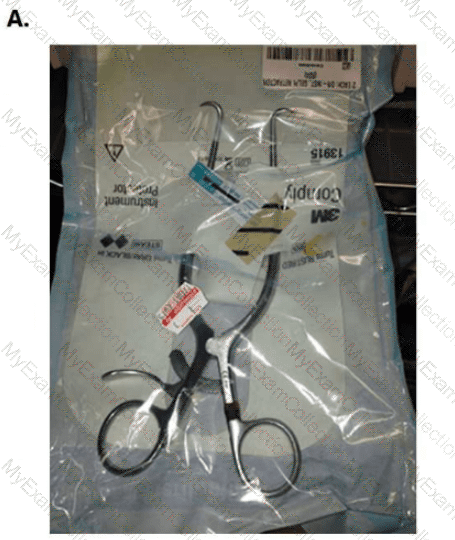
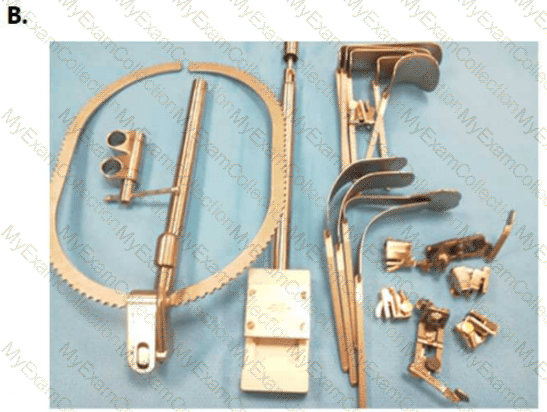
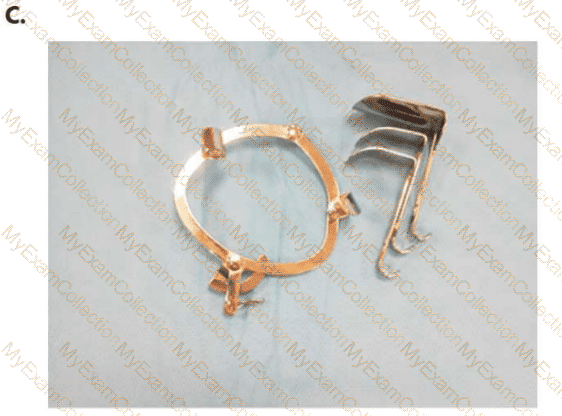
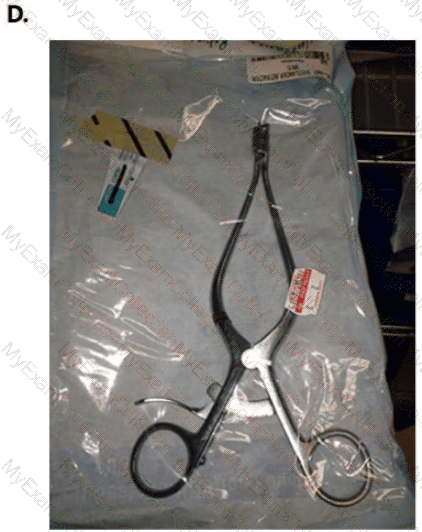
User attachment
A.
Instrument shown in Option A — Surgical clamp.
B.
Instrument shown in Option B — Bookwalter self-retaining retractor system.
C.
Instrument shown in Option C — O ' Sullivan–O ' Connor-type retractor system.
D.
Instrument shown in Option D — Surgical clamp.
Full Access
Answer:
B
Explanation:
The Bookwalter self-retaining retractor system , illustrated in Option B, is the most appropriate instrument for establishing and maintaining abdominal exposure during an open right hemicolectomy.
A right hemicolectomy involves removing the cecum, ascending colon, and potentially portions of the terminal ileum and transverse colon. Adequate visualization is essential for mobilization of the right colon, vascular ligation, bowel division, and intestinal anastomosis.
The Bookwalter system consists of an adjustable ring, table-mounted support, interchangeable retractor blades, and locking mechanisms. These components provide stable, hands-free retraction of the abdominal wall and surrounding tissues. The surgeon can adjust blade position and depth to obtain appropriate exposure throughout the operation. Surgical references specifically describe using the Bookwalter for open abdominal procedures, including right-sided colonic surgery.
StudFiles+1
Option A depicts a clamp rather than a comprehensive abdominal retraction system.
Option C depicts a smaller ring-style self-retaining retractor system, which may be used in abdominal or pelvic procedures, but is less characteristic of the extensive exposure required for this operation.
Option D depicts another clamp and does not provide the broad, sustained abdominal wall retraction required.
The surgical technologist must verify the retractor components, assemble the system correctly, and anticipate blade adjustments throughout the procedure.
[References:, NCCT TS-C Detailed Test Plan — Intraoperative Care and Preparation; Section 3B: Surgeon Support; Assessment of Retraction Requirements; Surgical Instrumentation., NCCT Tech in Surgery–Certified Detailed Test Plan., Right Hemicolectomy: Open Technique — Surgical Exposure., Bookwalter Retractor System — Instrument Components and Applications., Verification: Option B is the best selection based on the supplied images and the surgical procedure. The official NCCT test plan establishes the relevant instrumentation and retraction competencies but does not provide an answer key for this specific exhibit., , , ]
Question # 43
The circulating nurse is holding an empty specimen container to receive a specimen. What is the FIRST question the surgical technologist must ask the surgeon before releasing the specimen?
A.
" Can the specimen be passed off? "
B.
" Will there be more specimens? "
C.
" What is the name of the specimen? "
D.
" Does the specimen go in formalin? "
Full Access
Answer:
A
Explanation:
The surgical technologist must first obtain permission from the surgeon before transferring the specimen off the sterile field .
The surgeon may need to inspect the specimen, orient it anatomically, mark margins, identify specific tissue structures, or determine whether additional examination is required before release.
The Association of Surgical Technologists ' Standards of Practice for Handling and Care of Surgical Specimens , Standard III, Item 6, establishes the requirement to obtain surgeon authorization before transferring a specimen to the circulating nurse.
Standard_Handling_Care_Surgical_Specimens
Option B is incorrect because asking whether additional specimens will be collected does not establish that the current specimen is ready for transfer.
Option C is clinically important because accurate specimen identification is essential. The specimen name and anatomical site must be confirmed, but the question emphasizes authorization before release.
Option D is also important because the surgeon must specify whether a preservative is appropriate. Specimens intended for frozen-section analysis or certain microbiological investigations must not be placed in formalin.
Once permission has been obtained, the surgical technologist and circulating nurse must verify the specimen identity, anatomical location, laterality where applicable, and required preservation method.
The specimen must be transferred using appropriate aseptic technique, with accurate documentation and chain-of-custody procedures where necessary.
[References:, NCCT TS-C Detailed Test Plan — Intraoperative Care and Preparation, Section 3B8: Handle Specimens Appropriately., AST — Standards of Practice for Handling and Care of Surgical Specimens, Standard III, Item 6., AORN — Surgical Specimen Management and Verification.]
Question # 44
After an exploratory laparotomy, the wound is ready for closure. Arrange the following anatomical layers in their correct order of closure, proceeding from the innermost layer to the outermost layer.
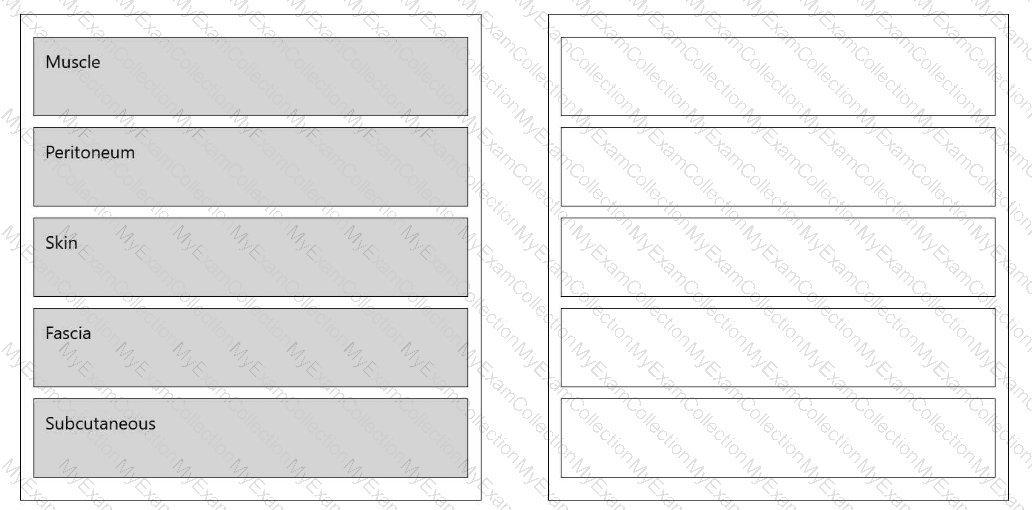
Full Access
Answer:
Answer: 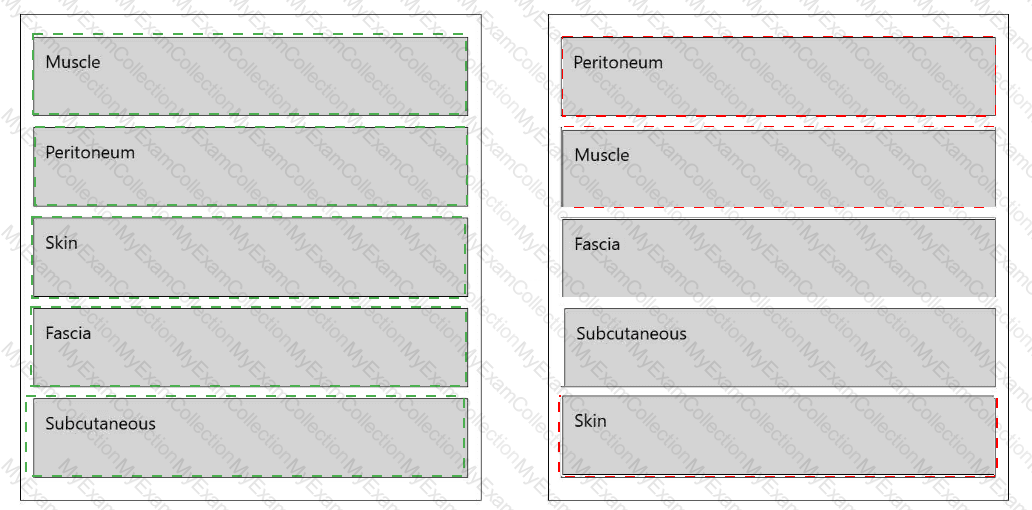
Explanation:
1
Peritoneum
2
Muscle
3
Fascia
4
Subcutaneous Tissue
5
Skin
Following an exploratory laparotomy, the anatomical sequence proceeds from the deepest abdominal structures toward the superficial tissues. Understanding this sequence enables the surgical technologist to anticipate appropriate sutures, needle holders, tissue forceps, and closure instruments.
First, the peritoneum forms the innermost lining of the abdominal cavity. When separate peritoneal closure is performed, absorbable sutures may be used to approximate this delicate membrane.
Second, the muscle layer is addressed. Where muscles have been divided, appropriate approximation may be required to restore anatomical continuity and abdominal wall function.
Third, the fascia is closed to restore the principal load-bearing strength of the abdominal wall. Proper fascial approximation is essential for reducing wound dehiscence and incisional hernia risk.
Fourth, the subcutaneous tissue may be approximated to minimize dead space and reduce postoperative fluid accumulation.
Finally, the skin is closed using sutures, staples, or another appropriate method.
The traditional anatomical progression is consistent with surgical technology teaching materials.
NCBI+1
Clinical distinction: Modern midline laparotomy closure does not routinely require separate suturing of every listed layer. Current guidelines generally favor continuous fascial closure without separate peritoneal closure, and the rectus muscles are commonly separated rather than divided.
PubMed Central (PMC)+1
[References:, NCCT Tech in Surgery–Certified (TS-C) — End of Procedure Tasks and Postoperative Care; Wound Closure; Surgical Anatomy; Suture Selection., Core Curriculum for Surgical Technology, 7th Edition — Abdominal Wound Closure., World Society of Emergency Surgery — Guidelines for Closure of Emergency Laparotomy (2023)., Verification: The five-step order is appropriate for the examination's simplified anatomical model. It should not be interpreted as a requirement to close all five layers separately during every exploratory laparotomy., , , , , , , ]
Question # 45
When performing a 10-minute gravity-displacement steam sterilization cycle, what is the appropriate temperature range?
A.
220–230°F
B.
270–275°F
C.
250–255°F
D.
290–300°F
Full Access
Answer:
B
Explanation:
The appropriate examination answer is 270–275°F , corresponding to the temperature range associated with high-temperature steam sterilization cycles.
The Centers for Disease Control and Prevention identifies a 10-minute exposure at 270°F (132°C) for specified immediate-use steam sterilization loads processed in gravity-displacement sterilizers, particularly mixed loads containing porous items or instruments with lumens.
CDC
Gravity-displacement sterilizers introduce saturated steam into the chamber, displacing cooler air through the drain. Effective sterilization requires adequate removal of air and direct contact between saturated steam and all instrument surfaces.
At the appropriate temperature, moist heat destroys microorganisms through protein denaturation and disruption of essential cellular processes.
Option A is incorrect because 220–230°F is below the temperature required for the specified 10-minute cycle.
Option C is incorrect because a temperature near 250°F requires a substantially longer exposure period for conventional gravity-displacement sterilization.
Option D is incorrect because 290–300°F exceeds the standard temperature range identified in the examination scenario.
Sterilization parameters depend on the sterilizer configuration, instrument design, packaging, and manufacturer ' s validated instructions. A 10-minute exposure should not be applied indiscriminately to every load.
Immediate-use sterilization also requires appropriate monitoring, aseptic transport, and compliance with institutional policies.
[References:, NCCT TS-C Detailed Test Plan — Perioperative Care and Preparation; Section 1B1, Sterilization Methods., CDC — Flash Sterilization and Immediate-Use Steam Sterilization., CDC — Sterilization Parameters, Table 8., Clinical qualification: The CDC example specifies 270°F for this particular cycle. The broader 270–275°F range is the closest listed answer, not a universal permitted operating range for every sterilizer.]
Question # 46
Which of the following pieces of equipment is necessary for a hysteroscopy?
A.
Laparoscope
B.
Insufflator
C.
Proctoscope
D.
Camera
Full Access
Answer:
D
Explanation:
A camera is an essential component of the conventional hysteroscopic visualization system used to examine the uterine cavity.
Hysteroscopy is an endoscopic procedure in which a hysteroscope is introduced through the vagina and cervical canal into the uterus. It permits direct visualization of the endometrium, uterine cavity, and tubal ostia.
A typical video hysteroscopy system consists of a hysteroscope, camera head, light source, monitor, and appropriate uterine distension equipment. The camera transmits images from the hysteroscope to the monitor, allowing the surgeon to identify intrauterine abnormalities and perform indicated procedures.
Published hysteroscopy instrumentation references identify the camera and visualization system as standard equipment for conventional operative hysteroscopy.
Clinical Gate
Option A is incorrect because a laparoscope is designed for visualization of the abdominal or pelvic cavity rather than the uterine cavity through the cervix.
Option B is not the best answer because contemporary hysteroscopy commonly uses liquid distension systems rather than conventional laparoscopic gas insufflation.
Option C is incorrect because a proctoscope is used to examine the rectum and lower gastrointestinal tract.
The surgical technologist should ensure appropriate camera connections, illumination, image clarity, distension equipment, and fluid monitoring before the procedure.
[References:, NCCT TS-C Detailed Test Plan — Intraoperative Care and Preparation; Surgical Instrumentation; Endoscopic Procedures; Gynecological Surgery., Clinical Gate — Hysteroscopy: Instruments and Equipment., Infrastructure and Instrumentation for Hysteroscopy., Clinical qualification: Integrated office hysteroscopes may incorporate imaging components within a compact device. The answer refers to the conventional video hysteroscopy setup.]
Question # 47
At the end of a surgical procedure, the surgical technologist should begin the turnover process by:
A.
Applying sterile dressings to the wound.
B.
Wiping down the furniture with a disinfectant.
C.
Preparing instruments for transport to decontamination.
D.
Counting sponges, needles, and instruments after skin closure.
Full Access
Answer:
C
Explanation:
Preparing contaminated surgical instruments for transport to the decontamination department is the most appropriate initial turnover activity among the listed options.
Following completion of the procedure and transfer of the patient from the operating room, the surgical technologist begins systematic breakdown of the sterile field. Proper instrument management is essential to prevent occupational injuries, preserve instrument functionality, and reduce microbial contamination.
The Association of Surgical Technologists (AST) emphasizes point-of-use instrument treatment as an integral component of sterile-field breakdown. Instruments should be inspected for damage, gross contamination should be removed, and instruments should be kept appropriately moist using a manufacturer-approved pretreatment method. Sharps must be segregated and disposed of safely following count reconciliation.
Option A is incorrect because application of sterile wound dressings occurs before patient transfer and formal room turnover.
Option B is incorrect because environmental disinfection follows the removal and appropriate segregation of contaminated instruments and supplies.
Option D is incorrect because required surgical counts must be completed at appropriate stages of closure, not deferred until after skin closure.
The AST additionally requires sterile instruments to remain available until the patient leaves the operating room. Formal breakdown should therefore not begin prematurely.
ast.org
[References:, NCCT TS-C Detailed Test Plan — End of Procedure Tasks and Postoperative Care, Section 4B2: Prepare Instruments for the Decontamination and Sterilization Process., AST — Guidelines for Best Practices for Breaking Down the Sterile Field, Guidelines I–II., Work Systems Analysis of Sterile Processing: Decontamination.]
Question # 48
Before passing a labeled surgical specimen in a sterile container to the circulating nurse, which of the following actions must the surgical technologist perform?
A.
Obtain permission from the circulating nurse.
B.
Place the container in a nonsterile area so that the circulating nurse has access to it.
C.
Verify and obtain permission from the surgeon.
D.
Place the sterile container in a clear, impervious bag.
Full Access
Answer:
C
Explanation:
Before transferring a surgical specimen from the sterile field, the surgical technologist must verify the specimen information and obtain the surgeon ' s authorization .
The surgeon is responsible for identifying the tissue removed and determining whether it requires routine pathological examination, frozen-section analysis, microbiological testing, or special handling.
The Association of Surgical Technologists ' specimen-handling standard explicitly requires the surgical technologist to obtain the surgeon ' s permission before releasing the specimen to the circulating nurse.
Standard_Handling_Care_Surgical_Specimens
Option A is incorrect because the circulator receives and documents the specimen but does not replace the surgeon ' s authorization.
Option B is incorrect because placing a sterile container directly onto a nonsterile surface compromises its exterior sterility and creates an avoidable contamination risk.
Option D is incorrect as the required action before handoff because the circulating nurse ordinarily places the properly secured specimen container into an appropriate transport bag after receiving it.
The specimen ' s identity, anatomical site, laterality where applicable, and special handling requirements must be confirmed using an appropriate verbal verification process.
The surgical technologist should handle the specimen carefully, avoid tissue crushing, and maintain the integrity of the container during transfer.
[References:, NCCT TS-C Detailed Test Plan — Intraoperative Care and Preparation, Section 3B8: Handle Specimens Appropriately., AST — Standards of Practice for Handling and Care of Surgical Specimens, Standards III and IV., AORN — Guideline in Focus: Specimen Management.]
Question # 49
The surgical technologist notices that the electrosurgical generator ' s power cord is frayed near the plug inserted into the electrical outlet. Meanwhile, the surgeon and surgical assistant are discussing the next steps of the procedure. What should the surgical technologist do?
A.
Interrupt the surgeon and surgical assistant to inform them about the frayed cord.
B.
Remove the machine after surgery is completed so that it can be repaired.
C.
Ask the circulating nurse to obtain a replacement electrosurgical generator.
D.
Ask the circulating nurse to contact Biomedical Engineering to come into the operating room.
Full Access
Answer:
A
Explanation:
The surgical technologist must immediately communicate the electrical safety hazard to the surgeon and surgical assistant , even if this requires interrupting their discussion.
A frayed power cord presents a significant risk of electrical shock, short circuit, equipment malfunction, or operating room fire. Because the electrosurgical generator is connected to an electrical outlet and may be activated during the procedure, the hazard requires immediate intervention.
AORN recommends removing damaged electrosurgical equipment from service immediately and reporting the defect through the appropriate equipment-maintenance process.
Recommended Practices for Electrosurgery+1
Option A is correct because immediate disclosure prevents the surgical team from inadvertently continuing to use potentially hazardous equipment.
Option B is incorrect because leaving the defective equipment in use until the procedure is completed exposes the patient and healthcare personnel to unnecessary electrical risks.
Option C describes an appropriate subsequent action. The circulating nurse should arrange for a functioning replacement generator once the hazard has been communicated.
Option D is also a subsequent corrective action, but waiting for Biomedical Engineering to inspect the device should not delay its removal from clinical use.
The damaged equipment should be taken out of service safely, labeled according to institutional policy, and referred for technical inspection.
The surgical technologist must demonstrate surgical conscience by identifying hazards and communicating concerns immediately, regardless of professional hierarchy.
[References:, NCCT TS-C Detailed Test Plan — Perioperative Care and Preparation; Section 1C1, Initiate Preventative or Corrective Actions in Hazardous Situations; Communication and Reporting., AORN — Preventing and Handling Medical Device Failures., AORN — Recommended Practices for Electrosurgery, Electrical Cord Safety., , , ]
Question # 50
Place the following options in the correct order for removal of surgical drapes after a laparotomy procedure.
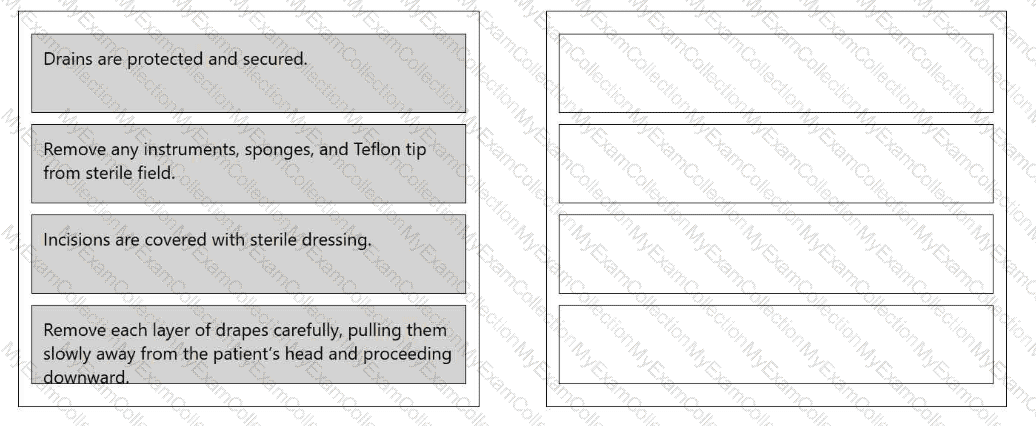
Full Access
Answer:
Answer: 
Explanation:
1
Remove any instruments, sponges, and Teflon tip from the sterile field.
2
Drains are protected and secured.
3
Incisions are covered with sterile dressings.
4
Remove each layer of drapes carefully, pulling them slowly away from the patient ' s head and proceeding downward.
Following a laparotomy, surgical drapes must be removed in a controlled sequence to prevent surgical site contamination, accidental drain displacement, and injuries from retained sharp instruments.
First, remove instruments, sponges, and the Teflon electrosurgical tip from the patient-associated sterile field. This prevents surgical equipment or sharps from becoming trapped within discarded drapes. The Association of Surgical Technologists recommends clearing instruments, sharps, and nondisposable items before applying the sterile dressing.
Second, protect and secure surgical drains. Drains must remain correctly positioned and secured to prevent accidental dislodgement during drape removal. Drain tubing should be identified and protected from traction or compression.
Third, cover the surgical incisions with sterile dressings. The surgical technologist assists in cleaning and drying the surrounding skin and applying the prescribed wound dressing. This protects the incision from contamination during subsequent handling.
Fourth, carefully remove the surgical drapes , working slowly away from the patient ' s head toward the lower body as described in the question. Drapes should be gathered and rolled inward to contain contaminated surfaces and prevent blood or body fluid splashing.
The fundamental safety principles are to clear hazardous items, protect drains and the wound, and remove drapes without disturbing the patient or spreading contamination.
ast.org+1
[References:, NCCT Tech in Surgery–Certified (TS-C) — End of Procedure Tasks and Postoperative Care; Surgical Draping; Wound Dressing; Drain Management; Aseptic Technique., Association of Surgical Technologists — Guidelines for Best Practices for Breaking Down the Sterile Field, Guideline I., NCBI Bookshelf — Wound Care and Surgical Drain Management., Verification distinction: The AST guideline explicitly establishes removal of instruments before dressing application and drape removal after dressing application. The relative ordering of drain securement and incision dressing is based on normal operative workflow rather than a separately mandated universal sequence., , , , ]
Question # 51
Which of the following is an example of a sentinel event?
A.
High traffic in the operating room during surgery.
B.
The electronic documentation system becomes unavailable during surgery.
C.
Fire on the surgical field.
D.
The surgical technologist hands the surgeon a local anesthetic instead of heparin solution.
Full Access
Answer:
C
Explanation:
A fire occurring on the surgical field is a sentinel event because it represents a serious, potentially preventable patient-safety incident that can cause burns, airway injuries, respiratory complications, and death.
Operating room fires involve three essential elements: an ignition source, a fuel source, and an oxidizer. Electrosurgical devices and lasers commonly provide ignition energy, while surgical drapes, sponges, and alcohol-based preparations may serve as fuel. Supplemental oxygen can substantially increase combustion risk.
The Joint Commission includes fires occurring during patient care within its sentinel event framework. Its 2025 policy recognizes fires and related hazardous thermal events caused by equipment used during direct patient care. The expanded reporting criteria scheduled for January 1, 2027, explicitly include qualifying fires regardless of patient harm.
digitalassets.jointcommission.org+1
Option A is incorrect because excessive operating room traffic is an infection prevention and environmental safety concern rather than an automatic sentinel event.
Option B is incorrect because temporary electronic documentation failure is an operational disruption unless it contributes to a qualifying serious safety event.
Option D represents a potentially serious medication error or near miss. Its classification depends on whether the medication was administered and the resulting patient harm.
The surgical technologist must understand fire prevention, participate in fire-risk assessment, and assist with immediate emergency procedures when necessary.
[References:, NCCT TS-C Detailed Test Plan — Perioperative Care and Preparation; Section 1C2, Emergency Preparedness; Section 1D4, Differentiating Reportable Incidents and Sentinel Events., The Joint Commission — Sentinel Event Alert 68: Surgical Fire Prevention., The Joint Commission — Sentinel Event Definitions and 2027 Updates., , , ]
Question # 52
At the completion of the surgical procedure, any unused portions of medication should always be:
A.
Discarded
B.
Verified
C.
Counted
D.
Saved
Full Access
Answer:
A
Explanation:
Unused portions of medications that have been opened, prepared, or transferred onto the sterile surgical field must be discarded appropriately at the completion of the procedure , unless a specific validated medication-handling protocol provides otherwise.
This practice reduces the risk of medication contamination, incorrect administration, cross-patient exposure, and inappropriate reuse. Medication remaining in an opened syringe, sterile basin, or other prepared container should not be retained for subsequent patients.
The surgical technologist must accurately communicate the amount of medication or solution used during the procedure to the circulating nurse. Medication disposal should follow institutional policies, hazardous pharmaceutical waste requirements, and applicable controlled-substance regulations.
Option B is incorrect because verification is necessary for medication identification and administration but does not replace appropriate disposal.
Option C is incorrect because controlled medications may require reconciliation and documentation, but counting alone does not fulfill the disposal requirement.
Option D is incorrect because opened or prepared medication remaining on the sterile field should not be saved for subsequent surgical procedures.
The Agency for Healthcare Research and Quality emphasizes appropriate disposal of partially used medications, documentation of waste, and additional safeguards for controlled substances.
PSNet
Clinical distinction: Unopened, uncontaminated medications with intact manufacturer packaging may be returned to secure inventory according to pharmacy policy. The requirement to discard applies to unused portions remaining from opened or prepared medications, not automatically to every unopened product.
Reference Topics: NCCT TS-C Detailed Test Plan — End of Procedure Tasks and Postoperative Care, Section 4A5: Report Total Amounts of Medications and Solutions Used; Perioperative Medication Safety; Pharmaceutical Waste Management.