Question # 4
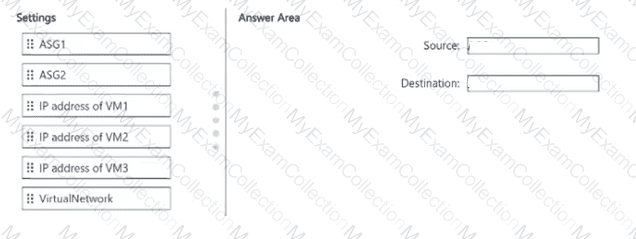
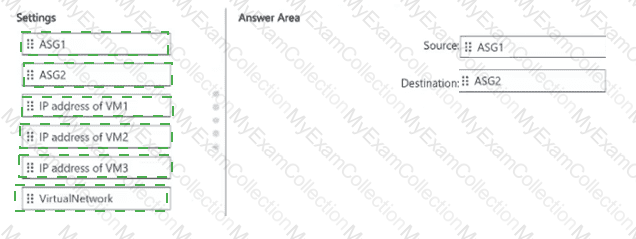
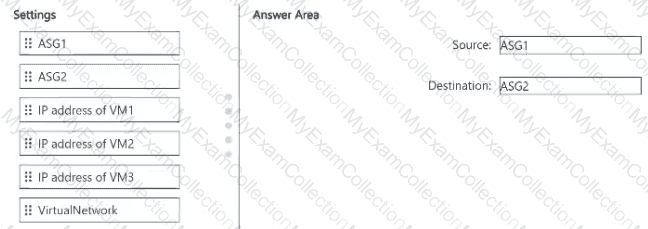
You have an Azure virtual network named VNet1 that contains three subnets named Subnet1, Subnet2 and Subnet3. A single network security group (NSG) named NSG1 is associated with all the subnets. You have the following virtual machines:
•VM1 on Subnet1
•VM2 on Subnet2
VM3 on Subnet3
You create two application security groups named ASG1 and ASG2. VM2 is a member of ASG1, and VM3 is a member of ASG2.
You need to ensure that only VM2 can connect to VM3. The solution must continue to work if the private IP address of VM2 changes.
How should you configure the inbound rule on NSG1 ? To answer, drag the settings to the correct configurations. Each setting may be used once, more than once, or not at all. You may need to drag the split bar between panes or scroll to view content.
NOTE: Each correct selection is worth one point.
Question # 5
You use Microsoft Security Copilot.
Users are assigned either the Security Copilot Contributor role or the Security Copilot Owner role.
A contributor enables a custom plugin that is NOT approved, and some Security Copilot features in embedded experiences no longer function.
You need to ensure that plugins affecting all users can only be added by owners.
What should you do in the Plugin settings?
Question # 6
You have a Microsoft Sentinel workspace named Workspace1
You have 100 on-premises servers that run Linux and have the Azure Monitor Agent installed.
You need to collect Syslog events from the Linux servers. The solution must meet the following requirements:
•Ensure that filtering occurs before data is written to Workspace1
•Reduce ingestion costs by excluding low value Syslog messages.
What should you include in the solution?
Question # 7
You have a management group named MG1 that contains two subscriptions named Sub1 and Sub2
Sub1 contains a resource group named RG-Exception and a resource group named RG1 that hosts Microsoft Foundry resources.
You need to assign an Azure policy to force new Foundry deployments in MG1 to use private endpoints. The solution must NOT restrict deployments in RG-Exception.
How should you configure the policy?
Question # 8
You have a Microsoft Entra tenant that uses Privileged Identity Management (PIM).
You need to modify the AI Administrator role settings to meet the following requirements:
•Elevated access must be evaluated by another administrator before it is granted
•Privileged access must be removed automatically after a fixed period.
Which two settings should you configure? Each correct answer presents part of the solution.
NOTE: Each correct selection is worth one point.
Question # 9
You have a Microsoft 365 tenant that uses Microsoft Security Copilot and Microsoft Defender XDR.
Access to Microsoft Defender XDR is managed by using Microsoft entra global roles.
The Phishing triage Agent is available in Microsoft Defender. The required agent prerequisites and approvals are complete
Two users will perform the following tasks:
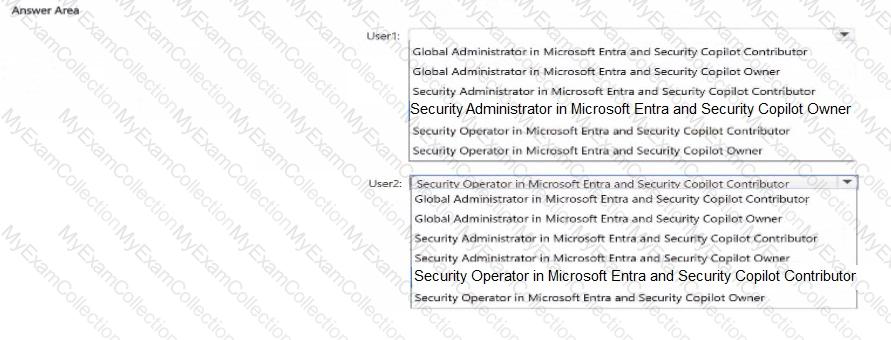
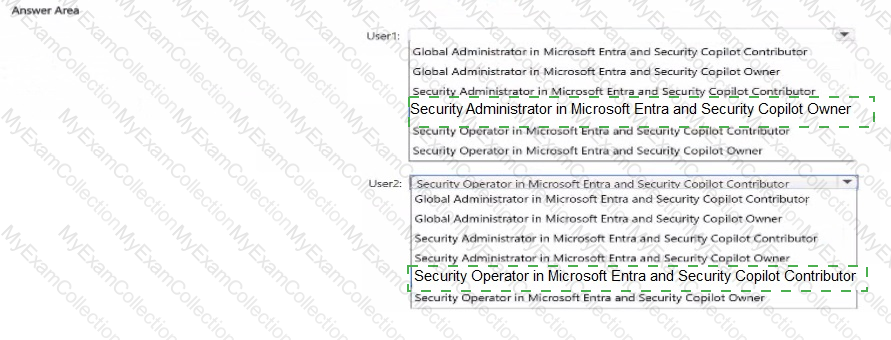
• User1 will enable and manage the Phishing Triage Agent settings.
• User2 will use Security Copilot in Microsoft Defender XDR to manage phishing incidents identified by the agent.
You need to assign the least-privileged built in Microsoft Entra role and Security Copilot role combination to each us Which roles should you assign to each user? To answer, select the appropriate options in the answer area.
Question # 10
You have an Azure subscription named Sub1 that contains a resource group named RG1.
RG1 contains a virtual network named VNet1 and a storage account named storage1. Several engineers are assigned the Owner role for Sub1.
You need to prevent updates to and deletions from VNet1. The solution must ensure that engineers can continue updating other resources in RG1.
Which lock should you apply?
Question # 11
You have an Azure environment.
You need to identity any Azure configurations and workloads that are non-compliant with ISO 27001:2013 standards. What should you use?
Question # 12
You have an Azure SQL Database logical server named Server1 that contains a database named DB1.
You need to configure authentication for Server1 to meet the following requirements;
•SQL authentication cannot be used for any databases on Server1.
•The solution must be enforced centrally at the server level.
What should you do?
Question # 13
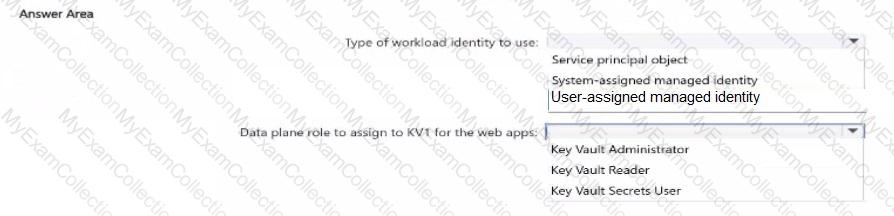
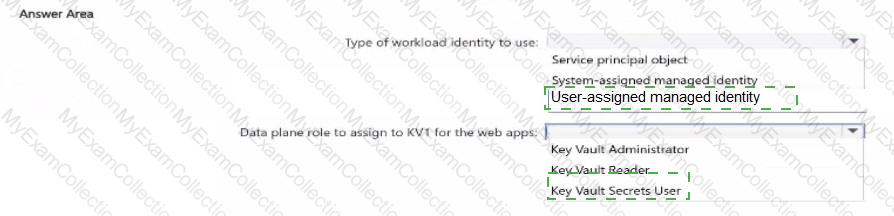
You have an Azure key vault named KV1 that uses rale based access control (RBAC) for data plane authorization.
You have multiple Azure App Service web apps that retrieve a SQL connection string stored as a secret in KV1.
You need to ensure that the web apps can access KV1. the solution must minimize the number of required identities and follow the principle of least privilege.
What should you do? To answer, select the appropriate options in the answer area.
NOTE: Each correct selection is worth one point.
Question # 14
You have an Azure Subscription that contains the Azure App Service web apps shown in the following table.
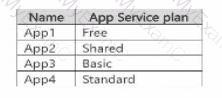
You purchase custom SSL certificates from a trusted third-party authority. To which apps can you assign the custom SSL certificates?
Question # 15
You have a Microsoft Copilot Studio agent.
A Microsoft Power Platform administrator configures external threat detection for the agent by using a Microsoft Entra application.
You need to ensure that real-time protection is enabled during agent runtime.
What should you do in the Microsoft Defender portal?
Question # 16
You have a virtual network named VNet1 that contains a subnet named Subnet1. Azure App Service is integrated with VNet1. You have an Azure SQL Database logical server named Server1 that contains a database named DB1. Server1 is accessible only by using a public IP address.
You need to ensure that Server1 does NOT use a public IP address and Azure App Service can still access Server1.
What should you create?
Question # 17
You have an Azure subscription.
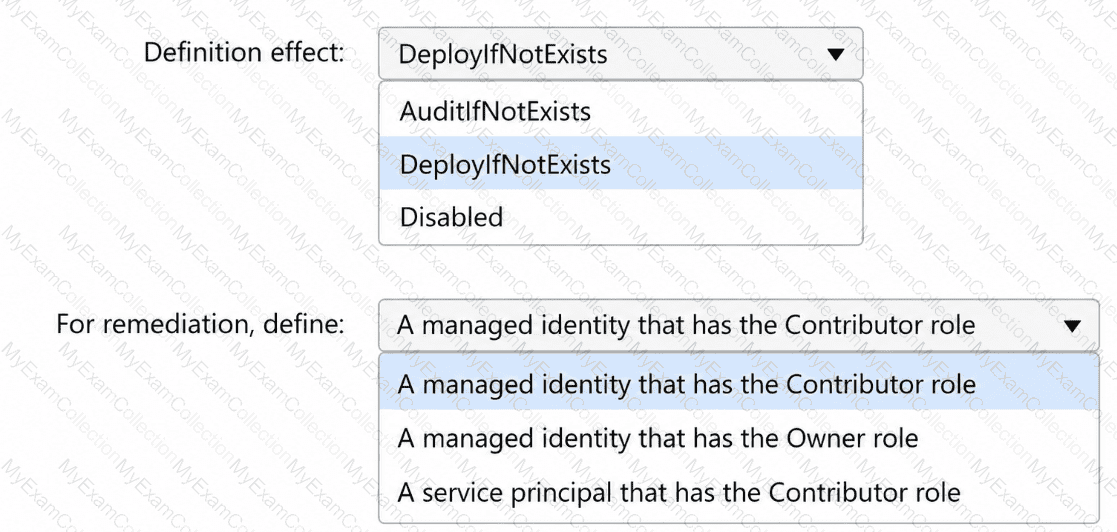
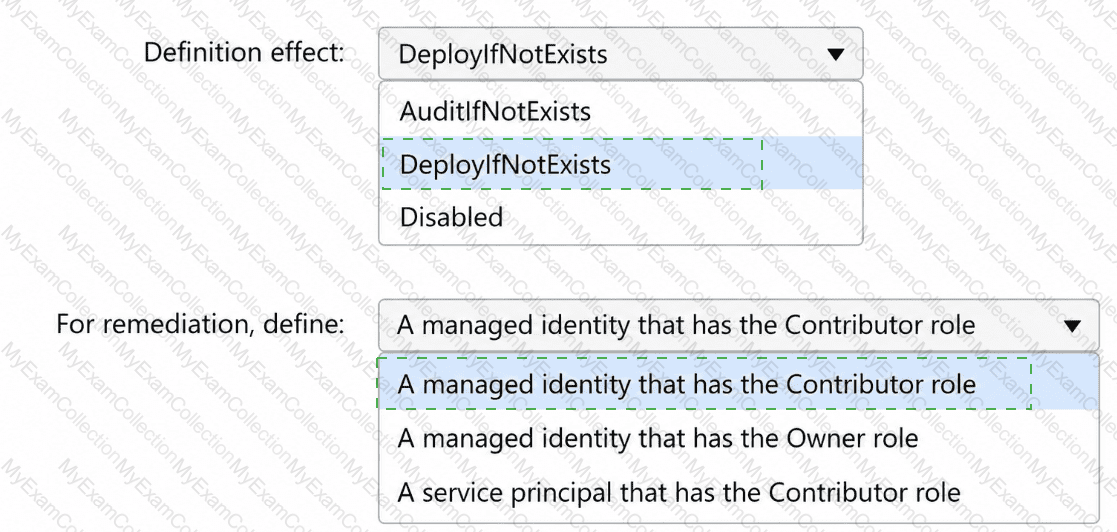
You need to create and deploy an Azure policy that meets the following requirements:
•When a new virtual machine is deployed, automatically install a custom security extension.
•Trigger an autogenerated remediation task for non-compliant virtual machines to install the extension.
What should you include in the policy? To answer, select the appropriate options in the answer area.
NOTE: Each correct selection is worth one point.

Question # 18
You have 15 Azure virtual machines in a resource group named RG1.
All the virtual machines run identical applications.
You need to prevent unauthorized applications and malware from funning on the virtual machines. Authorized applications must be able to run on the virtual machines.
What should you do?
Question # 19
You have a Microsoft Sentinel workspace named Workspace1.
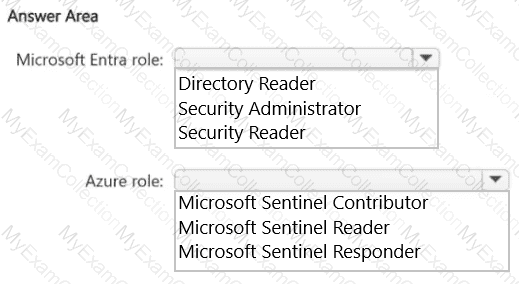
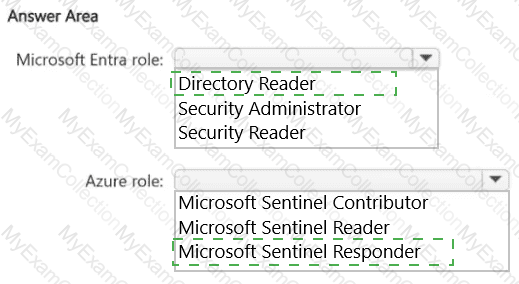
You hire a security consultant. You provide the consultant with a guest account named User1 in your Microsoft Entra tenant.
You need to enable User1 to assign incidents in Workspace1.
Which roles should you assign to User1? To answer, select the appropriate options in the answer area.
NOTE: Each correct selection is worth one point.
Question # 20
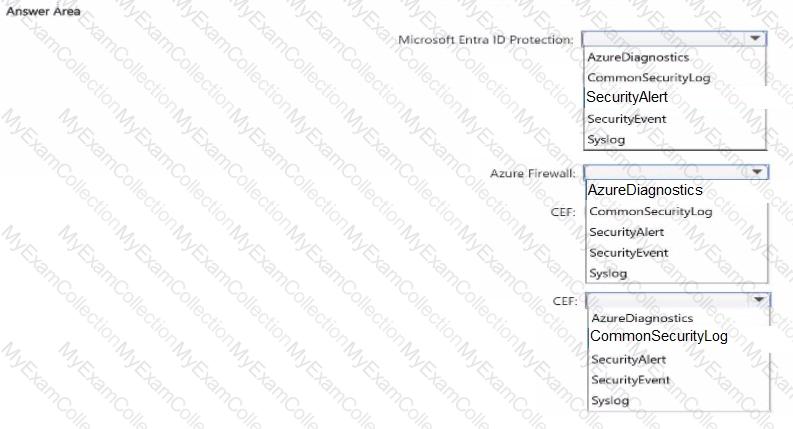
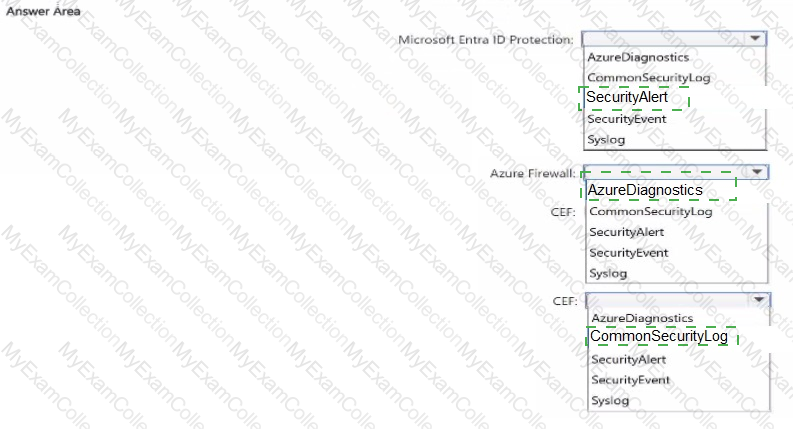
You have a Microsoft Sentinel workspace that has the following data connectors:
• Microsoft Entra ID Protection
• Azure Firewall
• Common Event Formal (CEF)
You need to ensure that data is being ingested from each connector.
From the Logs query window, which table should you query for each connector? To answer, select the appropriate options in the answer area.
Question # 21
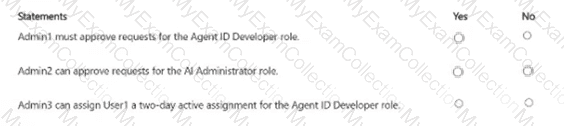
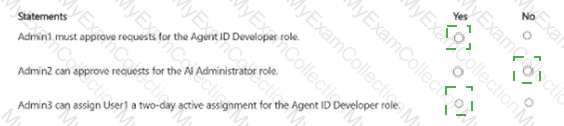
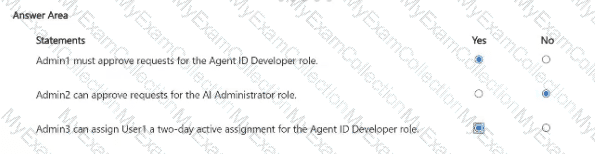
For each of the following statements, select Yes if the statement is true Otherwise, select No.
Question # 22
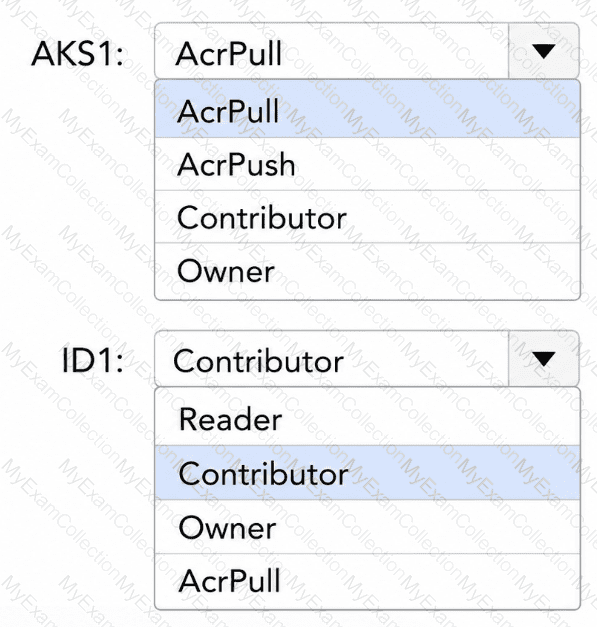
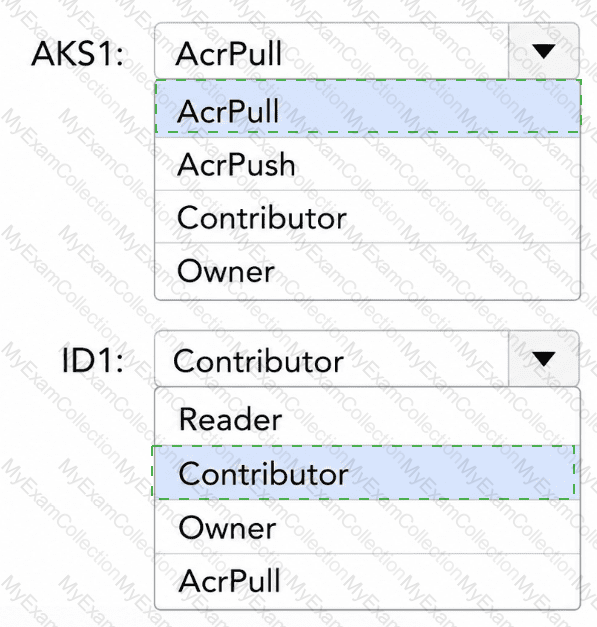
You need to configure the AKS1 and ID 1 managed identities to meet the technical requirements. The solution must follow the principle of least privilege.
Which role should you assign to each identity? To answer, select the appropriate options in the answer area.
NOTE: Each correct selection is worth one point.

Question # 23
Note: This section contains one or more sets of questions with the same scenario and problem. Each question presents a unique solution to the problem. You must determine whether the solution meets the stated goals. More than one solution in the set might solve the problem. It is also possible that none of the solutions in the set solve the problem.
After you answer a question in this section, you will NOT be able to return. As a result, these questions do not appear on the Review Screen.
You have a Microsoft Sentinel workspace
You have a multi-tier Security Operations Center (SOC) team.
You need to ensure that all new security incidents are assigned immediately to the Tier 1 analysts group and flagged for triage.
Solution: You create an automation rule.
Does this meet the goal?
Question # 24
For which storage accounts can you implement the planned changes for storage?
Question # 25
Note: This section contains one or more sets of questions with the same scenario and problem. Each question presents a unique solution to the problem. You must determine whether the solution meets the stated goals. More than one solution in the set might solve the problem. It is also possible that none of the solutions in the set solve the problem.
After you answer a question in this section, you will NOT be able to return. As a result, these questions do not appear on the Review Screen.
You have an Azure subscription that contains two virtual machines named VM1 and VM2. Each virtual machine has system-assigned managed identity enabled.
You have an Azure Storage account named storage. Public access from all networks is enabled for storage1.
You need to ensure that VM1 and VM2 can access storage1.
Solution: You create a private endpoint on storage1.
Does this meet the goal?
Question # 26
You need to implement the planned change for SQLdb1
Which two actions should you perform? Each correct answer presents part of the solution.
NOTE: Each correct selection is worth one point
Question # 27
You need to implement the planned change for storage2 The solution must meet the technical requirements for storage encryption.
What should you do?
Question # 28
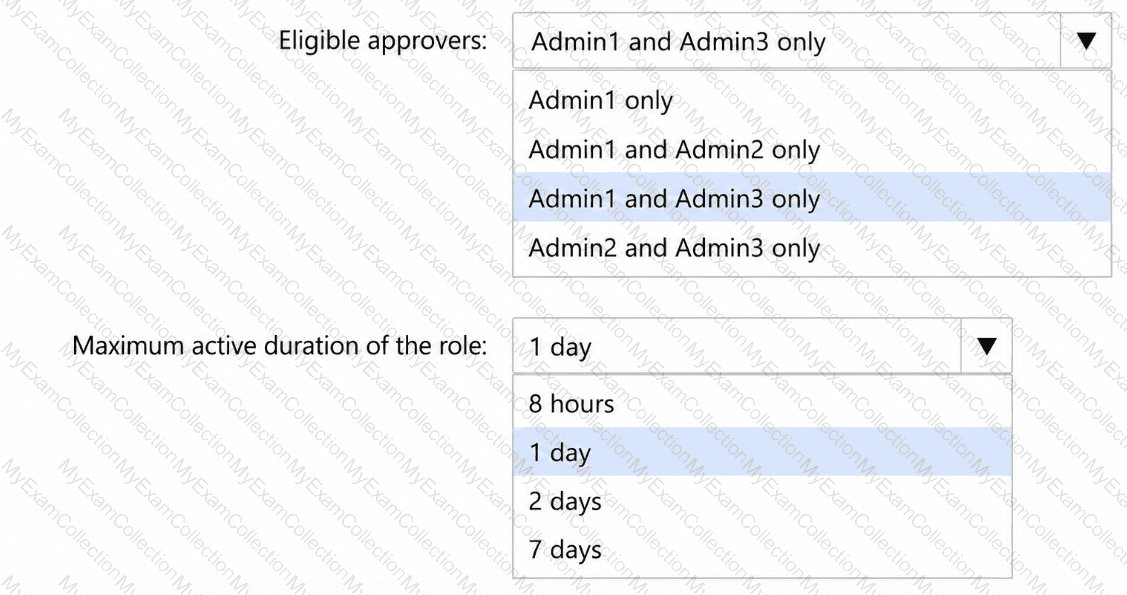
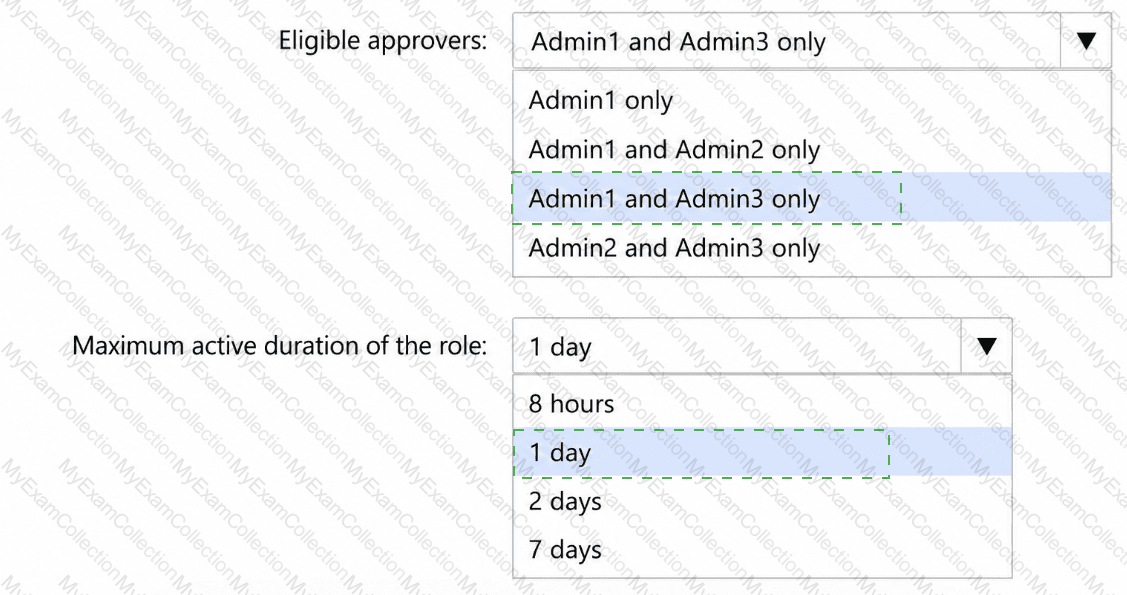
User1 has requested to use the AI Administrator role.
Which approvers can approve the request, and how long will User1 be an AI administrator after the role is approved? To answer, select the appropriate options in the answer area.
NOTE: Each correct selection is worth one point.

Question # 29
You need to protect the applications hosted on AKS1. The solution must meet the technical requirements.
Which Defender for Cloud plan should you enable?
Question # 30
Note. This section contains one or more sets of questions with the same scenario and problem. Each question presents a unique solution to the problem You must determine whether the solution meets the stated goals. More than one solution in the set might solve the problem. It is also possible that none of the solutions in the set solve the problem
After you answer a question in this section, you will NOT be able to return. As a result these questions do not appear on the Review Screen.
You have a Microsoft Sentinel workspace
You have a multi-tier Security Operations Center (SOC) team.
You need to ensure that all new security incidents are assigned immediately to the Tier 1 analysts group and flagged for triage.
Solution You create a hunting query.
Does this meet the goal’
Question # 31
You need to implement the function apps to meet the technical requirements.
Which apps should you include in the implementation?
Question # 32
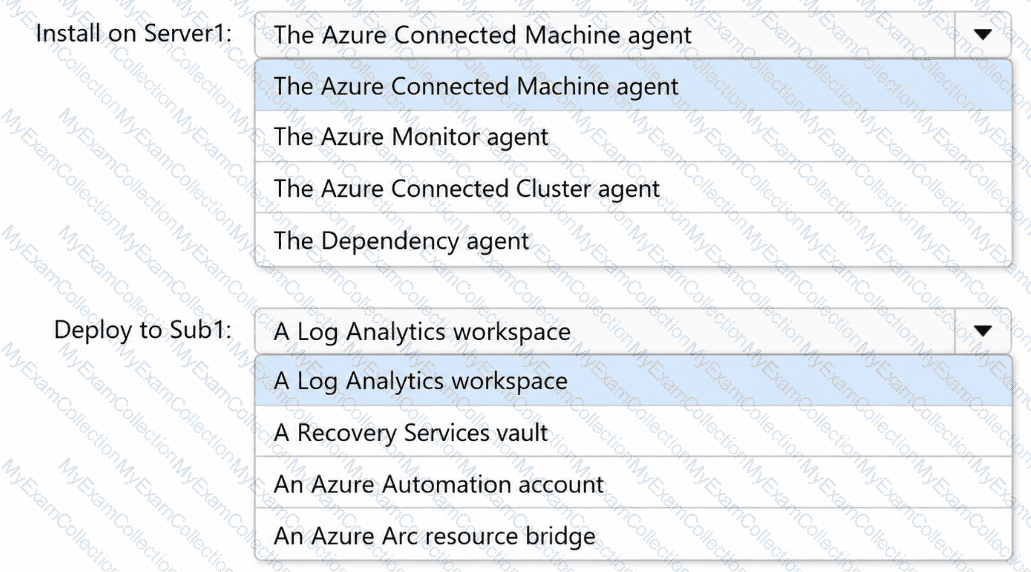
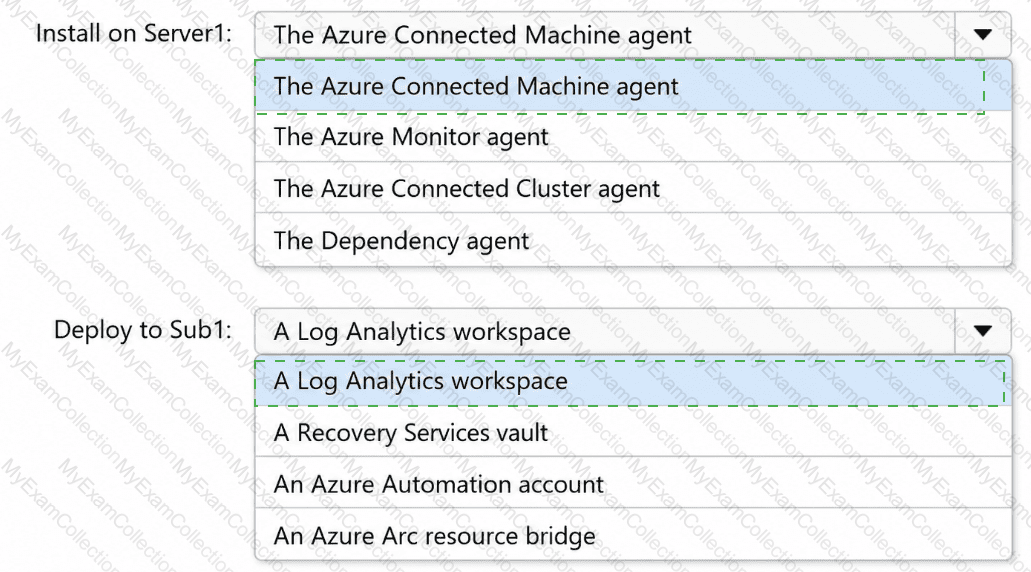
You need to configure Server1 to meet the technical requirements.
What should you do? To answer, select the appropriate options in the answer area.
NOTE: Each correct selection is worth one point.

Question # 33
You need to delegate a user to implement the planned change for Defender for Cloud. The solution must follow the principle of least privilege.
Which user should you choose?
Question # 34
Note: This section contains one or more sets of questions with the same scenario and problem. Each question presents a unique solution to the problem. You must determine whether the solution meets the stated goals. More than one solution in the set might solve the problem. It is also possible that none of the solutions in the set solve the problem.
After you answer a question in this section, you will NOT be able to return. As a result, these questions do not appear on the Review Screen.
You have an Azure subscription that contains two virtual machines named VM1 and VM2. Each virtual machine has system-assigned managed identity enabled.
You have an Azure Storage account named storage1. Public access from all networks is enabled for storage1.
You need to ensure that VM1 and VM2 can access storage1.
Solution: You add each virtual machine to a role on storage1.
Does this meet the goal?
Question # 35
You need to configure Microsoft Sentinel to meet the technical requirements.
To what should you set Analytics retention for DnsEvents?
Question # 36
You need to implement the planned change for the AKS1 integration.
What should you configure for AKS1?
Question # 37
Note: This section contains one or more sets of questions with the same scenario and problem. Each question presents a unique solution to the problem. You must determine whether the solution meets the stated goals. More than one solution in the set might solve the problem. It is also possible that none of the solutions in the set solve the problem.
After you answer a question in this section, you will NOT be able to return. As a result, these questions do not appear on the Review Screen.
You have a Microsoft Sentinel workspace
You have a multi-tier Security Operations Center (SOC) team.
You need to ensure that all new security incidents are assigned immediately to the Tier 1 analysts group and flagged for triage.
Solution: You create a playbook
Does this meet the goal?
Question # 38
Note: This section contains one or more sets of questions with the same scenario and problem. Each question presents a unique solution to the problem. You must determine whether the solution meets the stated goals. More than one solution in the set might solve the problem. It is also possible that none of the solutions in the set solve the problem.
After you answer a question in this section, you will NOT be able to return. As a result, these questions do not appear on the Review Screen.
You have a Microsoft Sentinel workspace
You have a multi-tier Security Operations Center (SOC) team.
You need to ensure that all new security incidents are assigned immediately to the Tier 1 analysts group and flagged for triage.
Solution: You create an analytics rule.
Does this meet the goal?
Question # 39
Note: This section contains one or more sets of questions with the same scenario and problem. Each question presents a unique solution to the problem. You must determine whether the solution meets the stated goals. More than one solution in the set might solve the problem. It is also possible that none of the solutions in the set solve the problem.
After you answer a question in this section, you will NOT be able to return. As a result, these questions do not appear on the Review Screen.
You have an Azure subscription that contains two virtual machines named VM1 and VM2. Each virtual machine has system-assigned managed identity enabled.
You have an Azure Storage account named storage1. Public access from all networks is enabled for storage1.
You need to ensure that VM1 and VM2 can access storage1.
Solution: You add each virtual machine to a security group, and then add the security group to a role on storage1.
Does this meet the goal?
Question # 40
Note: This section contains one or more sets of questions with the same scenario and problem. Each question presents a unique solution to the problem. You must determine whether the solution meets the stated goals. More than one solution in the set might solve the problem. It is also possible that none of the solutions in the set solve the problem.
After you answer a question in this section, you will NOT be able to return. As a result, these questions do not appear on the Review Screen.
You have an Azure subscription that contains two virtual machines named VM1 and VM2. Each virtual machine has system-assigned managed identity enabled.
You have an Azure Storage account named storage1. Public access from all networks is enabled for storage1.
You need to ensure that VM1 and VM2 can access storage1.
Solution: You create a user-assigned managed identity, assign the identity to each virtual machine, and then add each managed identity to a role on storage1.
Does this meet the goal?