Question # 4
You are undertaking the retrospective analysis of a laboratory-confirmed influenza A virus outbreak that occurred in a long-term care facility last year. Among the 163 residents in the facility during the outbreak, 101 residents had new-onset fever, cough, myalgias, and congestion. Of these, 37 residents were transferred to acute care. Of these, 17 residents died. Which one of the following is the best estimate of the attack rate in residents at the facility?
Question # 5
A 42-year-old woman is admitted to the Intensive Care Unit with a massive pulmonary embolism. Her condition is stabilized with intubation, hydration, inotropic support, and intravenous administration of heparin. Her partner provides you with a list of her medications. A combination oral contraceptive pill was recently prescribed. She smokes tobacco cigarettes, and her BMI is 36. Which one of the following is the best next step?
Question # 6
While covering for a colleague away on holidays, you receive the following laboratory results for one of her patients, a 24-year-old woman:
White blood cell count: 10 × 10â¹/L (4–10)
Hemoglobin: 80 g/L (123–157)
Mean corpuscular volume: 76 fL (80–100)
Platelet count: 150 × 10â¹/L (130–400)
You have arranged a follow-up appointment for the patient with your colleague. Which one of the following is the most likely diagnosis?
Question # 7
You are treating a 78-year-old man for recent onset of diarrhea, tenesmus, and minor bleeding when he wipes. He has a history of prostate cancer that was treated by radiotherapy. Rectal examination findings are normal. Colonoscopy reveals a pale rectum with ulcerations and areas of mucosal hemorrhage. Which one of the following is the most likely explanation for this clinical presentation?
Question # 8
A 40-year-old woman presents with a 3-month history of discharge from her right nipple. The discharge was initially milky white, but over the last 2 weeks, the patient has noted blood stains on her bra. There is mild discomfort in the same breast around the time of menses periods. On physical examination, the upper outer quadrant of the breast is tender, but there are no palpable lumps. You are able to express fluid from the nipple which is in fact blood-tinged. Which one of the following is the most likely diagnosis?
Question # 9
A 42-year-old woman presents to the emergency department with a 24-hour history of severe pain in her right eye. On examination, you notice a right conjunctival injection that is worst adjacent to the iris. Direct and consensual responses to light are intact but sluggish, with severe photophobia in the right pupil is slightly smaller than the left. The patient’s visual acuity is 20/20 on the left and 20/40 on the right. Visual field testing results are normal. Intraocular pressure findings are normal. Slit-lamp examination findings of the cornea are normal, and there are no cells in the anterior chamber. You are unable to visualize her fundus. Which one of the following is the most likely diagnosis?
Question # 10
A 37-year-old woman presents to your clinic with frequent palpitations. She has no other symptoms and is quite active. Physical examination and resting electrocardiogram findings are normal. Which one of the following is the best next step?
Question # 11
A 23-year-old woman with borderline personality disorder is brought to the Emergency Department having ingested non-lethal substances after her boyfriend broke up with her. The staff tells you that she has consulted 8 times under similar circumstances in the past 3 years. Which one of the following pieces of information would be useful to provide to the staff?
Question # 12
A 45-year-old woman presents to the emergency department after being involved in a motor vehicle collision. She reports severe right hip pain. On examination, the right hip is flexed and adducted. A radiograph shows a posterior dislocation. Which one of the following is the most appropriate management?
Question # 13
During an office visit, your 14-year-old patient requests a prescription for oral contraceptives. The province where you are working does not have a statutory age of consent. Which one of the following is the best next step?
Question # 14
A 39-year-old man presents to your clinic 4 months after a motor vehicle collision. He is trying to return to work but is having a difficult time because his job requires him to drive. He used to love his job, but he is worried about going back because every time he gets into a car, he is filled with dread, gets dizzy, and feels faint. He has regular nightmares about the incident. Which one of the following is the most likely diagnosis?
Question # 15
A mumps outbreak is occurring in your community, with higher attack rates among post-secondary students. Which one of the following is the most effective intervention?
Question # 16
A 46-year-old woman with a palpable breast lump underwent diagnostic mammography that revealed a suspicious mass in her right breast. The radiologist recommended a breast biopsy. The referring physician did not see the mammogram report or the recommendation for biopsy. One year later, invasive breast cancer is diagnosed in the patient. Which one of the following is most likely to prevent this issue from happening again?
Question # 17
A 91-year-old man comes to the Emergency Department reporting blood in his stools, which has now resolved. He is able to give a history and mentions that this also happened 2 years ago. At that time, a colonoscopy was done and revealed diverticular disease as the cause. Which one of the following is the best next step?
Question # 18
A 3.5-year-old girl has developed a stutter in the last 3 months. She repeats whole words several times before finishing a sentence. Her paternal uncle had a severe stuttering issue as a child. She has reached the developmental milestones for her age. Her new sibling was born 4 months ago. Which one of the following is the best next step?
Question # 19
A same-sex couple asks to join a family physician’s practice. The physician tells them that she does not treat same-sex couples and will refer them to a physician with more clinical experience with same-sex couples. Which one of the following best describes the physician’s obligation under the Canadian Charter of Rights and Freedoms?
Question # 20
A 34-year-old man with trisomy 21 is brought to the Emergency Department because of a painful, red great toe. He is accompanied by an older woman who begins giving you the history as you enter the room. The patient is sitting on the examination table with the foot exposed, but he does not speak. Which one of the following is the best next step?
Question # 21
A 45-year-old man presents to the office and reports difficulty understanding conversations that happen in a noisy environment. Ear examination findings are normal. You request audiography, from which results show bilateral high-frequency sensorineural hearing loss with a notch at 4000 Hz. Which one of the following is the most likely cause of this patient’s hearing loss?
Question # 22
A 34-year-old woman, gravida 3, para 2, aborta 0, presents at 38 weeks ' gestation. She is in early labor with ruptured membranes. Her previous pregnancy was complicated by fever during labor. Which one of the following would increase the risk of fever recurrence?
Question # 23
You are being consulted for a 79-year-old man who is about to undergo a total hip arthroplasty. His orthopedic surgeon is aware of the diagnosis of Alzheimer disease and would like your suggestions to help avoid acute postsurgical delirium. To that end, which one of the following is the most effective strategy?
Question # 24
A 16-year-old girl presents to the clinic with concerns about her toenails. The lesions, as shown in the attached image, have been present for 2 to 3 months. She is otherwise healthy and is in training for a triathlon. Which one of the following is the best next step?
Question # 25
A 4-year-old boy is brought by his parents to your walk-in clinic with a 3-week history of fatigue, bruising, and intermittent fever. He was previously healthy. Physical examination reveals hepatosplenomegaly and petechiae. His complete blood count shows the following:
Platelet count, blood: 15.0 × 10â¹/L (206.4–443.3)
White blood cell (WBC) count, blood: 1.0 × 10â¹/L (4.7–13.5)
Hemoglobin (Hgb), blood: 70 g/L (105–135)
Which one of the following is the most likely diagnosis?
Question # 26
A 17-year-old boy is brought by his 2 roommates to the emergency department (ED) after a party where he had been drinking and smoking cannabis. He reportedly was having a good time when he suddenly wanted to jump out of a window. His roommates describe him as “normal prior to a breakup with his girlfriend a week ago.†He has since become anxious and unable to sleep. On examination, he is somnolent and appears intoxicated. Which one of the following is the most appropriate initial management?
Question # 27
A 29-year-old woman presents to the sexually transmitted infection clinic with concerns regarding a copious vaginal discharge. Ten percent potassium hydroxide was used to confirm the diagnosis of which one of the following?
Question # 28
A 62-year-old woman with type 2 diabetes comes in for follow-up. She has noticed that her vision has been getting blurry over the past year and that she now needs a bright light to look at photos of her grandchildren. Upon fundoscopic examination, you note yellow deposits in the central retina. Which one of the following is the most likely diagnosis?
Question # 29
A 71-year-old man with stable chronic low back pain on hydromorphone (8 mg twice daily) presents upset, requesting an early refill. He reports his granddaughter has been stealing his medication and pressuring him for refills. Which one of the following is the best next step?
Question # 30
A 57-year-old man presents with low back pain. Radiographs of the lumbar spine show a narrowed disk space at L4-L5, anterior osteophyte formation at this level, and sclerosis of the L4-L5 end plates. Which one of the following is the most likely diagnosis?
Question # 31
A 77-year-old woman is brought to the Emergency Department by ambulance because she has severe heel ulcers and dehydration. Her husband reports that she has been sick for the past 6 to 8 weeks with a cough and congestion. He shares that he has tried to bring her to medical attention on several occasions, but she refused. The paramedics reported that her bed at home was soiled and that they could hardly reach her room due to clutter. On questioning, her answers seem reasonable. Which one of the following is the most critical next step?
Question # 32
You are counselling the wife of a 75-year-old man admitted under your care after a fall. The patient is confused, disoriented, barely sleeps at night and has complex visual hallucinations of animals running through his room. Given his state, which one of the following is the best advice for the wife?
Question # 33
A young man and woman who are in a relationship present to the office for prenatal counselling. During the visit, you observe that the man ' s lips appear as shown in the referenced photo.
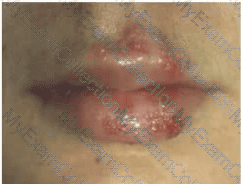
[Image shows grouped vesicular lesions on erythematous base affecting the lips—classic for herpes labialis (HSV-1).]
Which one of the following is the best advice?
Question # 34
A 33-year-old primigravid woman presents to the office with gestational hypertension. Her pregnancy is at 37 weeks’ gestation. The ultrasound findings are as follows:
Head circumference: 5th percentile
Biparietal diameter: 10th percentile
Abdominal circumference: 5th percentile
Femur length: 25th percentile
Amniotic fluid volume: 5.0 cm
Umbilical Doppler: Reversed end-diastolic flow
Which one of the following is the best next step?
Question # 35
An 8-year-old girl is brought by her father to the office with a 2-week history of red, itchy, and watery eyes. She is otherwise healthy. On examination, there is no discharge or difficulty with vision. Pupil examination findings are normal. The patient’s eyes are shown in the referenced photo. Which one of the following topical therapies is the best recommendation?
Question # 36
A 22-year-old woman, gravida 1, para 0, aborta 0, comes to the office at 10 weeks ' gestation for her first prenatal visit. When you ask how she is doing, she becomes tearful and says she has had severe nausea and vomiting. She is not taking her prenatal vitamins regularly and feels very guilty about it. She is worried that she is harming the fetus. Which one of the following is the most appropriate management of this patient ' s case?
Question # 37
You are called to the Emergency Department to see a 6-month-old boy with a 3-day history of fever. Physical examination reveals an irritable infant with a temperature of 38.1°C. His vital signs are:
Blood pressure: 87/50 mm Hg
Respiratory rate: 80/min
Heart rate: 140/min
Oxygen saturation: 92% on room air
The infant has no skin findings. On chest examination, you hear coarse crackles on the right side of the chest. Which one of the following is the best next step in the management of this child?
Question # 38
A 66-year-old woman suffering from a progressive neurological disease is admitted to a long-term care centre. Her husband does not wish to participate in discussions about the seriousness of his wife ' s disease and is convinced that she will soon come back home. During his 2nd visit to the centre, he gives you a cheque for a substantial sum made out to you, the treating physician, for your own research. Which one of the following is the best response to your patient ' s husband?
Question # 39
A 26-year-old woman, gravida 1, para 0, aborta 0, consults you at 36 weeks’ gestation regarding newborn care. She has HIV. Which one of the following is the best advice regarding reducing the risk for transmission of HIV to her newborn?
Question # 40
A 45-year-old man with confusion is brought to the Emergency Department by ambulance. He has end-stage renal disease and has missed his last 3 dialysis appointments. He also has a past medical history of antisocial personality disorder and hepatitis C. On examination, he is in respiratory distress. His blood pressure is 170/90 mm Hg, and his oxygen saturation is 84% on room air. His jugular venous pressure is 8 cm above the sternal angle, and he has crackles in his lungs bilaterally. A venous blood gas shows a bicarbonate of 11 mmol/L (24–30) and potassium of 7.1 mmol/L (3.5–5.0). Which one of the following is the best next step?
Question # 41
A 55-year-old man presents with vague abdominal pain and general weakness. His mother had colon cancer and died at age 60 years. His physical examination findings and complete blood count results are normal. Which one of the following tests should be ordered first?
Question # 42
You perform a literature search of journal articles on the effectiveness of a new antihypertensive for first-line treatment of people aged 35 to 50. You find reports of 4 good quality studies. Three of them show that statistically, the new drug is significantly more effective than the standard treatment, and one shows no difference. Before you conclude that the new antihypertensive is more effective in this group of patients, which one of the following concepts must be given consideration?
Question # 43
You have been asked to develop a program in your hospital for people who are at the highest risk of death by suicide. The hospital administrator asks you to describe the types of patients they should expect in the program. Which one of the following groups is the most likely prominent demographic?
Question # 44
A 35-year-old woman presents to your clinic with double vision and a gritty sensation in her eyes for the past several weeks. On examination, you notice her eyes are bulging. There is inflammation of her conjunctivae and swelling around her eyes. Which one of the following is the most likely diagnosis?
Question # 45
A 44-year-old woman presents to the office to discuss contraception. During the gynecologic examination, you notice an anterior cystocele to the hymenal ring. The woman denies any bulge symptoms but does report dribbling of urine, especially when she coughs or jogs.
Which one of the following is the best next step?
Question # 46
A 3-month-old girl is brought by her parents to the emergency department with a 3-day history of cough, coryza, and low-grade fever; she was previously well. In the last 24 hours, she has been noted to have rapid breathing with audible wheezing. Which one of the following pathogens is the most likely cause of the patient’s symptoms?
Question # 47
A 70-year-old man presents with severe, postprandial, mid-abdominal pain which has become more severe over the past 6 to 9 months. It is associated with nausea but has not caused him to vomit or changed his bowel habits. He has lost 14 kg over the last 6 months. Abdominal and rectal examination is normal. Upper gastrointestinal series is unremarkable. Which one of the following is the most likely diagnosis?
Question # 48
A 9-year-old girl from a remote community is brought to the clinic with a 2-week history of swelling in her neck. She has been afebrile but has had some night sweats. On examination, you note a fixed, unilateral, and nontender supraclavicular lymph node measuring 3 cm. The overlying skin color is unremarkable. In addition, you note a slightly enlarged spleen and liver. Which one of the following is the most likely diagnosis?
Question # 49
A 20-year-old nulligravid woman presents with severe pain during menstruation. She is unable to take nonsteroidal anti-inflammatory drugs (NSAIDs) and is adamant about not taking any hormonal therapy. She has questions about non-medicinal therapeutic options. Which one of the following recommendations is the most appropriate?
Question # 50
Your colleague ' s receptionist asks you to assess her 4-year-old daughter who has had 2 episodes of acute otitis media in the last month. The mother wants you to arrange a consultation with an ear, nose and throat (ENT) specialist to get a tympanostomy before her daughter starts school. You do not believe there is a surgical indication at this time. Which one of the following is the best next step?
Question # 51
A 4-month-old girl is brought by a parent to your clinic with a history of recurrent vomiting since birth. She cries with feeding and has not gained weight in the last 2 weeks. Her hemoglobin level is 95 g/L (100–125). The patient is currently being fed thickened hypoallergenic formula. Which one of the following is the most appropriate therapy?
Question # 52
A 70-year-old hypertensive woman with a history of congestive heart failure (CHF) secondary to left ventricular dysfunction presents to your office with a persistent dry hacking cough. She claims it began when she was started on ramipril. Which one of the following medications would be most appropriate to replace ramipril, to ensure that the risk of morbidity associated with CHF remains low?
Question # 53
An otherwise healthy 43-year-old woman presents to your clinic for a left breast mass. Six months ago, she underwent a bilateral breast magnetic resonance imaging (MRI) after watching a television program on breast cancer prevention. An ultrasound-guided biopsy of a 1.5 cm mass confirmed, at the time, that she had fibroadenoma. The follow-up ultrasound now reveals a mass measuring 1.7 cm. Which one of the following is the best next step in the management of this patient?
Question # 54
You are a physician working at a university campus health centre. Staff at the centre are thinking about initiating a campus-wide education campaign on stimulant medication use and misuse. From a physician ' s perspective, which one of the following is the key message to include in this campaign?
Question # 55
A 19-year-old primigravid woman presents to the office with a rapid increase of abdominal girth and shortness of breath. Her pregnancy is at 27 weeks’ gestation, as confirmed by early ultrasonogram. The symphysis-fundal height is 45 cm. The fetal heart rate is 150/min (110–160). Which one of the following is the most likely diagnosis?
Question # 56
A 20-year-old man is brought by a friend to the emergency department with an elevated temperature, generalized muscle rigidity, hypovolemia, a fluctuating level of consciousness, and impaired attention. The patient also may be responding to auditory hallucinations. The friend informs you that the patient overdosed with a prescribed medication. Which one of the following medications is most likely to cause these symptoms?
Question # 57
A 19-year-old woman with a long-standing history of abuse and borderline personality disorder presents to your office. She has a number of superficial lacerations over her arms and legs. They look like they were caused by a sharp edge such as a knife. They are at various stages of healing, and some look like they are a few hours old, though none require stitches. Which one of the following is the most likely comment she would make about the injuries?
Question # 58
A 4-year-old girl is brought to the family practice by her father. The child has a 2-week history of low-grade fever, fatigue, and sore throat. She has also developed several small, round, mildly tender lumps bilaterally in her neck. She was previously well. Which one of the following is most likely to be found on abdominal examination?
Question # 59
A 42-year-old woman presents to your clinic requesting an increase in her stimulant dosage for the treatment of her adult attention-deficit/hyperactivity disorder. Her medical history includes hypertension and type 1 diabetes with associated nephropathy. She has been taking methylphenidate daily for 15 years. Which one of the following would need to be addressed before the dosage can be increased?
Question # 60
A 27-year-old man with a bowel obstruction secondary to a terminal ileum stricture has been on various medications since he was diagnosed with Crohn disease 8 years ago. You recommend a bowel resection, but he refuses this option because he is fearful of short bowel syndrome. He states that the only surgical procedure he will undergo is a bypass of the diseased segment so that the affected bowel will heal. You know that this is the wrong operation. Which one of the following is the best next step?
Question # 61
A 71-year-old man is brought to the Emergency Department with sudden onset of shortness of breath and chest pain. He was discharged from hospital 1 week ago after a total hip arthroplasty. On examination, his respiratory rate is 32/min. There is visible respiratory distress, and chest auscultation is clear. Which one of the following is the most likely diagnosis?
Question # 62
A 60-year-old man is admitted to hospital, and lung cancer is diagnosed. When his family physician reviews the discharge summary, she reviews the patient’s chart and finds a chest radiograph report from 1 year ago that mentions a suspicious nodule and recommends a computed tomography scan. The family physician recalls seeing this report and did not order the scan. Which one of the following is the family physician’s best next step?
Question # 63
You are providing medical care to a 78-year-old man and notice a skin lesion which you suspect is malignant melanoma. He has been living in a long-term care facility for 2 years because of incontinence, mobility and vision problems. He is well-liked by facility staff and residents, manages his own affairs and communicates clearly. He has designated his daughter to be his substitute decision-maker and has signed a Do Not Resuscitate (DNR) order. Which one of the following is the best next step in providing care to this patient for his skin lesion?
Question # 64
A 20-year-old woman, gravida 0, para 0, presents with increased facial hair. Her periods are regular and moderate. Her BMI is 24, and her blood pressure is 110/70 mm Hg. Which one of the following is the most likely diagnosis?
Question # 65
A 43-year-old man is referred to you for an incidental finding of elevated hemoglobin. Laboratory results are as follows:
Hemoglobin
185 g/L (130-170)
Mean corpuscular volume
92 fL (60-100)
White blood cells
7.8×1037.8×103 / L (4-10)
Platelets
250×103250×103 / L (130-400)
His BMI is 23. He has type 2 diabetes for which he takes gliclazide MR 60 mg daily. Which one of the following features on history could explain his laboratory abnormality?
Question # 66
A 25-year-old woman presents to the Emergency Department with a 2-hour history of pelvic pain associated with no other symptoms. The first day of her last menstrual period was 14 days ago. On examination, her vital signs are as follows:
Blood pressure
108/72 mm Hg
Heart rate
110/min
Temperature
37 °C
Abdominal examination reveals rebound tenderness and guarding. Pelvic examination reveals exquisite left adnexal tenderness. Which one of the following is the most likely diagnosis?
Question # 67
A 21-year-old man presents to the Emergency Department with a 6-month history of unusual behavior. He believes that he has been specially chosen to found a new religion. He says he has seen visions of angels in his bedroom. He appears disheveled and malodorous. On further inspection, you note that he drinks 2 liters daily. Which one of the following is the most appropriate initial management?
Question # 68
You are asked to see a 34-year-old patient at his long-term care facility for a 2-day history of fever. You diagnose a urinary tract infection. He has multiple sclerosis diagnosed 5 years ago and has lived in this long-term care facility for the past 2 years. He is bedbound and has an indwelling urinary catheter. For the past 3 months, he has been non-communicative. Prior to this, he had made it clear that he did not want any life-prolonging measures. Which one of the following is the best next step?
Question # 69
A 34-year-old woman, gravida 3, para 2, comes to your office for prenatal care. Past medical history includes 2 precipitous uncomplicated term deliveries of infants greater than 4200 g. Which one of the following is she most at risk of developing?
Question # 70
A 63-year-old man presents to the office with a 2-year history of episodic swallowing problems that have been increasing in frequency. He states that food seems to stick in his throat, and these episodes are often associated with coughing or regurgitating undigested food. Physical examination reveals that the patient has halitosis; otherwise, findings are normal. Which one of the following is the best next step to confirm the most likely diagnosis?
Question # 71
A 67-year-old man presents to the clinic because of elevated liver enzymes. He is asymptomatic. His medical history is significant for type 2 diabetes, which is being treated with metformin. On physical examination, he looks well. His blood pressure is 125/75 mm Hg, his heart rate is 80/min, and his BMI is 35. Findings of the remainder of the examination are normal. His blood work results are as follows:
Platelet count: 170 × 10â¹/L (130–380)
Creatinine: normal
GGT: 75 µmol/L (49–93)
ALT: 146 IU/L (15–85)
AST: 101 IU/L (17–63)
Bilirubin (total): 17 µmol/L (3–17)
INR: 1.2 (0.9–1.2)
Which one of the following is the most likely diagnosis?
Question # 72
A 24-year-old woman with chronic anorexia nervosa presents to the Emergency Department with diarrhea, chest pain and palpitations. She is noted to have a BMI of 13, a heart rate of 48/min, significant orthostatic hypotension and a temperature of 35.9 °C. Her electrocardiogram shows frequent premature ventricular contractions. Her blood work indicates elevated liver transaminases and evidence of acute kidney injury from dehydration. She agrees to admission for medical stabilization only if she does not receive fluids either orally or intravenously, as they will cause her to gain weight and to feel bloated. Which one of the following is the best next step?
Question # 73
A 45-year-old man is brought to the Emergency Department with chest pain. He has no significant medical history. He is anxious and agitated, and he reports severe central chest pain that began about 90 minutes ago. His vital signs are as follows: blood pressure 200/110 mm Hg, heart rate 140/min, respiratory rate 30/min, oxygen saturation 98% on supplemental oxygen. Physical examination reveals a restless and slightly tremulous man. Pupils are 7 mm reactive. There are no focal neurologic signs. Cardiopulmonary examination is normal. The 12-lead electrocardiogram reveals sinus tachycardia; findings are otherwise normal. Which one of the following is the most likely cause of this clinical presentation?
Question # 74
A 38-year-old marathon runner presents to your office with a 6-month history of increasing right hip pain. The pain is worse with acclivity and has prevented him from running for the last 4 months. He denies fever or chills. His wife adds that she is concerned because he is increasingly disengaged with the family and not interested in other activities he usually enjoys, including sex. Which one of the following is the best next step in management?
Question # 75
A 62-year-old woman presents with abdominal pain, fever and chills. She was hospitalized 4 weeks ago for sigmoid diverticulitis. She felt well after her discharge from hospital until 5 days ago when the fever started. She is now anorexic. On examination, she has right upper quadrant pain and her temperature is 38.5 °C. Which one of the following investigations is most likely to confirm the diagnosis?
Question # 76
A 3-year-old boy is brought to your office because his daycare teachers are concerned about his language development. His parents speak both English and French at home, and he can say around 15 words combined in both languages. His history reveals that he has minimal interest in playing with other children. Which one of the following is most appropriate?
Question # 77
A 72-year-old woman presents with swelling of her right leg that developed overnight. She had an abdominal hysterectomy 10 days ago. On examination, there is pitting edema of the leg that extends from the foot to the groin. The calf is 3 cm larger in diameter than the calf on the left leg. Which one of the following is the most likely diagnosis?
Question # 78
A 32-year-old man presents to the clinic for assessment of a dog bite sustained 3 days ago while traveling in another country. He recalls having seen the dog eat where he was staying, and the animal did not appear well. On examination, the patient has 2 distinct deep puncture wounds on his left leg. There is an erythematous border but no exudate. He is unsure of his immunization status. Which one of the following is the most appropriate management?
Question # 79
A 55-year-old woman presents to the office with a 2-month history of right shoulder pain and limited function that started after she began an upper body weight training program. Examination shows tenderness inferior to the acromion. She has full passive range of motion of the shoulder but significant pain with abduction from 30° to 120° of arc. Which one of the following is the best next step?
Question # 80
A 78-year-old man, who is accompanied by his eldest son, presents for follow-up of his chronic kidney disease and neurocognitive disorder due to vascular disease. He is married and has 4 children. His creatinine clearance has slowly deteriorated over the last few years and has reached the stage where you are considering starting renal replacement therapy. After your discussion, it is clear that the patient, his son, and his wife want to start dialysis. Based on your assessment, it is clear that he does not understand the information you have relayed to him. You inform the patient that you believe he is incapable of making this decision and he agrees. His son would prefer not to start dialysis as he is concerned about the impact this would have on his father’s quality of life. Which one of the following is the best next step?
Question # 81
A 76-year-old man is brought by his family to your clinic with new-onset urinary incontinence. They state that the patient is experiencing a slowly progressing cognitive decline marked by memory disturbance, apathy, and attentional problems. Examination reveals that the patient has a stooped, forward-leaning posture and a wide-based gait. Which one of the following is the most likely diagnosis?
Question # 82
A 36-year-old woman presents to the office with a 2-month history of multiple asymptomatic bumps on her vulva. She is not currently sexually active but has had 2 male sexual partners in the past, with the most recent relationship ending 1 year ago. On examination, she appears to have genital warts. She has not received the human papillomavirus (HPV) vaccine and is not interested in any treatment that is not absolutely necessary. Which of the following is the best next step?
Question # 83
A 43-year-old car mechanic, with no prior history, comes to the Emergency Department because of a sudden loss of balance at work. He also feels lightheaded, slightly disoriented and nauseous. Physical examination and basic blood work-up are normal. He tells you this is the 3rd time this has happened at work. Which one of the following is the most likely diagnosis?
Question # 84
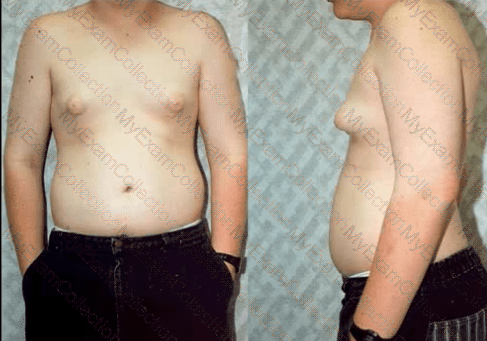
A 15-year-old boy is brought to your office because of concerns about his breast development. He has no other symptoms. His physical examination does not reveal any other abnormality. Which one of the following is the best next step?
Question # 85
A 26-year-old woman, gravida 2, para 2, aborta 0, has just delivered a full-term newborn via spontaneous vaginal delivery after 4 hours of labor. Following oxytocin administration and placental expulsion, there continues to be a steady trickle of bright red blood from her vagina. On examination, the placenta is intact and the fundus feels firm. Her vital signs are within normal range.
Which one of the following is the most likely diagnosis?
Question # 86
A previously healthy 7-year-old boy presents to the Emergency Department with a generalized tonic-clonic seizure, which subsided spontaneously after 10 minutes. There is no history of trauma. Physical examination reveals normal vital signs and a normal neurologic examination. Which one of the following diagnostic studies is urgently indicated?
Question # 87
A 63-year-old man is brought to the Emergency Department by ambulance after he injured his abdomen. While working on a house, he fell 1 m from a scaffold and landed on a metal pipe. He is clinically stable but reports localized abdominal pain. On examination, he has a 17-cm laceration to his abdomen in the left hypochondrium. The laceration is 4 cm deep, but there is no fascial laceration. Which one of the following is the best next step?
Question # 88
A 69-year-old woman with long-standing hypertension presents to the emergency department with a 2-hour history of persistent chest and back pain. A posteroanterior chest radiograph shows suspicious widening of the mediastinal shadow. Which one of the following is most likely to yield a clinical diagnosis?
Question # 89
A 52-year-old man presents to the Emergency Department with a history of back, neck, and shoulder pain sustained from a workplace incident 4 years ago. He is under observation by a multidisciplinary pain clinic, and his next appointment is not for another 4 weeks. He does not report any recent change in his symptoms. His medications are as follows:
Acetaminophen
1000 mg orally 4 times daily
Naproxen
500 mg orally twice daily
Amitriptyline
25 mg orally at bedtime
Acetaminophen 1000 mg orally four times daily
Naproxen 500 mg orally twice daily
Amitriptyline 25 mg orally at bedtime
The patient has not taken his medications for several weeks because he thinks they are not working. He requests a prescription for oxycodone because he tried some that a friend sold him, and it worked very well. After completing an assessment and providing counseling, which one of the following is the best next step?
Question # 90
A 51-year-old man comes to your clinic for follow-up regarding his type 1 diabetes. His hemoglobin A1c is 12.5% (normal 4–6%). He has never had such high blood sugar results. He drinks 2 beers per night to help with sleep. He is not well rested because he has been sleeping on a friend’s couch since losing his job last year. Which one of the following is the best next step?
Question # 91
A 29-year-old concert pianist with severe chronic kidney disease presents with a 6-month history of loss of appetite and pruritus. Although the issue of initiating dialysis has been discussed with him and his questions answered, he has declined dialysis thus far. You understand his concerns that it will interfere with his concert tour and recording schedule. Which one of the following is the best next step?
Question # 92
A 6-year-old boy is brought to the Emergency Department with a 2-day history of a limp. On examination, he looks well, has a temperature of 38 °C and is able to weight-bear. His hip examination reveals mild decreased range of motion. Radiographs of his hip and pelvis show no abnormality. His C-reactive protein level is 8 mg/L ( < 6). Which one of the following is the most likely diagnosis?
Question # 93
A 70-year-old woman presents to the Emergency Department with a 2-day history of dysuria and right flank pain. Upon arrival, she is quite unwell. Her vital signs are as follows: blood pressure 70/38 mm Hg, heart rate 130/min, respiratory rate 24/min, temperature 39.4 °C.
Due to difficulty obtaining peripheral access, a central line is inserted. There is a lot of ongoing bleeding around the line insertion site. Her blood work shows:
White blood cell count: 19.8 × 10â¹/L (4–10)
Hemoglobin: 101 g/L (123–157)
Platelets: 85 × 10â¹/L (130–400)
Blood film: schistocytes
INR: 1.9 (0.9–1.2)
Fibrinogen: < 1 g/L (2–4)
Which one of the following is the most likely cause of her ongoing bleeding?
Question # 94
A 46-year-old woman presents with concerns because she has not had a period for the past 13 months. She has not had any hot flashes or night sweats, but she has noted some problems staying asleep for the past 6 months. She feels “foggy,†which has made her work more difficult. She is in a same-sex relationship and has no pain with sexual activity. In discussing options with her, which one of the following is most appropriate?
Question # 95
A 40-year-old woman presents to your clinic for follow-up regarding her major depressive disorder, which is being treated with the starting dosage of escitalopram. Most of her symptoms have now improved. However, she has noted anorgasmia since taking this medication. This has significantly affected her relationship with her wife. Which one of the following is the best next step?
Question # 96
A 29-year-old man comes to the office for an initial visit. He is being treated for schizophrenia and epilepsy. He has a 20 pack-year history of smoking. His medications are carbamazepine, clozapine, and quetiapine. In the past year, he has gained a considerable amount of weight. Aside from a BMI of 32, the results of his physical examination are unremarkable. Which one of the following conditions should he be investigated for?
Question # 97
A 32-year-old woman, gravida 0, comes to your office for contraception counselling, specifically about insertion of a levonorgestrel-releasing intrauterine device. She has a past history of breast cancer and is presently on tamoxifen. Which one of the following is the best advice for your patient?
Question # 98
You are on duty in the Emergency Department when 5 patients are brought in by ambulance after a high-speed motor vehicle collision. Which one of the following patients requires the most urgent medical care?
Question # 99
A 26-year-old man presents to your office with fever, chills, and malaise. Aside from an episode of dysuria 8 weeks ago, which spontaneously resolved, he has been healthy. On examination, his left wrist and right ankle are tender. There is a cluster of vesiculopustular lesions on his right hand. Which one of the following is the most likely diagnosis?
Question # 100
An 18-year-old man presents to your clinic with a history of intermittent, dull, achy pain on the left side of his scrotum, and he has now noted left scrotal enlargement. On examination, you note a swelling in the left scrotum when he is standing that disappears when he is supine. Which one of the following is the most likely diagnosis?
Question # 101
A previously well 2-year-old girl is brought to the Emergency Department with difficulty breathing that has been gradually worsening over the last 24 hours. Her parents say she has a sore throat. On examination, you note that she appears ill. She has stridor and is in moderate respiratory distress, drooling and emitting a muffled voice. Vital signs are as follows: respiratory rate 34/min, heart rate 160/min, temperature 40.2°C.
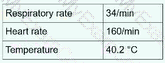
Which one of the following is the most likely diagnosis?
Question # 102
A 32-year-old woman presents to the office with questions related to the mRNA vaccines that are approved for COVID-19. She is a health care worker. She gave birth to a healthy child 2 months ago. Before being immunized, which one of the following is the most important detail to elicit from the patient ' s history?
Question # 103
A 62-year-old man (wealthy philanthropist) with emphysema from smoking and a 21-year-old woman (elementary teacher) with cystic fibrosis are both compatible matches for a lung transplant. Which criterion determines organ allocation?
Question # 104
A 62-year-old man, who has not seen a physician in 20 years, presents to your clinic with a burning sensation in his feet. The symptoms have been progressing slowly over the last 6 months. There is no associated motor weakness or skin changes. He reports no significant past medical history and takes no medications. His alcohol intake is minimal. On examination, he has reduced pinprick/vibration sensation and proprioception in the ankles with absent ankle reflexes. Which one of the following blood tests would you expect to be abnormal?