Spring Sale Special - Limited Time 70% Discount Offer - Ends in 0d 00h 00m 00s - Coupon code: mxmas70

Home > Juniper > JNCIP-ENT > JN0-650

JN0-650 Enterprise Routing and Switching - Professional (JNCIP-ENT) Question and Answers

Question # 4

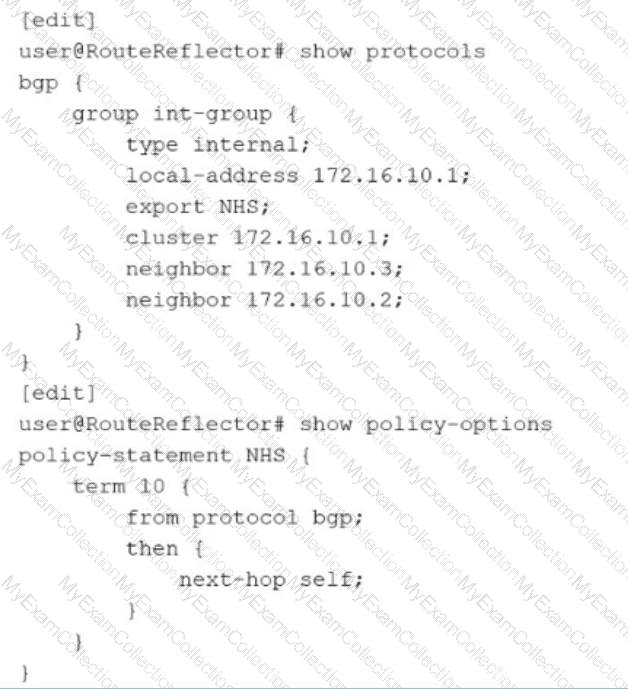
Exhibit

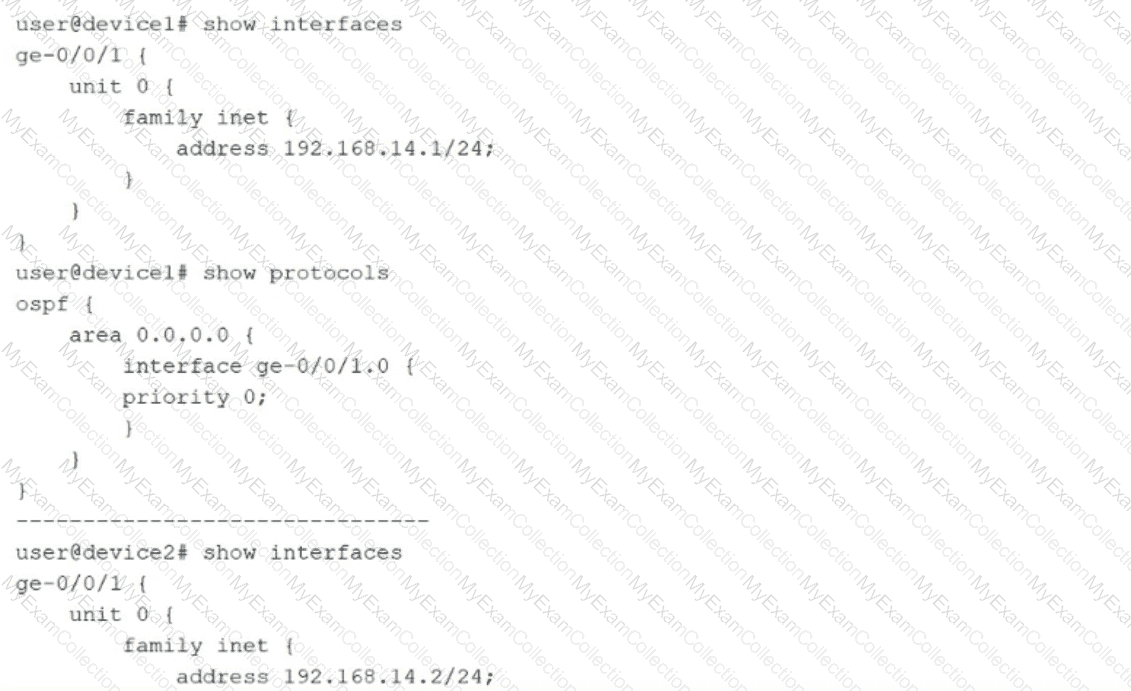
You need to configure the non-RP routers in your network to dynamically learn the location of the RP using standard protocols only. You have already applied the configuration shown in the exhibit, but the routers have not learned the location of the RP.

Which additional step must you take to fulfill these requirements?

A.

Configure MSDP.

B.

Configure BSR.

C.

Configure Anycast RP.

D.

Configure Auto-RP

Full Access
Question # 5

You are troubleshooting a multicast deployment in a network. Some multicast groups operate in PIM-ASM mode and others operate in PIM-SSM mode. While troubleshooting, you note the following:

- The network uses IGMPv2 for some segments and IGMPv3 for others.

- For group 232.1.1.1, receivers know the exact source IP of the multicast sender

- For group 239.10.10.10. receivers do not know the source address in advance.

Which two statements correctly describe the operational differences between these two modes in Junos OS? (Choose two.)

A.

PIM-ASM supports multiple active sources for a group without requiring receivers to know them in advance, whereas PIM-SSM requires explicit source knowledge

B.

In PIM-ASM. the DR first sends a PIM register message to the RP before switching to the shortest-path tree.

C.

PIM-SSM requires an RP for initial joins, whereas PIM-ASM can operate without one.

D.

PIM-SSM relies on IGMPv3 to signal both the source and the group in the join message, bypassing the RP entirely.

Full Access
Question # 6

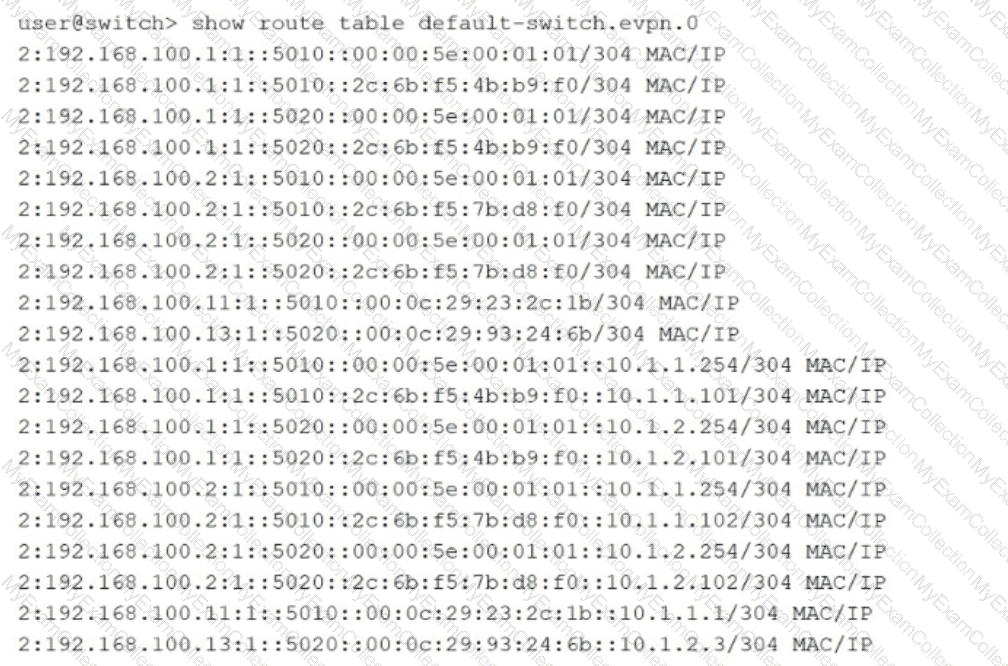
Exhibit

Referring to the exhibit output, which statement is correct?

A.

The device with an IP address of 192.168.100 2 is attached to VNI 5010

B.

The output shows the router ID of the device sending the EVPN Type 2 routes

C.

The output shows the route distinguisher of the device sending the EVPN Type 2 routes

D.

IP addresses 10.1.1.1 and 10.1 2.3 are connected to the same VNI.

Full Access
Question # 7

You are implementing an EVPN-VXLAN edge-routed bridging design using Layer 3 gateway operations. In this scenario, which statement is correct?

A.

Each distribution switch has unique IP addresses for IRB interfaces; routing protocols run on IRB interfaces

B.

Distribution switches share the same anycast IP addresses for IRB interfaces; routing occurs at the distribution layer.

C.

Only core switches have IRB interfaces; all Layer 3 routing happens in the core.

D.

IRB interfaces are disabled; all routing happens through external routers only.

Full Access
Question # 8

You want to implement a system in your network to simplify VLAN management that can also dynamically create and prune VLANs. How would you accomplish this task?

A.

Enable GVRP on access interfaces.

B.

Enable MVRP and GVRP on all interfaces.

C.

Enable MVRP on trunk interfaces.

D.

Enable MVRP on access interfaces.

Full Access
Question # 9

While deploying class of service on an EX Series switch, what are two aspects of the scheduler? (Choose two.)

A.

It defines interface rate-limiting.

B.

It provides DiffServ code translation.

C.

It identifies the priority of the queue to which it is assigned.

D.

It defines a buffer size of the queue to which it is assigned.

Full Access
Question # 10

Exhibit

As shown in the exhibit, you have implemented CoS classifiers using Differentiated Services Code Point (DSCP)

In this scenario, which two statements are correct? (Choose two.)
A.

This custom DSCP classifier must be associated with logical interfaces.

B.

This custom DSCP classifier must be associated with physical interfaces.

C.

The configuration imports all default classification assignments that are not specified.

D.

The default classification assignment overwrites all specified classifications

Full Access
Question # 11

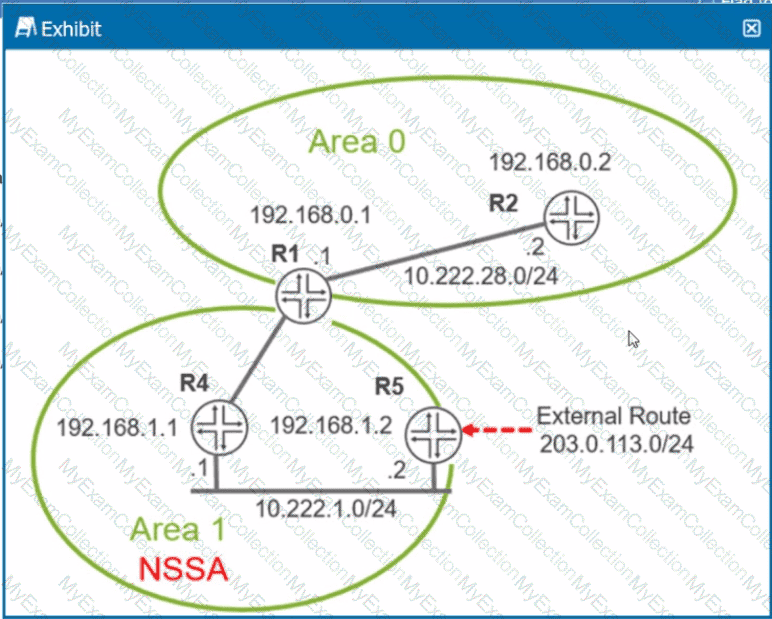
Exhibit.

Referring to the exhibit, which two statements are correct? (Choose two.)

A.

R1 will advertise the 203 0.113.0724 route as an OSPF Type 7 LSA into Area 0.

B.

R5 will advertise the 203 0.113 0/24 route as an OSPF Type 5 LSA into Area 1.

C.

R1 will advertise the 203 0.113.0/24 route as an OSPF Type 5 LSA into Area 0

D.

R5 will advertise the 203 0.113.0/24 route as an OSPF Type 7 LSA into Area 1.

Full Access
Question # 12

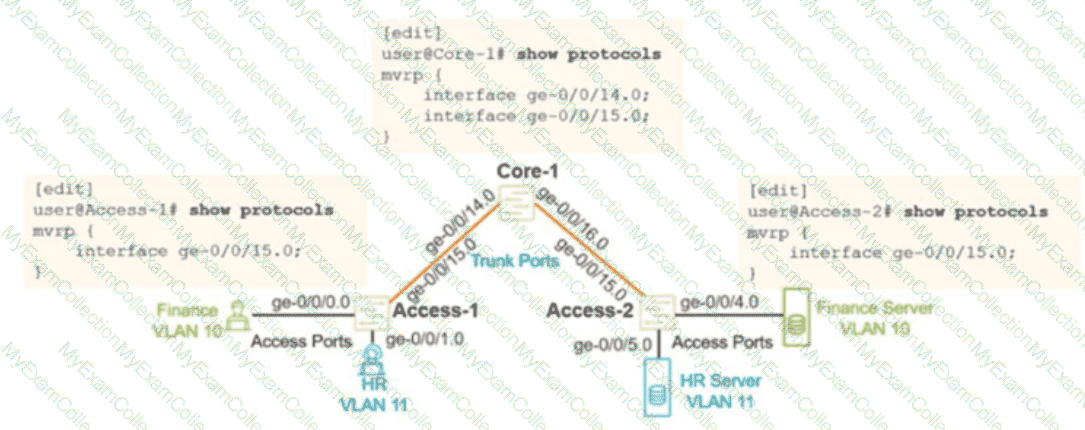
Exhibit

You configured MVRP in your Layer 2 network using the configuration shown in the exhibit. You verified that the appropnate VLANs are configured and applied on the two access switches. You are using RSTP as your loop prevention mechanism. Unfortunately, the users are not able to communicate with their corresponding server attached to the Access-2 switch.

In this scenario, what should you do to solve this problem?

A.

Configure VSTP instead of RSTP as your loop-prevention mechanism.

B.

Configure the access interfaces on the Access-2 switch under MVRP.

C.

Configure the ge-070716.0 interface on the Core-1 switch under MVRP.

D.

Configure the access interfaces on the Access-1 switch under MVRP.

Full Access
Question # 13

You have several switches in your network that use Cisco's PVST+ protocol. You want your Juniper switches to interoperate with those devices.

In this scenario, which protocol would you use?

A.

RPVST+

B.

MSTP

C.

VSTP

D.

RSTP

Full Access
Question # 14

Exhibit

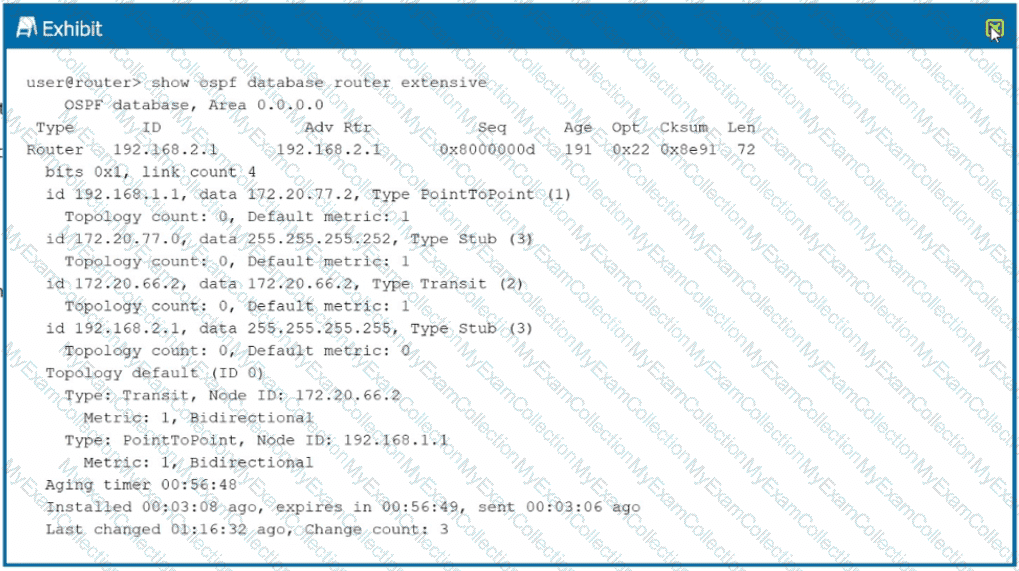
What is the OSPF router type shown in the exhibit for router 192.168.2.1?

A.

neither an ABR nor an ASBR

B.

an ASBR

C.

both an ABR and an ASBR

D.

an ABR

Full Access
Question # 15

You run a multivendor switching environment where you have configured VSTP. You have 450 VLANs and notice that some of your VLANs do not function properly. How should you change the configuration to get all 450 VLANs working?

A.

Include the force-version stp; statement in your configuration

B.

Enable RSTP to handle additional VLANs.

C.

Set the VLAN max-age to 3600 or more.

D.

Increase the bridge priority on all VLANs to at least 16k.

Full Access
Question # 16

Which statement accurately describes the role of a multicast RP, specifically when using the PIM sparse mode?

A.

The RP functions as a central point where multicast sources announce their existence and receivers send join requests to start multicast sessions

B.

The RP is primarily used in the PIM dense mode to flood multicast traffic throughout the network periodically

C.

The RP is responsible for forwarding all multicast traffic to all interfaces on the network, regardless of receiver interest.

D.

The RP in the PIM sparse mode eliminates the need for any source-specific multicast (SSM) configurations.

Full Access
Question # 17

Exhibit

You want to provide better performance for the video traffic that traverses your network The video traffic enters your network without any class-of-service markings

According to Juniper Networks, which two classification methods are performed by the routers shown in the exhibit? (Choose two.)

A.

R1 performs behavior aggregate classification.

B.

R1 performs multifield classification.

C.

R2 and R3 perform multifield classification

D.

R2 and R3 perform behavior aggregate classification

Full Access
Question # 18

You are asked to establish authentication for users connecting to the corporate network. You must ensure that only corporate devices that are identified by MAC addresses are allowed to authenticate and connect Authentication must be handled by a centralized database.

Which authentication method would you implement in this scenario?

A.

MAC RADIUS

B.

captive portal

C.

single-secure supplicant mode

D.

single supplicant mode

Full Access
Question # 19

Exhibit

You are receiving the 203 0.113.0/24 route from both upstream ISPs You are asked to ensure that ISP A is the preferred ISP for traffic being sent to the 203.0.113.0/24 network from devices in AS 65512.

Referring to the exhibit, which two statements will accomplish this behavior? (Choose two.)

A.

You should assign a local preference that is lower than 100 for the route learned from ISP A.

B.

You should assign a local preference that is higher than 100 for the route learned from ISP A.

C.

You should assign a local preference that is lower than 100 for the route learned from ISP B.

D.

You should assign a local preference that is higher than 100 for the route learned from ISP B.

Full Access