Question # 4
Which of the following statements describe the advantages of introducing SDN into a telco cloud network?
Select all that apply.
A.
SDN helps automate VNF connection configuration on the network.
B.
SDN improves O & M efficiency through a series of O & M automation capabilities.
C.
SDN significantly shortens deployment time and reduces deployment costs.
D.
SDN automates basic network configuration and service network configuration.
Full Access
Answer:
A, B, C, D
Explanation:
Exact Extract — Huawei Training Material (Network Orchestration Technologies Overview, p.25):
“Orchestration is to flexibly combine various resources to achieve a specific purpose. Orchestration refers to the flexible organization and scheduling of basic resources (computing, storage, and network) in the ICT domain to achieve ROADS (Real-time, On-Demand, All-Online, DIY, Social) experience for network services.â€
Huawei Reference Verification:
Huawei's network orchestration curriculum describes flexible arrangement of computing, storage, and network resources to achieve service objectives and real-time, on-demand service delivery. Software-defined networking provides programmatic management of these resources, enabling automated VNF connections, basic and service configuration, O & M workflows, and rapid provisioning. A controller can coordinate virtual and physical networking requirements using standardized models and interfaces. This reduces repeated manual device configuration and improves operational consistency. All four choices align with the intent of the Huawei orchestration architecture.
Technical Deep Dive:
A, B, C, and D are correct. SDN automatically configures connectivity for VNFs such as virtual firewalls, BNGs, and load balancers, mapping their virtual interfaces into required VLANs, VPNs or VXLAN networks. Centralized O & M enables fault correlation, performance monitoring, configuration compliance and service restoration. Automation shortens the deployment workflow by replacing repetitive device-by-device tasks with validated templates and controller-executed service models. It also supports basic underlay provisioning and overlay service configuration. Huawei uses NETCONF/YANG for configuration, BGP-LS for topology reporting, PCEP for computed path management, and telemetry for network health. Routing engines and controllers install the intended forwarding state; NP/ASIC hardware carries normal packets without a round trip to the controller. The practical results include improved consistency, fewer manual errors, faster activation and more efficient network utilization. The extent of cost reduction depends on network scale and integration effort.
───────────────────────────────────────────────────────
Question # 5
On the HoVPN illustrated, which of the following statements about the network are correct?
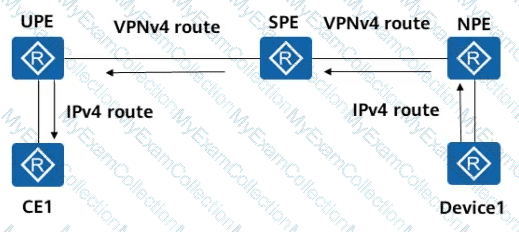
Exhibit 49.1 — Original topology/configuration figure
Select all that apply.
A.
The VPN labels used between the UPE and SPE are the same as those used between the SPE and NPE.
B.
The SPE advertises the default route to the UPE.
C.
The next hop of the route learned by the UPE is the SPE.
D.
The next hop of the route learned by the SPE is the NPE.
Full Access
Answer:
B, C, D
Explanation:
Huawei Reference Verification:
Huawei Hierarchy of VPN (HoVPN) divides service roles between an Underlayer PE, a Superstratum PE, and a Network PE. The UPE handles customer attachment and can use a default VPN route advertised by the SPE instead of hosting all remote VPN prefixes. The SPE advertises itself as next hop toward the UPE and learns remote service routes from the NPE with the NPE as next hop. The SPE also allocates local labels when advertising VPN routes across hierarchical boundaries, so the labels used on the UPE–SPE and SPE–NPE segments do not necessarily match. Accordingly B, C and D are correct.
Technical Deep Dive:
B, C and D are correct. HoVPN distributes provider-edge service processing to improve scalability in large access and aggregation networks. The UPE attaches customer traffic and can have smaller VPN routing tables. The SPE maintains fuller VPN information, advertises a default/summary route to the UPE and acts as its next hop. Toward the backbone, the SPE learns VPNv4 routes from the NPE, making the NPE the next hop for those routes. The SPE can reallocate or rewrite VPN labels as it advertises routes between hierarchy levels, so option A is incorrect. At forwarding time the SPE may terminate one hierarchical VPN context and apply a new label stack for the next network segment. This approach reduces memory and control-plane requirements on access PEs while retaining large VPN service scale. The figure's UPE–SPE and SPE–NPE arrows illustrate the asymmetric route distribution central to the answer.
───────────────────────────────────────────────────────
Question # 6
The system IDs for the same IS-IS device in separate processes can be identical.
A.
TRUE
B.
FALSE
Full Access
Answer:
A
Explanation:
Huawei Reference Verification:
Huawei IS-IS multi-process operation keeps separate link-state databases, neighbor state, and route calculations for distinct routing-process instances. IS-IS system IDs must be unique among nodes within the same applicable routing domain to avoid conflicting LSP identities. However, using the same system ID in independent IS-IS processes on one router is permissible when their associated routing instances do not collide. The process number distinguishes the local protocol instance; the system ID identifies the device within the relevant IS-IS domain. Accordingly the statement is true.
Technical Deep Dive:
A is TRUE. An IS-IS NET contains an area portion, a six-byte system ID, and an N-selector, typically 00. For example, 49.0001.0000.0000.0001.00 contains system ID 0000.0000.0001. Router identities must be unique within a shared LSDB because duplicate system IDs cause LSP collisions and unstable topology representation. A device can nevertheless run multiple independent IS-IS processes with separate interfaces and databases. Reusing the system ID across those distinct processes does not inherently violate the uniqueness requirement as long as each routing domain remains unique internally. This distinction is between the globally configured value on the physical device and its meaning inside a protocol domain. On VRP, `display isis brief`, `display isis peer` and `display isis lsdb` allow engineers to check process, adjacency and LSP state.
───────────────────────────────────────────────────────
Question # 7
In an EVPN VXLAN solution, which of the following features can be enabled to reduce ARP packet flooding between VTEPs?
Select all that apply.
A.
Local proxy ARP
B.
Host information collection
C.
ARP broadcast suppression
D.
Interface isolation
Full Access
Answer:
A, B, C
Explanation:
Huawei Reference Verification:
Huawei EVPN VXLAN provides ARP optimization through local proxy ARP, host-information collection and ARP broadcast suppression. The VTEP learns or imports IP-to-MAC mappings, which can be distributed through EVPN MAC/IP routes. When the destination mapping is known, the VTEP may answer ARP requests locally rather than flooding the request to remote VTEPs. ARP suppression similarly limits broadcasts when suitable host reachability information exists. Interface isolation restricts endpoint communication but does not independently supply the IP/MAC resolution or flood-suppression mechanism. Thus A, B and C are applicable.
Technical Deep Dive:
A, B and C reduce unnecessary ARP flooding. A local proxy responds to known requests using cached or learned IP/MAC bindings. Host-information collection populates and distributes the information that makes local resolution possible, often through EVPN Type 2 routes. ARP broadcast suppression prevents unnecessary network-wide ARP replication when the gateway already knows the relevant destination host binding. These mechanisms reduce overhead in large tenant VXLAN overlays with many VTEPs. Interface isolation serves a different purpose: preventing or restricting communication between endpoints on specified interfaces. Depending on Huawei platform and BD mode, `arp l2-proxy enable` and `arp broadcast-suppress enable` may be mutually exclusive within the same bridge domain; the question asks which mechanisms can reduce flooding, not whether all must run simultaneously. Representative commands include `bridge-domain 10`, `arp broadcast-suppress enable`, and `arp l2-proxy enable` in compatible configurations.
───────────────────────────────────────────────────────
Question # 8
In an inter-AS VPN Option C network, VPN routes are exchanged between AS100 and AS200. Which of the following statements concerning inter-AS VPN Option C are correct?
Select all that apply.
A.
MPLS must be enabled on interfaces interconnecting ASBR1 and ASBR2.
B.
The undo policy vpn-target command must be run in the BGP-VPNv4 address family view of ASBR1 and ASBR2.
C.
The capability of allocating BGP labels must be enabled on ASBR1 and ASBR2.
D.
An MP-EBGP peer relationship can be established between RR1 and RR2, and the maximum number of hops between the RRs must be set using the peer ebgp-max-hop command.
Full Access
Answer:
A, C, D
Explanation:
Huawei Reference Verification:
Huawei inter-AS VPN Option C separates labeled public-network reachability from customer VPN route distribution. ASBRs exchange labeled IPv4 unicast reachability and must support MPLS forwarding on the relevant interconnection, including capability negotiation for BGP labels. VPNv4 routes can be exchanged between PEs or between route reflectors in different ASs using MP-EBGP. When the RRs peer via loopbacks and are not directly connected, EBGP multihop configuration is required. Option C does not require ASBRs to host complete VPNv4 tables or necessarily disable route-target filtering on them. Accordingly A, C and D are correct.
Technical Deep Dive:
A, C and D are correct. Option C is a scalable inter-AS MPLS L3VPN design. The ASBRs exchange labeled public IPv4 routes, providing an inter-AS transport LSP to the remote PE. MPLS must operate on the ASBR interconnection in this design and BGP labeled unicast capability must be supported. VPNv4 service routes are distributed directly among PEs or through RRs, so ASBRs need not maintain each customer's VPNv4 prefixes. RRs in separate autonomous systems may establish multihop MP-EBGP VPNv4 peering and use `peer ebgp-max-hop` when sourced from non-directly connected addresses. Option B incorrectly describes a universally mandatory `undo policy vpn-target` command on ASBRs; route-target filtering matters where VPNv4 routes are actually maintained. The data plane processes transport labels across the inter-AS path and the egress PE performs the customer VPN lookup using its service label.
───────────────────────────────────────────────────────
Question # 9
Which of the following statements are accurate regarding router ID planning in a 5G transport network?
Select all that apply.
A.
Addresses must be properly reserved at each layer to prevent re-planning required for network expansion.
B.
It is recommended that router IDs on the same ring be consecutive and use 32-bit host addresses.
C.
Two devices on the transport network cannot use the same router ID.
D.
In address planning, it is good practice to make each address meaningful. In this way, you can roughly determine the location and services of a device based on an address.
Full Access
Answer:
A, B, C, D
Explanation:
Huawei Reference Verification:
Huawei's 5G transport address-planning guidance emphasizes hierarchical reservations, uniqueness, consistent assignment and human-readable operational conventions. Router IDs are 32-bit identifiers that must be unique in the relevant OSPF, BGP or other routing domain. Reserving address capacity per access, aggregation and core level reduces renumbering during expansion. Consecutive router IDs within an aggregation ring and meaningful prefixes simplify device identification, fault correlation and network inventory. All four statements reflect the intended design recommendations, while uniqueness is technically a requirement inside the applicable routing domain rather than a global prohibition across entirely isolated networks.
Technical Deep Dive:
A, B, C and D are correct. The 5G mobile bearer network includes access rings, aggregation layers, and core transport nodes with large numbers of loopback and interconnection addresses. Reserving address pools at each layer makes later growth less disruptive. Consecutive 32-bit router IDs, commonly represented in dotted-decimal notation, simplify monitoring, deployment scripts and operations on the same ring. Unique IDs within the routing domain prevent LSP/LSA or peer identity conflicts. Structured addressing can encode region and network role so engineers infer a device's approximate location and function. Router IDs are often assigned stable loopback-style identifiers independent of individual physical port state. VRP commands `display ospf brief`, `display isis brief`, `display bgp peer`, and `display ip interface brief` help check identity and address assignment. Meaningful numbering schemes should remain sufficiently flexible to allow expansion rather than becoming overly complex or rigid.
───────────────────────────────────────────────────────
Question # 10
Which of the following statements are true regarding multicast packets in a BIERv6 multicast network?
Select all that apply.
A.
The destination nodes of a multicast packet can belong to only one set.
B.
The destination nodes of a multicast packet can belong to multiple sets.
C.
Only one copy of multicast packets can be transmitted over one link on the multicast network.
D.
Multiple copies of multicast packets can be transmitted over one link on the multicast network.
Full Access
Answer:
B, D
Explanation:
Huawei Reference Verification:
Huawei BIERv6 maps receiver BFR-IDs into BitStrings divided into sets according to the BitString length. A single multicast service may have receivers whose BFR-IDs belong to more than one set. The ingress BFIR must create set-specific copies with the matching Set Identifier and BitString. Because several sets may share part of the forwarding topology, multiple copies of the same multicast flow can traverse the same physical link. This makes B and D true, while the statements that receivers must share one set or that only one copy can traverse a link are incorrect.
Technical Deep Dive:
B and D are correct. A BIERv6 BitString indicates target receiver BFR-IDs within a set. If receiver numbering or scale exceeds one set's capacity, traffic is represented by multiple set-specific packets. A BFIR creates the necessary copies and each carries the proper set number and BitString; forwarding nodes replicate according to their BIFT. Paths for different sets can overlap, so two or more copies of the same multicast payload may traverse a shared link. This differs from the simplified expectation that a multicast forwarding tree always carries exactly one copy per link. BFR-ID planning is important because efficient allocation can reduce unnecessary duplicated packets and optimize bandwidth usage. Destination sets permit scalability without arbitrarily large per-packet BitStrings. The forwarding hardware uses the set and bit information to select the next-hop fan-out.
───────────────────────────────────────────────────────
Question # 11
Which backup modes do vBRAS-UPs support?
Select all that apply.
A.
N+1 warm backup
B.
N+1 hot backup
C.
N:1 cold backup
D.
N:1 warm backup
Full Access
Answer:
A, D
Explanation:
Huawei Reference Verification:
Huawei's separated subscriber-control and user-plane architecture allows several active UPs to share standby protection resources. A carrier deployment model describes N+1 warm protection, and independent Huawei vBNG interoperability testing establishes N:1 warm backup with one standby UP protecting multiple active nodes. When an active forwarding node fails, the control plane coordinates recovery and installs the subscriber/session and routing information required by the standby. Warm backup differs from 1:1 hot standby, in which much of the active forwarding state may be continuously replicated. The answer therefore selects the two warm-backup configurations.
Technical Deep Dive:
A and D are the intended answers. In N+1 protection, backup capacity exists in addition to the group of active resources. In N:1 warm backup a single standby protects N active user planes. The centralized vBRAS-CP monitors UP resources, coordinates selection of the recovery node and redeploys the affected subscriber information after a failure. This model optimizes spare hardware compared with dedicating a synchronized standby UP to each active UP. It may produce longer restoration times than 1:1 hot standby because forwarding entries are restored or reinstalled during failover rather than continuously synchronized. Restoration depends on subscriber population, policy/session complexity, UP processing speed, and forwarding-table installation rate. N+1 hot and N:1 cold backup do not match the intended vBRAS-UP protection models. Support for the exact N+1 nomenclature and deployment limits must be checked against the relevant Huawei product release.
───────────────────────────────────────────────────────
Question # 12
Which of the following statements regarding the telco cloud network are correct?
Select all that apply.
A.
If two DC GWs are single-homed to PEs, you are advised to adjust route preference in a way that traffic from the two DC GWs uses different PEs as next hops. Otherwise, one PE may become overloaded.
B.
If the management & storage network and service network are deployed independently, they are physically isolated. If one network is attacked, the other network continues to run as usual, ensuring overall security.
C.
The service network uses the flattened spine-leaf architecture to provide high bandwidth, elastic scalability, and flexible access.
D.
As the telco cloud network expands, some sites that use box-shaped devices as DC GWs may fail to meet the bandwidth requirements of north-south service traffic, yet carriers may not want to replace existing DC GWs with high-capacity ones. In this case, the egress bandwidth of the telco cloud network can be increased by adding more DC GWs.
Full Access
Answer:
A, B, C, D
Explanation:
Huawei Reference Verification:
Huawei's Telco Cloud Transport architecture connects cloud workloads through spine-leaf fabrics, DC gateways, PEs, and centrally managed service networks. Route preference can distribute north-south traffic among PEs to avoid concentrated utilization. Separate management/storage and production networks improve operational isolation. A flattened spine-leaf topology provides multiple equal-cost routed paths and supports horizontal expansion. Where existing gateway appliances cannot carry projected north-south throughput, additional DC GWs can increase aggregate egress capacity when upstream routing and connectivity are correspondingly engineered. These points support all four intended design statements, although isolation must not be confused with an unconditional security guarantee.
Technical Deep Dive:
A, B, C, and D describe the intended telco-cloud engineering model. With multiple single-homed gateways, BGP preference and next-hop policies can steer traffic so one PE does not become an unnecessary bottleneck. Physically separating management/storage and service functions reduces shared fault and attack exposure; access controls and other safeguards remain necessary because separation alone does not guarantee availability. A spine-leaf fabric uses multiple equal-cost underlay paths, predictable scale-out and flexible server/VNF attachment. Additional DC gateways increase north-south capacity when their upstream links and route-selection policies distribute flows appropriately. VXLAN with EVPN can isolate tenants over an IP underlay and provide distributed gateway service. Supported ASICs accelerate VXLAN encapsulation, IP lookups and ECMP decisions. The overarching objective is to scale bandwidth, reliability, segmentation and automation together, rather than merely increasing switch or gateway port capacity. Option B's phrase guaranteeing overall security should be softened.
───────────────────────────────────────────────────────
Question # 13
Assume Flex-Algo is configured on a device and a tunnel policy is set for the device to preferentially select a Flex-Algo-based SR-MPLS BE tunnel. Under which of the following conditions would a VPN route recurse to the Flex-Algo-based SR-MPLS BE tunnel?
Select all that apply.
A.
Affinity
B.
Color attribute
C.
Next-hop address of the route
D.
Algorithm ID
Full Access
Answer:
B, C
Explanation:
Huawei Reference Verification:
Huawei uses a BGP Color Extended Community to associate service routes with transport characteristics and a BGP next-hop address to identify the transport destination. A tunnel policy can prefer SR-MPLS Best Effort tunnels calculated using Flex-Algo. The service route's color identifies the desired algorithm or constrained transport slice, and the next hop identifies the endpoint that the tunnel must reach. The Flex-Algo algorithm ID defines how the routing topology is calculated, while link affinity influences eligible links within that algorithm. Color and BGP next hop are the route-level recursion matching information; accordingly B and C are correct.
Technical Deep Dive:
B and C are correct. A Flex-Algo definition builds a separate constrained SPF topology using algorithm-specific attributes such as metrics and administrative group restrictions. Tunnel policies can map service colors to appropriate Flex-Algo paths. When a VPN route arrives, its BGP Color Extended Community describes the desired transport behavior, and its next-hop address identifies the remote PE or tunnel endpoint. The device matches that pair against eligible tunnels and installs the resulting forwarding recursion. Affinity (A) can control which physical links participate in the algorithm-specific topology, but is not the route's direct matching attribute. Algorithm ID (D) identifies the computation algorithm rather than independently defining the BGP route recursion key. After resolution, forwarding NP/ASIC hardware applies the programmed SR-MPLS labels and next-hop group. This separation allows a carrier to provide differentiated transport characteristics without manually defining an explicit LSP for every VPN route.
───────────────────────────────────────────────────────
Question # 14
In the distributed telco-cloud network shown, traffic is sent from the external network to the VNF. The route configurations on the relevant DC GW are shown. How is the traffic forwarded within the telco-cloud network, from the DC GW to the leaf node?
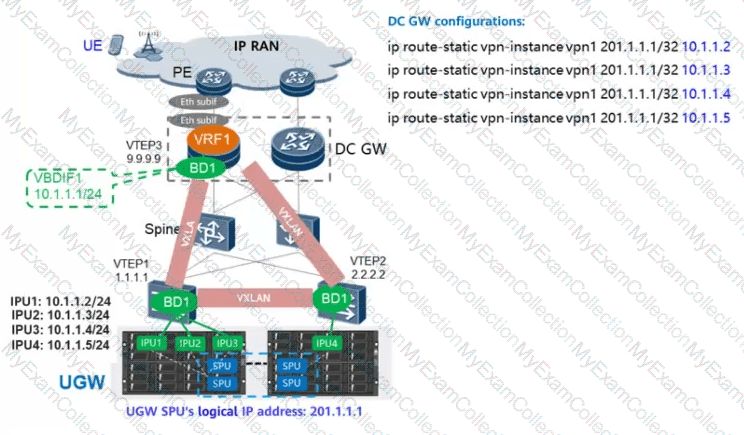
Exhibit 14.1 — Original topology/configuration figure
A.
Forwarded over a Layer 2 VXLAN tunnel
B.
Forwarded over a Layer 3 VXLAN tunnel
C.
Forwarded over a VPN after being encapsulated with VPN and public network labels
D.
Directly forwarded by the IP network
Full Access
Answer:
A
Explanation:
Huawei Reference Verification:
Huawei's underlay/overlay architecture distinguishes VXLAN tenant transport from the IP underlay that provides VTEP reachability. In this topology the DC GW's static VPN route resolves through next-hop addresses belonging to subnet 10.1.1.0/24. That subnet is attached to VBDIF1 and bridge domain BD1, which carries the corresponding Layer 2 VXLAN service. The VBDIF supplies a routed interface into a bridge domain, but the resulting transport from DC GW VTEP to leaf VTEP is an Ethernet frame encapsulated in VXLAN. Consequently the forwarding between these VXLAN endpoints is through a Layer 2 VXLAN tunnel.
Technical Deep Dive:
A is correct. The gateway performs a route lookup in VPN instance vpn1 and resolves the selected next-hop IP through the VBDIF1/BD1 connectivity. ARP/EVPN host reachability determines the Layer 2 destination associated with the remote leaf VTEP. The gateway encapsulates the resulting Ethernet frame using VXLAN and forwards the outer IP packet across the routed underlay. The leaf decapsulates the VXLAN packet and forwards traffic to the VNF. Using VBDIF for the route lookup does not by itself turn this particular transport into a Layer 3 VXLAN tunnel; the relevant BD carries the Layer 2 overlay. The alternative MPLS-label answer assumes a different transport encapsulation, while pure unencapsulated IP forwarding ignores the VXLAN fabric. On supported Huawei ASICs, VXLAN encapsulation, MAC lookup, and tunnel forwarding can occur in dedicated packet-processing hardware.
───────────────────────────────────────────────────────
Question # 15
Which of the following represent the primary functions of BGP-LS in Huawei SRv6 Policy?
A.
Delivers BGP routes.
B.
Advertises the SRv6 Policy status.
C.
Collects topology/prefix information.
D.
Delivers SRv6 Policy information.
Full Access
Answer:
C
Explanation:
Exact Extract — Huawei Training Material (Automatic SDN Network O & M, p.29):
“BGP-LS: A method of collecting network topology information, which makes it easier and more efficient to collect topology information. BGP-LS Route: A medium that carries network topology information. There are three types of BGP-LS routes, which are used to carry node, link, and route prefix information respectively. The three types of routes work together to transmit topology information.â€
Huawei Reference Verification:
Huawei's BGP-LS protocol-concepts module describes BGP-LS as a mechanism for collecting topology information through BGP. It defines three principal link-state NLRI categories carrying node information, link information and route-prefix information. An IGP learns the network topology, and BGP-LS speakers summarize and export it to a controller for centralized traffic-engineering computation. SRv6 Policy delivery is instead performed using BGP SR Policy mechanisms or other supported southbound interfaces, not ordinary BGP-LS topology advertisement. Therefore the function sought is topology and prefix collection.
Technical Deep Dive:
C is correct. BGP-LS removes the need for a centralized controller to run every IGP protocol directly. OSPF and IS-IS still build their routing-domain LSDBs, but BGP-LS speakers export node, link and prefix attributes in a normalized form. The controller assembles a multi-domain topology, combines TE attributes such as bandwidth and delay, and computes optimized SRv6 service paths. BGP-LS is not primarily an ordinary IPv4/IPv6 unicast route delivery channel, nor is it the BGP SR Policy address family used to distribute headend policies. BGP-LS supplies network state; policy signaling supplies traffic-steering instructions. The training material explicitly states that a BGP-LS route is a medium for node, link and prefix topology information. This is why the topology-and-prefix selection is the unambiguous answer.
───────────────────────────────────────────────────────
Question # 16
Under which of the following conditions must OSPF TE and IS-IS TE flood link information?
Select all that apply.
A.
An LSP cannot be established because resources are insufficient to reserve bandwidth.
B.
A link is activated or deactivated.
C.
The IGP TE flooding interval elapses.
D.
The link attribute changes.
Full Access
Answer:
A, B, C, D
Explanation:
Huawei Reference Verification:
Huawei's OSPF TE and IS-IS TE implementations flood link-state and traffic-engineering information so that routers and traffic-engineering controllers can maintain an accurate TEDB. Triggers include topology changes when links become active or fail, changes in TE attributes, and periodic refresh when the flooding interval expires. In addition, insufficient bandwidth resources discovered during LSP setup can prompt updated TE resource advertisements so that other path-computing nodes have current information. These update conditions keep link attributes, bandwidth availability, and topology consistent throughout the routing domain. Thus all four conditions are relevant.
Technical Deep Dive:
A, B, C and D are correct. Traffic Engineering uses information beyond basic reachability: maximum reservable bandwidth, unreserved bandwidth, TE metrics and administrative groups/affinities may determine whether a constrained LSP can be established. Link activation or failure requires an immediate topology update. Administrative-group or bandwidth changes may affect which links remain eligible. TE refresh intervals ensure that relevant advertisements remain current, while a failed bandwidth reservation can trigger an availability update so other computations avoid the exhausted resource. OSPF TE distributes information in opaque LSAs, and IS-IS TE uses appropriate TLVs. CSPF relies on these advertisements to build the traffic-engineering database and determine paths meeting service requirements. Missing or delayed updates can cause setup failures or inappropriate path selection. The precise event thresholds and suppression timers are release- and configuration-dependent, but each listed condition can prompt TE link-state advertisement.
───────────────────────────────────────────────────────
Question # 17
A device receives two BGP routes for the same prefix from two peers, with one route received from each peer. One route has next hop NH1, whereas the other has next hop NH2. All other attributes of the two routes are identical. NH1 recursively resolves to two direct next hops, A and B, and NH2 likewise recursively resolves to two direct next hops, C and D. If BGP is configured with the maximum load-balancing 2 command and the device supports at most six load-balancing routes, how many load-balancing routes for the relevant prefix are present in the FIB?
A.
4
B.
2
C.
3
D.
1
Full Access
Answer:
A
Explanation:
Huawei Reference Verification:
Huawei's BGP multipath architecture distinguishes the number of BGP routes selected from the number of directly reachable FIB next hops produced by route recursion. The maximum load-balancing parameter controls the number of eligible equal-cost BGP paths. Each selected BGP next-hop address may recursively resolve through multiple equal-cost direct next hops. In this scenario two BGP paths are selected and each resolves through two direct forwarding alternatives. The total of four FIB next hops remains within the stated platform maximum of six. Therefore the correct answer is four.
Technical Deep Dive:
A is correct. `maximum load-balancing 2` permits two equivalent BGP paths for one destination, which here have BGP next hops NH1 and NH2. Route recursion then considers the IGP or directly connected paths that make each BGP next hop reachable. NH1 resolves to direct next hops A and B, while NH2 resolves to C and D. The installed FIB next-hop group therefore contains A, B, C and D, four choices in total. The device's six-path upper limit is a cap rather than a requirement to synthesize six routes. On Huawei carrier routers, the BGP control plane selects and resolves paths; forwarding NP/ASIC logic performs ECMP selection among the installed direct next hops. Useful diagnostic commands include `display bgp routing-table`, `display ip routing-table`, and `display fib`. The distinction between BGP multipath selection and physical recursive next-hop expansion is the key to the question.
───────────────────────────────────────────────────────
Question # 18
Which of the following statements are accurate about IS-IS LSPs?
Select all that apply.
A.
LSP fast flooding allows a device to first flood less than a specified number of LSPs to speed up LSDB synchronization.
B.
The shorter the LSP generation interval, the more stable the network.
C.
When the interval defined by the intelligent timer for generating LSPs reaches the maximum value, the interval does not increase if network changes occur.
D.
As the volume of link state information increases, the length of LSPs can be increased to allow each LSP to carry more information.
Full Access
Answer:
A, C, D
Explanation:
Huawei Reference Verification:
Huawei's IS-IS fast-convergence features include LSP fast flooding, intelligent generation timers and configuration of LSP size. Fast flooding sends a bounded group of LSPs early in the processing sequence to accelerate LSDB synchronization. When topology changes repeatedly, the intelligent LSP-generation timer increases its delay only to its configured maximum, preventing uncontrolled update frequency. The allowable LSP length may be increased within the supported MTU constraints to carry more topology information. A shorter generation interval does not automatically improve network stability, because very frequent updates can increase CPU utilization and SPF churn. Accordingly A, C and D are the appropriate answers.
Technical Deep Dive:
A, C and D are correct. `flash-flood` controls quick propagation of a defined maximum number of LSPs before normal route calculation, reducing network-wide propagation delay. Option A is best worded as no more than the configured number rather than strictly less. An intelligent timer can begin with a small delay, increase during repeated changes, and stop increasing at the maximum limit; C reflects this cap. Raising an LSP's configured maximum length can permit more TLVs to be carried per LSP as the topology expands, but all participating devices and interfaces must support the resulting packet size; D is correct. B is incorrect because excessive LSP generation during flapping can destabilize routing operation, increasing update load and repeated SPF calculations. Example VRP commands: `isis 1`, `flash-flood 5`, `timer lsp-generation 1000 50 50`. Use timer values appropriate for the hardware, topological scale, and failure-convergence requirements.
───────────────────────────────────────────────────────