Question # 4
Users report that traffic is negatively affected every time a BIG-IP device fails over. The traffic becomes stabilized after a few minutes. What should the BIG-IP Administrator do to reduce the impact of future failovers?
Question # 5
All pool members are online. All other virtual server settings are at default.
What might alter the load balancing behavior? (Choose one answer)
Question # 6
The BIG-IP Administrator is investigating if better TCP performance is possible for a virtual server. Which built-in profile should be tried first?
Question # 7
A BIG-IP Administrator creates an HTTP Virtual Server using an iApp template. After the Virtual Server is created, the user requests to change the destination IP addresses. The BIG-IP Administrator tries to change the destination IP address from 10.1.1.1 to 10.2.1.1 in Virtual Server settings, but receives the following error: " The application service must be updated using an application management interface. " What is causing this error?
Question # 8
The BIG-IP Administrator is investigating whether better TCP performance is possible for a virtual server.
Which built-in profile should be tried first? (Choose one answer)
Question # 9
All pool members are online and all other settings are default.
What might alter the load balancing behavior?
Question # 10
A BIG-IP Administrator adds new pool members into an existing, highly utilized pool. Soon after, there are reports that the application is failing to load for some users.
What pool-level setting should the BIG-IP Administrator check?
Question # 11
The BIG-IP Administrator has to provide encrypted communication between users and the virtual server they access. Multiple hostnames are configured in DNS with the same IP address.
Which profile type and setting in the profile should be used? (Choose one answer)
Question # 12
Refer to the exhibit.
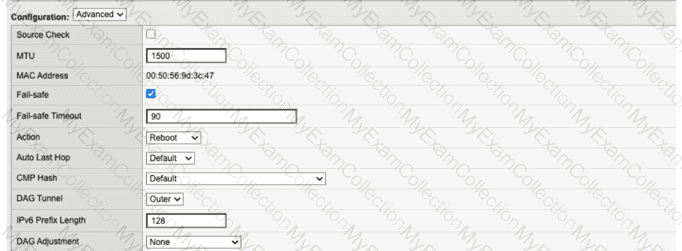
A BIG-IP Administrator configures a new VLAN on an HA pair of devices that does NOT yet have any traffic. This action causes the assigned traffic group to fail over to the standby device. Which VLAN setting should be changed to prevent this issue?
Question # 13
Which two load balancing methods consider all the connections the BIG-IP has between it and each backend application server (Pool Member) when making a load balancing decision for a new connection?
Question # 14
A BIG-IP Administrator configures an SSH pool with five members.
Which health monitor should be applied?
Question # 15
Application administrators are reporting that nodes different from those configured in the pool are selected. The use of an iRule is suspected.
How can the BIG-IP Administrator check if an iRule is used for this traffic? (Choose two answers)
Question # 16
A Standard Virtual Server for a web application is configured with Automap for Source Address Translation. The original client IP must be known by backend servers.
What should the BIG-IP Administrator configure?
Question # 17
Refer to the exhibit.
A BIG-IP Administrator needs to configure health monitors for a newly configured server pool named Pool_B. Which health monitor settings will ensure that all pool members will be accurately marked as available or unavailable?
Question # 18
During a high-demand event, the BIG-IP Administrator needs to limit the number of new connections per second to a Virtual Server.
What should be applied?
Question # 19
In a pool there are 2 pool members out of the 5 members that are older servers. The number of connections these can handle is less than the other 3 pool members. Which load balancing method would allow more traffic to be directed to the newer servers? (Choose one answer)
Question # 20
In the BIG-IP Configuration Utility, a user requests a single screen view to determine the status of all Virtual Servers and associated pool members, as well as any iRules in use. Where should the BIG-IP Administrator instruct the user to find this view?
Question # 21
To increase available bandwidth of an existing Trunk, the BIG-IP Administrator is adding additional interfaces. Which command should the BIG-IP Administrator run from within the bash shell?
Question # 22
Refer to the exhibit.
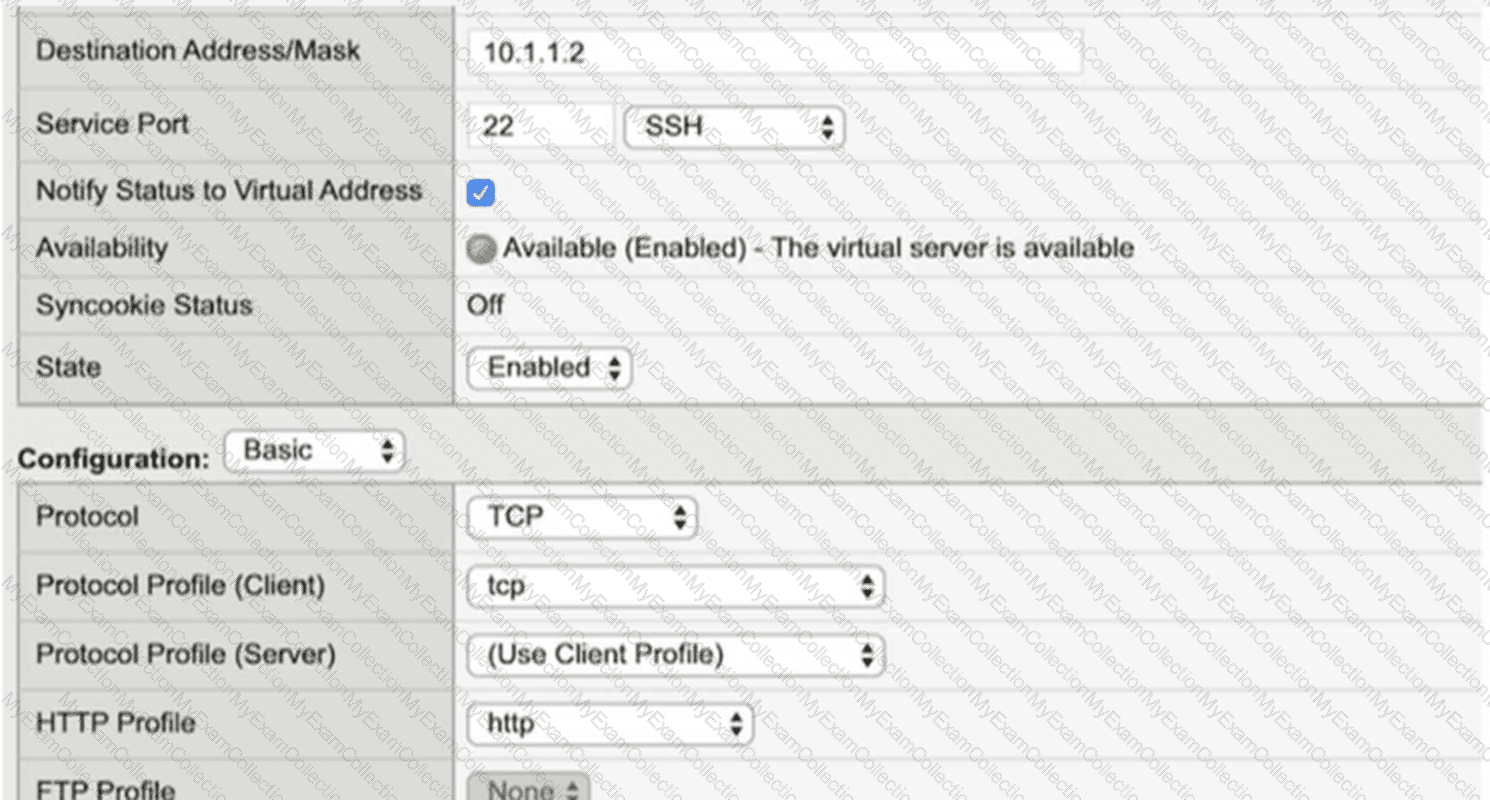
A BIG-IP Administrator creates a new Virtual Server to load balance SSH traffic. Users are unable to log on to the servers.
What should the BIG-IP Administrator do to resolve the issue?
Question # 23
A Standard Virtual Server reports poor performance for Internet users.
What TCP profile configuration should be applied?
Question # 24
A BIG-IP Administrator finds the following log entry after a report of user issues connecting to a virtual server:
01010201: Intercept exhaustion on 10.70.110.112 to 192.28.123.250:80 (proto 6)
How should the BIG-IP Administrator modify the SNAT pool that is associated with the virtual server? (Choose one answer)
Question # 25
Due to a change in application requirements, a BIG-IP Administrator needs to modify the configuration of a Virtual Server to include a Fallback Persistence Profile.
Which persistence profile type should the BIG-IP Administrator use?