Question # 4
Nonstress testing is used more frequently for antepartum testing than contraction stress testing because contraction stress testing has a:
Question # 7
(Full question)
Vibroacoustic stimulation (VAS) is a useful intervention which can
Question # 9
(Full question statement)
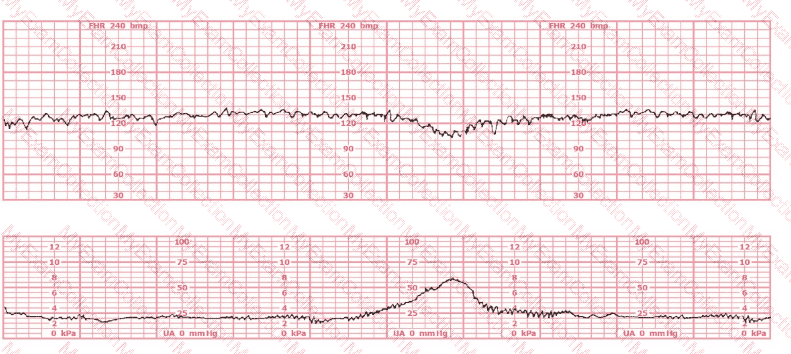
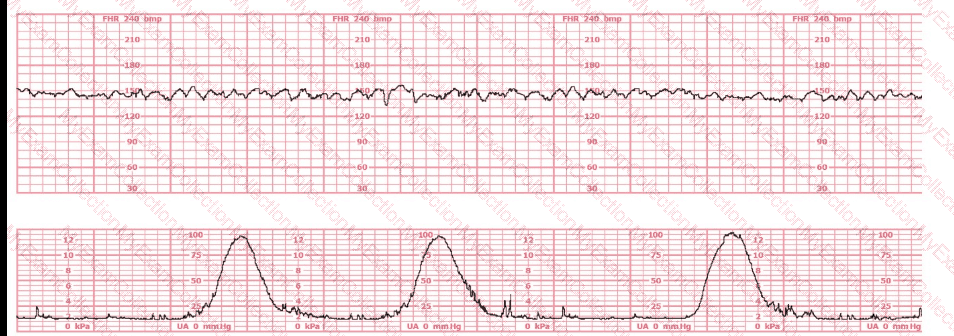
A woman at 39-weeks gestation is in labor, progressing normally. The baseline fetal heart rate has increased from 125 to 150 beats per minute over the last hour with moderate variability. What is the next step?
Question # 10
Usually, the duration of an early deceleration in comparison with the contraction is:
Question # 11
The most probable underlying fetal physiologic cause for this tracing would be:
Question # 12
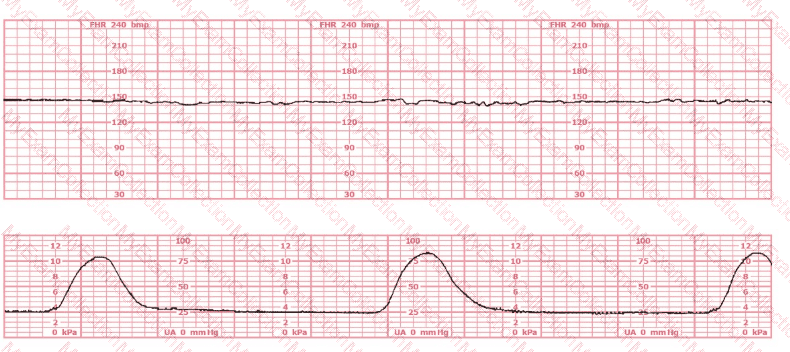
A woman is being induced with oxytocin. The tracing shown is representative of 20 minutes. Based on this tracing, the next step would be to:
Question # 13
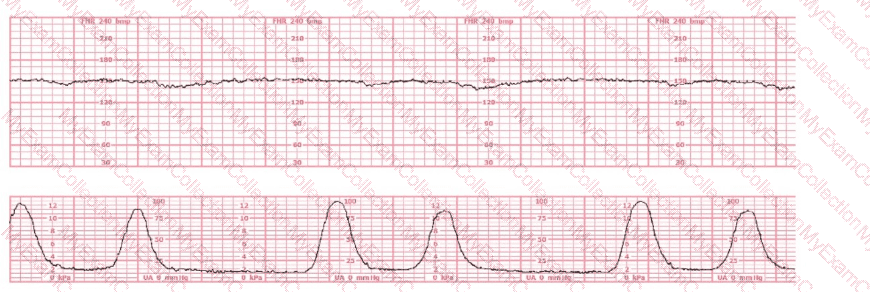
A woman reports 12 fetal movements over one hour. The best recommendation is to:
Question # 14
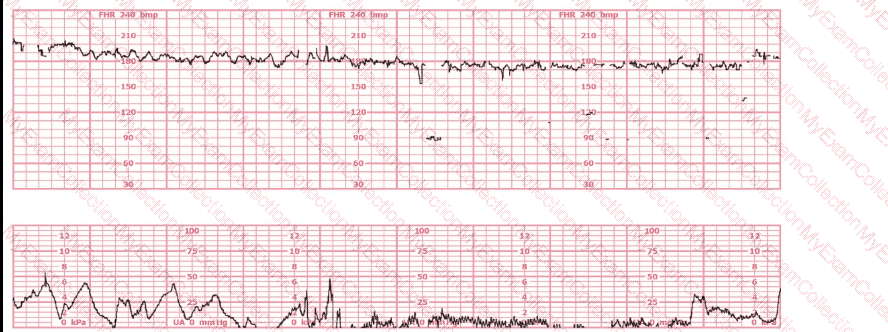
A 30-year-old woman (G2P0) is experiencing preterm labor at 26-weeks gestation. She is receiving magnesium sulfate for neuroprotection. Her external fetal monitoring tracing over the past 30 minutes is shown. The next step would be to:
Question # 15
The factor that differentiates a prolonged deceleration from bradycardia is:
Question # 17
A 30-minute tracing with moderate variability, accelerations, and one variable deceleration would be classified as:
Question # 18
A woman with hypertension at 38-weeks gestation has a biophysical profile. The result is 4/10 with decreased amniotic fluid volume. The next step should be to:
Question # 19
A woman who is one week past a confirmed due date has serial ultrasounds to determine:
Question # 20
The ratio of oxyhemoglobin to the total amount of hemoglobin available is called oxygen
Question # 21
Sustained fetal supraventricular tachycardia that goes untreated is most likely to result in:
Question # 22
A fetal heart rate pattern characteristic of fetal neurological injury and impending intrapartum fetal demise is:
Question # 23
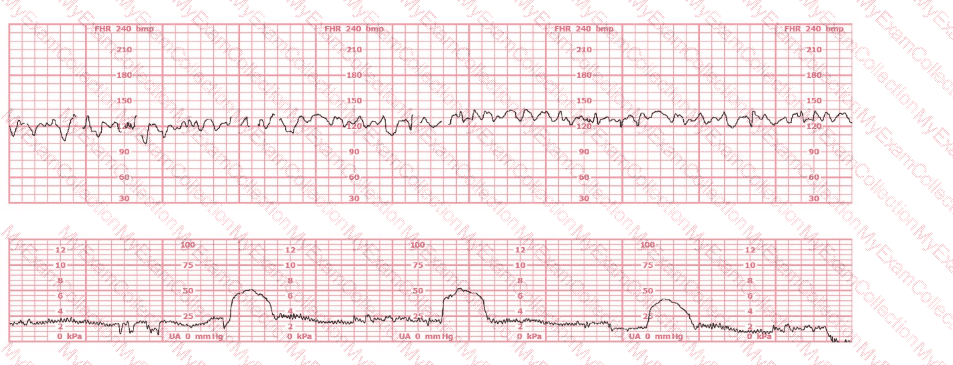
A woman at 34-weeks gestation is in active labor after spontaneous rupture of membranes. Accelerations should be documented as
Question # 24
When auscultating the fetal heart rate, the Doppler should be placed over the fetal:
Question # 25
The presence of fetal breathing movements on a biophysical profile reflects adequate:
Question # 26
An internal electronic fetal monitor tracing continues to record artifact despite equipment troubleshooting and replacement of the spiral electrode. The next action is to:
Question # 27
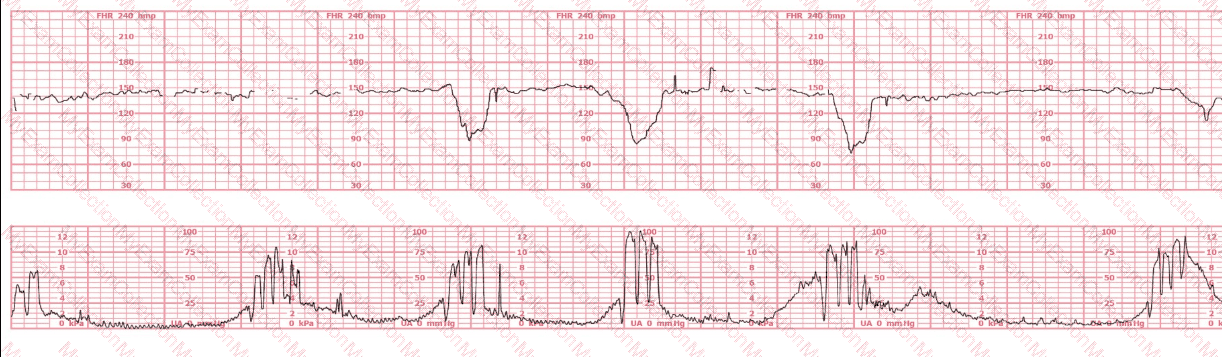
A woman in labor has been pushing for 4 hours. For the last 2 hours, there have been recurrent variable decelerations. Variability has evolved from moderate to minimal. Cervical exam is 10/100%/+2, fetal head OP. There has been no fetal descent for the last 45 minutes. Based on the tracing shown, the most reasonable approach is
Question # 28
A fetal heart rate pattern shows no accelerations or decelerations. It would be interpreted as a Category II pattern if it occurred with:
Question # 30
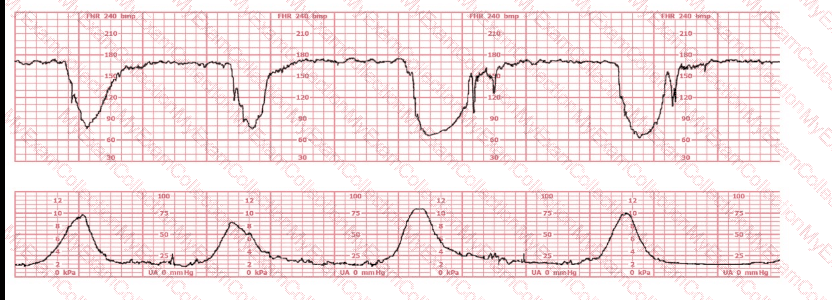
The decelerations seen in the fetal monitoring tracing shown are best described as:
Question # 31
Fetal respiratory acidosis is most likely to present with which of the following fetal heart rate decelerations?
Question # 33
(Full question statement)
Recurrent decelerations are defined as occurring with 50% or more of contractions in any window of how many minutes?
Question # 34
When the fetal heart rate is measured by a Doppler transducer and the intervals between heart beats are persistently identical, this shows as
Question # 35
A woman is admitted at 41-weeks gestation for fetal evaluation following a motor vehicle accident. She reports that she hit her abdomen on the steering wheel. The underlying physiology of the tracing is most likely:
Question # 36
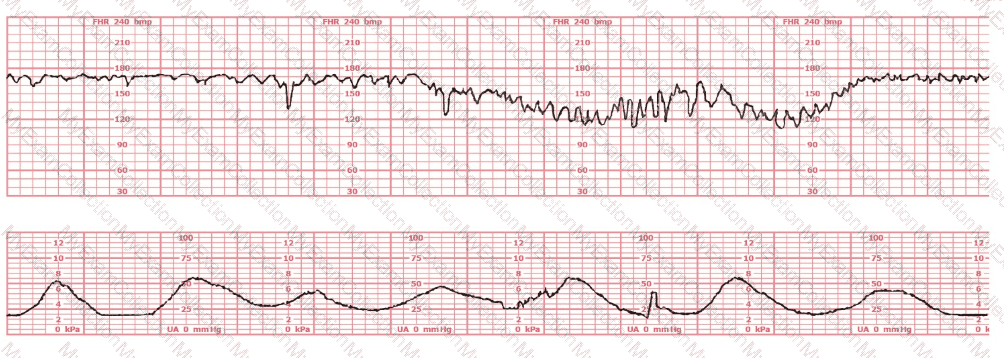
A woman has been 5 cm dilated for the past 3 hours. The tracing shown has developed over the last 30 minutes. The best initial course of action is to:
Question # 37
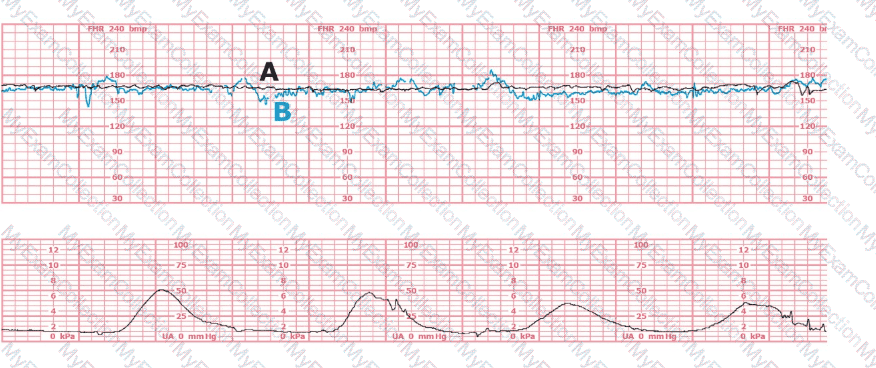
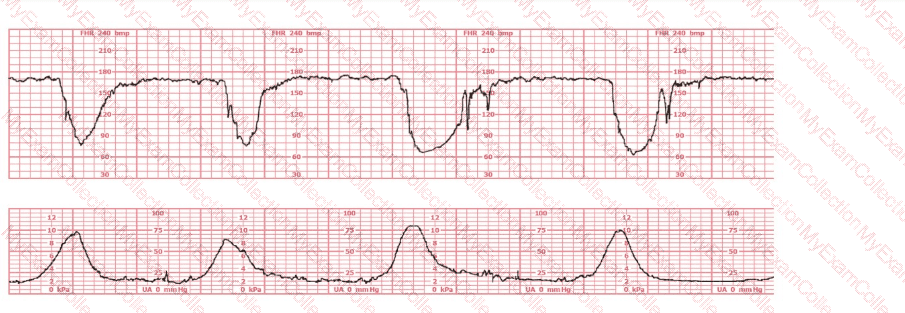
The black pattern represents the heart rate pattern for Baby A. The blue pattern represents the heart rate pattern for Baby B. A possible etiology of the baseline fetal heart rate of Baby A is: