Question # 4
Which of the following are key elements of a risk register?
Choose 2 answers.
A.
Performance criteria
B.
Probability of occurrence
C.
Function of the risk
D.
Impact on the scope
Full Access
Answer:
B, D
Explanation:
The correct answers are B and D . A risk register is used to document, organize, and evaluate risks so that the VM team can understand how uncertainty may affect proposed alternatives. The two essential risk-register elements shown in the choices are probability of occurrence and impact on the scope . Probability identifies how likely the risk is to happen. Impact identifies what the consequence will be if the risk occurs, including possible effects on scope, cost, schedule, quality, performance, implementation, or stakeholder acceptance.
In the VM Job Plan, risk thinking becomes especially important when ideas move from creativity into evaluation and development. At that point, alternatives are no longer just possibilities; they must be tested for feasibility, consequences, and implementation exposure. A risk with high probability and high impact demands more attention than one with low probability and minor impact.
Option A, performance criteria , is related to evaluation criteria, not a core risk-register field. Option C, function of the risk , is not a standard risk-register element. Functions belong to Function Analysis and are normally expressed in verb-noun format, while risks are documented as uncertain events or conditions.
References/topics: Evaluation Phase; Development Phase; Risk Register; Risk Probability; Risk Impact; VM Proposal Screening.
Question # 5
A function performance specification:
Choose 3 answers.
A.
accurately identifies requirements specific to functions.
B.
puts parameters on VM team options.
C.
defines constraints on designers.
D.
communicates customer performance wants and needs.
E.
assists in uncovering hidden assumptions.
Full Access
Answer:
A, D, E
Explanation:
The correct answers are A, D, and E . A Function Performance Specification is used to define performance requirements in terms of the functions that must be achieved, not in terms of a predetermined design solution. In VM, value is linked to functions measured by the customer’s performance requirements, and the methodology seeks alternate ways to accomplish a function while meeting customer performance expectations. ( )
Therefore, it accurately identifies requirements specific to functions . FPS characterizes each function through criteria, expected performance levels, and flexibility, which makes the requirement measurable and traceable. ( Value Analysis ) It also communicates customer performance wants and needs because it documents what the user or customer expects the solution to accomplish. The FPS approach expresses needs and expected performance without reference to a specific solution, allowing broader innovation while maintaining customer requirements. ( Value Analysis )
It also helps uncover hidden assumptions because vague wants must be translated into explicit criteria, levels, and flexibility. Option B is incorrect because FPS does not evaluate or limit VM team options; it defines functional performance expectations. Option C is incorrect because FPS should avoid constraining designers to a specific design.
References/topics: Function Analysis Phase; Function Performance Specification; Customer Requirements; Performance Criteria; Functional Requirements.
Question # 6
When facilitating a VM study team without experience with function analysis, which of the following are effective methods to introduce the topic?
Choose 2 answers.
A.
Prepare a FAST diagram in advance of the meeting.
B.
Show the VM study team an example of function analysis.
C.
Have the VM Team identify functions of items in the room.
D.
Classify functions prior to identifying functions.
Full Access
Answer:
B, C
Explanation:
The correct answers are B and C . When a VM study team has little or no experience with function analysis, the facilitator should introduce the concept through simple demonstration and participative learning. SAVE guidance identifies Function Analysis as the foundation of Value Methodology and explains that functions are expressed in two-word active verb / measurable noun form to describe what work is being performed. ( ) Showing an example of function analysis helps the team see how physical items are translated into functional language before applying the method to the study subject.
Having the team identify functions of items in the room is also effective because it creates a low-risk practice exercise. The SAVE study material provides simple item-based examples such as a table performing “Support Weight†and a screwdriver performing “Transmit Torque,†which directly supports this teaching approach. ( ) This builds confidence before moving to more complex project functions.
Option A is not preferred because preparing the FAST diagram in advance removes team discovery, ownership, and consensus-building. Option D is incorrect because functions must first be identified before they can be classified, analyzed, or evaluated; function analysis is defined as the process of defining, classifying, and evaluating functions. ( )
References/topics: VM Facilitation; Team Learning; Function Analysis Phase; Function Identification; FAST Introduction.
Question # 7
Which of the following indicates the need to train managers, team members, or decision-makers in the Value Methodology?
Choose 3 answers.
A.
Poor results
B.
Reluctance to participate in a value study
C.
Lack of technical expertise
D.
Lack of management support
E.
Lack of funding
Full Access
Answer:
A, B, D
Explanation:
The correct indicators are poor results , reluctance to participate in a value study , and lack of management support . These are behavioral and organizational symptoms showing that the Value Methodology is not being understood, accepted, or applied correctly. VM depends on a disciplined Job Plan, qualified facilitation, multidisciplinary participation, and informed decision-making. SAVE describes VM as a systematic process applied by a multidisciplinary team to improve value through function analysis, and SAVE also emphasizes education, training, and certification as part of competent VM practice. ( Value Engineering )
Poor results suggest that participants may be using VM tools mechanically without understanding function analysis, value improvement, or the Job Plan logic. Reluctance to participate usually reflects misunderstanding, fear of criticism, or lack of awareness of the benefits of VM. Lack of management support is especially critical because VM programs require sponsorship, resources, implementation authority, and decision-maker commitment. Lack of technical expertise is not primarily a VM training indicator; it is a team composition issue. Lack of funding is a resource constraint, not direct evidence that VM education is needed.
References/topics: VM Programs; VM Training; Management Support; Program Implementation; Team Participation; Value Study Effectiveness.
Question # 8
A small group within the VM team is sitting silently and won’t engage. What should the VM facilitator do?
A.
Ask the group to leave
B.
Open discussions with the group
C.
Ignore potential threats to the group
D.
Engage the other VM team members
Full Access
Answer:
B
Explanation:
The correct answer is B. Open discussions with the group . In VM facilitation, silence from a subgroup is a participation barrier that must be addressed constructively, not punished or ignored. The facilitator’s responsibility is to maintain a productive team environment, encourage balanced participation, and protect the integrity of the Job Plan. SAVE-related VM guidance emphasizes that the team leader must have both Value Methodology training and team facilitation capability, including strong leadership and communication skills. ( UW Courses )
A silent subgroup may indicate disagreement, confusion, resistance, lack of psychological safety, or hidden technical concerns. Opening discussion allows the facilitator to surface the cause without embarrassing the participants. This may be done through neutral questions, direct invitation, small-group check-ins, or reframing the issue so the subgroup can contribute safely.
Option A is inappropriate because asking them to leave damages trust and reduces multidisciplinary input. Option C is incorrect because ignoring disengagement allows dysfunction to grow. Option D may help later, but engaging others first does not address the disengaged subgroup directly. The facilitator should first open communication with the silent group and reintegrate them into the VM process.
References/topics: VM Facilitation; Team Dynamics; Communication Skills; Participation Management; VM Study Team Leadership.
Question # 9
In VM, the basic function of a product, project, or process answers which question?
A.
What must it do?
B.
What does it cost?
C.
Who designed it?
D.
How quickly can it be procured?
Full Access
Answer:
A
Explanation:
The correct answer is A . The basic function is the essential purpose for which the project, product, or process exists. SAVE’s dictionary defines the basic function as the specific purpose for which the subject exists and states that it answers, “What must it do?†This is one of the most important concepts in the CVS exam because the basic function anchors function analysis, FAST diagramming, creativity, and evaluation.
Option B is incorrect because cost is a resource measure, not the basic function itself. Cost becomes meaningful only when compared with function, worth, performance, and user need. Option C is irrelevant to function. Option D may matter in procurement or schedule evaluation, but it does not define why the subject exists. A team that fails to identify the basic function often becomes trapped by existing design assumptions. For example, a wall may be assumed necessary, but the basic function might be “separate spaces,†which could be achieved by many alternatives. Function abstraction is the discipline that opens the door to value improvement.
References/topics: Basic Function; Function Classification; Function Analysis Phase.
Question # 10
The Value Methodology
Choose 2 answers.
A.
Encourages multidisciplinary communication
B.
Accelerates the design process
C.
Maintains paradigms
D.
Develops realistic budgets
Full Access
Answer:
A, D
Explanation:
The correct answers are A and D . Value Methodology is defined by SAVE International as a systematic process used by a multidisciplinary team to improve project value through the analysis of functions. Because the method intentionally brings together people from different technical, operational, cost, owner, user, and management perspectives, it naturally encourages multidisciplinary communication . The SAVE Study Guide also explains that function naming helps multidisciplinary teams build a shared understanding of project requirements, which supports clearer communication and better identification of value-improvement opportunities. ( )
The second correct answer is develops realistic budgets . VM evaluates required functions against resources such as materials, labor, price, time, and other cost drivers. This function/resource relationship helps teams understand what the project must accomplish and what resources are reasonably required. OMB’s Value Engineering policy also describes VE as a management tool used to ensure realistic budgets , remove nonessential costs, and maintain acceptable quality. ( George W. Bush White House Archives )
Option C is incorrect because VM does not maintain paradigms; it challenges assumptions and existing approaches. Option B may occur as an indirect benefit, but it is not the stronger core answer for this two-response item.
References/topics: Value Methodology Definition; Multidisciplinary Team; Function/Resource Relationship; VM Job Plan; VM Programs.
Question # 11
Which activities promote innovation by the VM team during the Creativity Phase?
Choose 2 answers.
A.
Envisioning the ideal
B.
Maintaining existing solutions
C.
Testing old combinations
D.
Modifying what currently exists
Full Access
Answer:
A, D
Explanation:
The correct answers are A and D . In the Creativity Phase, the VM team deliberately moves beyond the current design, process, or solution and generates alternative ways to perform the required functions. SAVE’s Value Methodology Standard defines the Creative Phase as the point where the team uses creative techniques to identify other ways to perform the project’s functions .
Envisioning the ideal promotes innovation because it removes premature constraints and helps the team imagine the best functional outcome before judging feasibility, cost, or implementation difficulty. This supports divergent thinking, which is essential during Creativity. Modifying what currently exists also promotes innovation because many value-improving ideas are produced by adapting, improving, simplifying, combining, or changing an existing concept rather than inventing a completely new one.
By contrast, maintaining existing solutions does not promote innovation because it preserves the current approach and limits alternative thinking. Testing old combinations is also not the best answer because the Creativity Phase is focused on generating possibilities, not testing or validating them. Testing, screening, and ranking belong more naturally in the Evaluation Phase.
References/topics: Creativity Phase; Creative Thinking; Alternative Generation; Function-Based Innovation; VM Job Plan.
Question # 12
A company wants to add a new product to its manufacturing process. Who should provide input as this new product will affect the current manufacturing process?
Choose 3 answers.
A.
Marketing
B.
Maintenance
C.
Production
D.
Human resources
E.
Engineering
Full Access
Answer:
B, C, E
Explanation:
The correct answers are Maintenance, Production, and Engineering . In the Preparation Phase, the VM Facilitator must ensure that the right stakeholders and technical participants are involved before the study begins. SAVE describes Value Methodology as a systematic process performed by a multidisciplinary team led by a qualified facilitator to improve value. ( Value Engineering ) The selected participants should represent the areas directly affected by the subject under study.
Because the new product affects the current manufacturing process , the most relevant input must come from those who understand the physical process, equipment, workflow, capacity, and technical requirements. Production provides knowledge of daily operations, labor flow, throughput, bottlenecks, quality issues, and feasibility on the shop floor. Maintenance provides input on machine reliability, downtime risk, service access, preventive maintenance needs, and equipment limitations. Engineering contributes design, tooling, process capability, specifications, manufacturability, and technical integration.
Marketing may help define customer demand or product positioning, but the question specifically focuses on manufacturing-process impact. Human resources may support staffing or training later, but it is not one of the primary technical input sources for process change.
References/topics: Preparation Phase; Team Selection; Stakeholder Involvement; Multidisciplinary Team; VM Facilitation.
Question # 13
Which of the following are typically documented on an Implementation Form?
Choose 3 answers.
A.
Creative idea list
B.
VM proposal number
C.
Risk impacts
D.
Title of the VM proposal
E.
Developer of the VM proposal
Full Access
Answer:
B, D, E
Explanation:
The correct answers are B, D, and E . An Implementation Form is used after VM proposals have been developed, presented, reviewed, and moved into disposition or execution tracking. Its purpose is to identify each accepted or pending value alternative clearly enough that management, the project team, and follow-up reviewers can track what proposal is being implemented, who developed or owns it, and how it will be handled.
The SAVE International Study Guide describes Implementation Activities as ensuring accepted value alternatives are implemented and that projected benefits are realized. It further identifies activities such as conducting an implementation meeting, determining the disposition of each value alternative, establishing action plans, obtaining commitments, setting timeframes, tracking value achievement, and validating benefits. ( )
Therefore, an implementation form normally requires traceable proposal identifiers: the VM proposal number , the title of the VM proposal , and the developer or originator/responsible party . These fields allow each proposal to be tracked from study recommendation through acceptance, rejection, modification, and completion. A creative idea list belongs to the Creativity Phase record, not implementation tracking. Risk impacts may support development or recommendation documentation, but they are not as fundamental as proposal identity and responsibility fields on the implementation form.
References/topics: Implementation Phase; VM Proposal Tracking; Action Plans; Follow-Up; Value Study Recommendation Documentation.
Question # 14
What should the VM facilitator primarily consider when guiding discussion on which VM proposals to present when time is limited?
Choose 2 answers.
A.
Proposals that provide the greatest benefit
B.
The relative risk of each proposal
C.
Easily implemented proposals
D.
Proposals with low-cost impact
Full Access
Answer:
A, B
Explanation:
The correct answers are A. Proposals that provide the greatest benefit and B. The relative risk of each proposal . During the Presentation Phase, the VM team must communicate recommendations that are strong enough to justify management action. SAVE’s VM guidance states that developed alternatives should include cost, performance data, implementation cost, and consideration of risk and uncertainty . It also identifies performance benefit analysis as part of developing alternatives before presentation. ( UW Courses )
When time is limited, the facilitator should guide the team toward proposals with the highest value contribution, not simply the easiest or cheapest ideas. A proposal with the greatest benefit is most aligned with VM’s purpose: improving value by achieving required functions more effectively. Risk is also essential because decision makers must understand whether the recommendation is practical, credible, and acceptable for implementation.
Option C may be attractive, but ease of implementation alone does not prove high value. Option D is incorrect because low cost impact may produce limited value improvement and may not justify presentation priority. The Presentation Phase seeks concurrence and commitment from decision makers to proceed with implementation of recommendations. ( UW Courses )
References/topics: Presentation Phase; Development Phase; VM Proposal Selection; Risk and Uncertainty; Performance Benefit Analysis.
Question # 15
Which of the following considerations should be included in the Implementation Plan for each of the accepted VM proposals?
Choose 3 answers.
A.
Implementation costs
B.
Responsibility
C.
Schedule
D.
VM Team involvement
E.
New Proposals
Full Access
Answer:
A, B, C
Explanation:
The correct answers are A, B, and C . An implementation plan for accepted VM proposals must translate approved recommendations into executable action. Therefore, it must identify the implementation costs , the responsible parties , and the schedule for completing the required activities. The SAVE Value Methodology Standard states that during proposal development, the team prepares implementation requirements, including estimated initial costs, life-cycle costs, and implementation costs , while accounting for risk and uncertainty. It also requires technical data to identify schedule impact. ( UW Courses )
The same Standard further specifies that the implementation plan should include the proposed schedule of all implementation activities, team assignments, and management requirements. This directly supports responsibility and schedule as required plan elements. ( UW Courses ) In the Implementation/Post-Study activity, assignments may be made to VM team members or to other individuals designated by management, so the key requirement is not generic “VM Team involvement†but clear accountability. ( UW Courses ) “New proposals†are not part of the implementation plan for already accepted proposals; they would belong to a new study cycle or further development.
References/topics: Implementation Phase; Development Phase; Implementation Plan; Accepted VM Proposals; Responsibility Assignment; Schedule and Cost Requirements.
Question # 16
Which type of cost is calculated for study items by multiplying the unit cost by the number of units produced per year?
A.
Total costs
B.
Life-cycle costs
C.
Incremental unit costs
D.
Annualized costs
Full Access
Answer:
D
Explanation:
The correct answer is D. Annualized costs . In VM cost analysis, when a study item has a known unit cost and a known annual production quantity , multiplying the two gives the cost impact over one year. That makes the result an annualized cost , because the calculation converts a per-unit value into a yearly cost basis.
This distinction is important in manufacturing or repetitive-process VM studies. A component may appear inexpensive on a unit basis, but if it is used thousands or millions of times per year, its annualized cost may become a major value-improvement target. SAVE’s VM Glossary defines cost as the monetary valuation of resources consumed in the production or delivery of a project, product, or process, and it also recognizes annualized cost as a cost expression used in life-cycle cost measurement. ( )
Option A, total costs , is too broad because it may include many cost categories and periods. Option B, life-cycle costs , covers acquisition, operation, maintenance, replacement, and disposal over time. Option C, incremental unit costs , concerns the cost of an additional unit, not annual volume impact.
References/topics: Information Phase; Cost Data; Cost Modeling; Annualized Costs; Manufacturing Study Items.
Question # 17
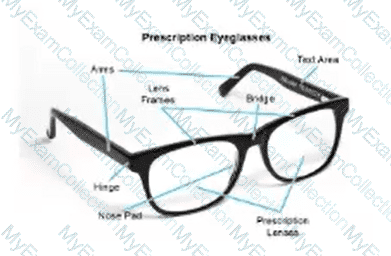
On the Function Logic Path, how do prescription eyeglasses correct vision?
A.
Minimize weight
B.
Secure position
C.
Improve durability
D.
Align focus
Full Access
Answer:
D
Explanation:
The correct answer is D. Align focus . In Function Analysis, the team defines what the subject must do, not what its parts are. SAVE’s study guidance states that functions are described using two-word active verb/measurable noun pairings, and FAST is used to show how project functions relate to each other. ( )
For prescription eyeglasses, the basic function is correct vision . On the Function Logic Path, the “how†question asks: How do eyeglasses correct vision? The best functional answer is align focus because prescription lenses bend and direct light so the image focuses correctly for the user. This directly supports the basic function.
The other choices are supporting or secondary functions. Secure position helps hold the glasses properly on the face, but it does not itself correct vision. Minimize weight improves comfort, and improve durability supports dependability, but neither explains the direct functional mechanism of vision correction. FAST logic is specifically used to map these function relationships through How/Why reasoning, making align focus the correct lower-order function linked to “correct vision.†( )
References/topics: Function Analysis Phase; FAST Diagramming; Function Logic Path; Basic Function; Lower-Order Function.
Question # 18
What is the expected output or deliverable of the Information Phase?
A.
Identification of value improvement opportunities
B.
Thorough understanding of the study subject
C.
Definition of study subject functions
D.
Recommended value improvement proposals
Full Access
Answer:
B
Explanation:
The correct answer is B. Thorough understanding of the study subject . The Information Phase is designed to ensure that the VM study team understands the project, product, process, or service before performing function analysis or generating alternatives. SAVE’s Value Methodology Standard states that the objective of the Information Phase is to complete the value study data package started during Pre-Study, receive briefings from the project sponsor or designer, ask questions, complete site visitation where needed, confirm improvement targets, and review the scope statement for adjustment.
Therefore, the expected output is not yet a proposal or a final value recommendation; it is a reliable, shared understanding of the study subject, including baseline requirements, constraints, costs, performance expectations, schedule factors, and stakeholder objectives. Option A is more closely related to the Function Analysis Phase , where cost-to-worth comparison identifies value improvement opportunities. Option C is also Function Analysis, because functions are defined after the team understands the subject. Option D belongs to the Development/Presentation Phases , where selected ideas become formal value improvement proposals.
References/topics: Information Phase; VM Job Plan; Study Subject Understanding; Data Package; Scope Review.
Question # 19
The decision-makers agreed to implement a VM proposal requiring an organizational change. What should be done to improve success?
Choose 2 answers.
A.
Encourage participation by those affected by the change
B.
Strictly define the implementation plan
C.
Hire a change management consultant
D.
Appoint an oversight committee
Full Access
Answer:
A, D
Explanation:
The correct answers are A. Encourage participation by those affected by the change and D. Appoint an oversight committee . In the Implementation Phase, the approved VM proposal must be converted from an accepted recommendation into an actual organizational action. When the proposal requires organizational change, technical approval alone is not enough; successful implementation depends heavily on acceptance, ownership, coordination, and follow-through.
Encouraging participation by those affected by the change is essential because employees, managers, operators, and process owners who must live with the change often understand the practical barriers, workflow impacts, training needs, and resistance points. Their involvement improves buy-in and reduces implementation failure.
Appointing an oversight committee is also appropriate because organizational change normally crosses departments, responsibilities, and authority levels. Oversight provides governance, monitors progress, resolves conflicts, confirms accountability, and ensures the approved VM proposal remains aligned with the intended value improvement.
Option B is less suitable because an implementation plan should be clear and controlled, but not so rigid that it prevents adjustment during organizational transition. Option C is not required; a consultant may help in special cases, but it is not a primary VM implementation requirement.
References/topics: Implementation Phase; Change Adoption; Stakeholder Participation; Implementation Governance; VM Proposal Follow-Through.
Question # 20
According to the Value Methodology Job Plan.
Choose 2 answers.
A.
Alternative solutions are evaluated based on criteria established.
B.
Alternative solutions are generated and evaluated at the same time.
C.
Functions are defined prior to the generation of alternative solutions.
D.
Functions are defined prior to the VM study.
Full Access
Answer:
A, C
Explanation:
The correct answers are A and C because the VM Job Plan is a sequential, function-based process. SAVE’s study guide explains that the Job Plan guides the study team through identifying and focusing on key project functions so new ideas can be created for value improvement. It also states that Job Plan phases are performed in sequence because each phase provides the information needed for the next phase. ( )
Therefore, functions must be defined before alternative solutions are generated . This occurs in the Function Analysis Phase , where the team identifies, classifies, and models project functions, then selects value-mismatched functions to focus the Creativity Phase. ( ) The Creative Phase then generates alternative ideas for performing those functions, while the Evaluation Phase later reduces and prioritizes those ideas by considering cost, performance, and other evaluation methods. ( )
Option B is incorrect because idea generation and evaluation are intentionally separated; judgment is suspended during Creativity and applied during Evaluation. Option D is incorrect because functions are not fully defined before the VM study; they are formally developed during the Job Plan.
References/topics: VM Job Plan; Function Analysis Phase; Creativity Phase; Evaluation Phase; Sequential Job Plan Logic.
Question # 21
The VM Job Plan differs from the scientific method approach to problem-solving because the VM job plan
A.
requires less information on a subject than the scientific method.
B.
focuses on what a subject does.
C.
requires less analysis than the scientific method.
D.
analyzes a problem and develops a hypothesis.
Full Access
Answer:
B
Explanation:
The correct answer is B. focuses on what a subject does . The key difference between the VM Job Plan and many other problem-solving methods is its deliberate emphasis on function . In Value Methodology, the team does not begin by defending the existing design, component, process, or solution. Instead, it asks what the subject must do to satisfy the required need.
SAVE’s Study Guide states that Value Methodology improves value through the analysis of functions and that Function Analysis is the activity that differentiates VM from other problem-solving or improvement practices. It also explains that functions describe the work being performed within the study scope using active verb and measurable noun pairings. ( )
Option A is incorrect because VM still requires adequate information during the Information Phase. Option C is incorrect because VM does not reduce analysis; it structures analysis through the Job Plan. Option D describes the scientific method more closely because hypothesis development and testing are central to scientific inquiry. The VM Job Plan is function-based: it defines, analyzes, creatively improves, evaluates, develops, and presents alternatives that better perform required functions. SAVE’s VM Standard also confirms that Function Analysis defines project functions and identifies which functions require improvement, elimination, or creation. ( )
References/topics: Value Methodology and Job Plan; Function Analysis Phase; Function-Based Thinking; Active Verb/Measurable Noun; VM vs Scientific Method.
Question # 22
When is the most appropriate time to acquire information from the customer?
A.
As the VM study is beginning
B.
During the final presentation
C.
Before the VM study begins
D.
During conceptual development
Full Access
Answer:
C
Explanation:
The correct answer is C. Before the VM study begins . Customer information must be acquired during the Preparation Phase , also called the pre-study effort, because the VM facilitator needs accurate project knowledge before the formal study session starts. This includes the customer’s objectives, needs, constraints, priorities, budget concerns, schedule requirements, performance expectations, risk issues, and definition of success. Without this information, the VM team may begin the study with an unclear scope, incomplete data, or incorrect assumptions.
The customer’s input also helps the facilitator select the right team members, prepare the agenda, identify required documents, define study boundaries, and confirm the decision-making framework. By the time the team enters the Information Phase, the study should already be organized and supported by relevant background data.
Option A is weaker because waiting until the study begins reduces efficiency and may waste team time. Option B is incorrect because the final presentation is for communicating recommendations, not collecting basic customer requirements. Option D is incorrect because conceptual development occurs after functions and ideas have already been analyzed.
References/topics: Preparation Phase; Pre-Study Activities; Customer Requirements; Study Scope; VM Job Plan; Information Readiness.
Question # 23
Which of the following is the most commonly used technique to identify functions?
A.
FAST
B.
Mind Mapping
C.
Random Words
D.
Random Function Identification
Full Access
Answer:
D
Explanation:
The correct answer is D. Random Function Identification . In the Function Analysis Phase, the team first identifies and defines functions of the product, project, process, or service being studied. The function statement is normally written in the classic VM format: active verb + measurable noun . SAVE-related VM guidance describes this first step as identifying and defining functions using active verbs and measurable nouns, often referred to as Random Function Definition . ( UC Homepages )
This is why Random Function Identification is the best answer. It is the direct technique used to generate the initial list of functions before the team classifies, organizes, models, or evaluates those functions.
FAST is important, but it is not primarily the first technique for identifying individual functions. FAST is mainly used after functions are listed, to show logical How/Why relationships between functions and to build a function model. SAVE material describes FAST as a technique that illustrates relationships among functions. ( cdn..com )
Mind Mapping and Random Words are creativity tools, not the standard VM function-identification method.
References/topics: Function Analysis Phase; Random Function Definition; Function Identification; Verb-Noun Function Format; FAST Diagramming.
Question # 24
Innovation styles, also known as creativity types, include
A.
Visioning, modifying, and experimenting
B.
Exploring, adapting, and brainstorming
C.
Factfinding, brainstorming, and transforming
D.
Analyzing, testing, and illustrating
Full Access
Answer:
A
Explanation:
The correct answer is A. Visioning, modifying, and experimenting . In the VM Creativity Phase, the facilitator must help the team generate a broad quantity of ideas and alternative ways to perform required functions. The SAVE Study Guide places creativity within the certification body of knowledge and emphasizes divergent thinking, unrestricted idea generation, brainstorming techniques, and suspending judgment until the Evaluation Phase. ( )
Innovation styles, also called creativity types, describe how different people naturally approach idea generation and change. The recognized Innovation Styles model includes Visioning, Modifying, Exploring, and Experimenting . Visioning focuses on ideal future possibilities; modifying improves or refines what already exists; experimenting combines and tests different factors; and exploring seeks new or novel possibilities. ( TrainingEdge )
Option A is the best match because all three listed terms are recognized innovation styles. Option B includes “exploring,†but “adapting†and “brainstorming†are not innovation styles; brainstorming is a creativity technique. Option C and D mix problem-solving or analysis activities with non-style terms.
References/topics: Creativity Phase; Innovation Styles; Divergent Thinking; Team Creativity; VM Facilitation.
Question # 25
Which of the following could a VM facilitator say to stimulate creativity?
Choose 2 answers.
A.
“What does the project manager think of these ideas?â€
B.
“What do you wish could have happened or had been done differently?â€
C.
“If you could do anything at all to change the study subject, what would that be?â€
D.
“Please wait to speak until you are called upon.â€
Full Access
Answer:
B, C
Explanation:
The correct answers are B and C . In the Creativity Phase , the VM facilitator’s role is to stimulate open, unrestricted idea generation. The SAVE Value Methodology Standard states that the Creative Phase aims to develop a large quantity of ideas for performing each selected function, and that this effort should be unconstrained by habit, tradition, negative attitudes, assumed restrictions, and specific criteria. It also states that judgment and evaluation are suspended during this phase. ( courses.washington.edu )
Option B is effective because it invites reflection on missed opportunities and encourages participants to identify improvements without immediately judging feasibility. Option C is also effective because it removes normal constraints and encourages broad, imaginative thinking about the study subject. This matches the Creative Phase principle that free flow of thoughts and ideas is required, without criticism or premature evaluation. ( courses.washington.edu )
Option A is not ideal because it introduces authority influence and may cause the team to conform to the project manager’s view. Option D restricts open participation and weakens creative flow.
References/topics: Creativity Phase; VM Facilitation; Divergent Thinking; Idea Generation; Suspending Judgment.
Question # 26
During the Presentation Phase, the team leader should primarily do which of the following?
A.
Document and communicate developed alternatives and value improvement opportunities
B.
Begin random function identification
C.
Generate all possible alternatives without evaluation
D.
Replace the owner’s decision-making authority
Full Access
Answer:
A
Explanation:
The correct answer is A . SAVE’s VM Standard defines the Presentation Phase as the phase where the team leader develops a report and/or presentation that documents and conveys the adequacy of the developed alternatives and the associated value improvement opportunity. The purpose is to communicate recommendations clearly so decision makers can assess whether to accept, modify, defer, or reject them.
Option B belongs to Function Analysis. Option C belongs to Creativity. Option D is wrong because the VM team recommends; it does not take over governance or ownership authority. A strong CVS-level presentation must be technically credible and management-focused. It should explain what is recommended, why the alternative satisfies required functions, how it affects performance and risk, what costs change, what life-cycle benefits are expected, and what implementation actions are required. The Presentation Phase is not a sales pitch based on vague savings claims. It is a disciplined transfer of decision-ready information from the VM team to accountable decision makers.
References/topics: Presentation Phase; VM Report; Decision-Maker Communication.
Question # 27
A VM study team struggles to reach consensus while evaluating an idea during the Evaluation Phase. Which approaches should the VM facilitator use?
Choose 3 answers.
A.
Have the team modify the title of the idea.
B.
Ask for more information about the idea.
C.
Remove the idea from further consideration.
D.
Ensure each team member has provided their input.
E.
Restart the evaluation process.
Full Access
Answer:
A, B, D
Explanation:
The correct approaches are A, B, and D because the facilitator’s role in the Evaluation Phase is to keep the team in a structured, objective decision process rather than prematurely discarding ideas or resetting the workshop. SAVE’s Value Methodology Standard defines the Evaluation Phase as the point where the team uses a structured process to select ideas with value-improvement potential while considering project functions, performance requirements, and resource limits. ( ) When consensus is difficult, the facilitator should first clarify the idea. Modifying the idea title can remove ambiguity, improve shared understanding, and ensure the team is evaluating the same concept. Asking for more information is also appropriate because disagreement often reflects insufficient technical, cost, risk, or implementation detail.
The facilitator must also ensure that every team member has provided input, since VM relies on multidisciplinary team judgment and stakeholder expertise. The Standard identifies the team as a multidisciplinary group chosen for relevant expertise and experience, including different points of view. ( ) Removing the idea is premature unless it clearly fails criteria, and restarting the evaluation process is unnecessary unless the entire evaluation basis is invalid.
References/topics: Evaluation Phase; VM Facilitation; Team Consensus; Structured Evaluation; Idea Clarification.
Question # 28
After reviewing the VM study results, the decision-makers take no action. What strategies could the VM facilitator use to engage the group?
Choose 2 answers.
A.
Discuss allocating time and resources to implement the change.
B.
Maintain involvement at lower level of management.
C.
Provide only the necessary information with respect to the change.
D.
Build a support network by developing a detailed Implementation Plan.
Full Access
Answer:
A, D
Explanation:
The correct answers are A and D . When decision-makers review VM study results but take no action, the facilitator is dealing with a change-response problem, not simply a technical presentation problem. In VM implementation guidance, this behavior aligns with the early “shock†response to change, where people may mentally shut down because the proposed change feels uncertain, risky, or disruptive. The recommended coping strategy is to create safety, structure, and visible support around the change.
Therefore, discussing allocation of time and resources is appropriate because implementation cannot move forward without clear commitment, staffing, schedule allowance, and management attention. The VM Guide identifies proper allocation of time and resources as a way to provide safety during change. It also states that shock and stress can be reduced by building a support network through a detailed implementation plan . ( pdfcoffee.com )
Option B is incorrect because the guidance emphasizes visible upper management support, not merely lower-level involvement. Option C is incorrect because limiting information increases uncertainty; the recommended approach is to provide broad, clear, and consistent information about the change.
References/topics: Implementation Phase; Change Management Strategies; Implementation Plan; Resource Allocation; Decision-Maker Engagement.
Question # 29
Which of the following strategies should be employed to enhance the VM study presentation?
Choose 2 answers.
A.
Include a summary of key points to reinforce the message.
B.
Design the presentation in a complex format.
C.
Utilize visuals such as charts and graphs.
D.
Provide handouts with detailed technical specifications.
Full Access
Answer:
A, C
Explanation:
The correct strategies are A and C because the Presentation Phase is intended to communicate value alternatives clearly enough for management and stakeholders to make informed implementation decisions. The SAVE Study Guide identifies the Presentation Phase purpose as presenting value alternatives to management, stakeholders, and decision makers, with the fundamental question focused on helping them make more informed decisions that fit strategic plans. ( ) Therefore, a concise summary of key points is essential because it reinforces the major recommendations, benefits, risks, and implementation direction without forcing decision makers to search through excessive detail.
Visuals such as charts and graphs are also appropriate because presentation products commonly include cost-versus-worth comparisons, present-worth analysis, risk analysis, and advantages-versus-disadvantages information. ( ) These items are best communicated visually when the objective is executive understanding and decision readiness. The formal VM Standard also states that the Presentation Phase involves an oral presentation followed by a written report, with the team obtaining approval or direction for additional information. ( courses.washington.edu ) A complex presentation format would reduce clarity, and detailed technical specifications belong mainly in the Development Phase technical data package, not as the primary means of enhancing the presentation.
References/topics: Presentation Phase; Value Alternatives; Management Decision Support; Oral Presentation; Formal Report.
Question # 30
Which statement best describes a FAST diagram?
A.
A schedule network used to calculate project float
B.
A graphical model showing dependent relationships among functions
C.
A cost spreadsheet used to calculate inflation
D.
A procurement chart showing supplier lead times
Full Access
Answer:
B
Explanation:
The correct answer is B . FAST stands for Function Analysis System Technique. SAVE defines a FAST diagram as a graphical representation of dependent relationships of functions within a project, product, or process. The diagram uses logical relationships such as “How,†“Why,†and “When†to organize functions. It is a core Function Analysis tool because it forces the team to examine why functions exist, how they are accomplished, and which functions lie on the critical function logic path.
Option A is incorrect because schedule networks belong to project scheduling, not function modeling. Option C is wrong because cost spreadsheets may support resource analysis, but they do not show functional dependency logic. Option D is a procurement management artifact. FAST is valuable because it shifts the team from objects and components to function relationships. This enables better creativity because the team can ask, “How else can we perform this function?†rather than merely asking, “How can we make this component cheaper?â€
References/topics: FAST Diagram; Function Analysis System Technique; How-Why Logic.
Question # 31
Which of the following are important to the success of the Presentation Phase?
Choose 3 answers.
A.
Tailoring the material presented based on participants
B.
Presenting each idea developed
C.
Timing of the VM results presentation
D.
Level of development of the VM proposal write-ups
E.
Having the right individuals available to participate
Full Access
Answer:
A, C, D
Explanation:
The correct answers are A, C, and D because the Presentation Phase is focused on communicating developed VM results in a form that enables decision makers to understand, judge, and act on the team’s recommendations. SAVE’s Value Methodology Standard describes the Presentation Phase as the point where the team leader develops a report or presentation that “documents and conveys the adequacy†of the developed alternatives and their value improvement opportunity. ( )
Therefore, tailoring the material to the participants is essential. Executives, technical reviewers, owners, cost specialists, and implementation personnel require different levels of detail and emphasis. Timing of the presentation is also critical because VM results should be presented while the study findings are current, decision attention is active, and implementation momentum has not been lost. Level of development of proposal write-ups is equally important because weak or incomplete write-ups reduce credibility and make approval difficult.
Option B is incorrect because the team should not present every idea generated in Creativity; only evaluated and developed alternatives should advance. The Evaluation Phase selects ideas with value potential, and the Development Phase turns selected ideas into documented proposals for decision making. ( )
References/topics: Presentation Phase; Development Phase; VM Proposal Write-Ups; Decision-Maker Communication; VM Results Presentation.
Question # 32
Carpet and vinyl tile are acceptable alternatives for an owner to cover 1,000 square meters of floor. Carpet installation cost is $30 per square meter. What is the initial cost of the carpet?
A.
$30,000
B.
$32,500
C.
$33,000
D.
$36,000
Full Access
Answer:
A
Explanation:
The correct answer is A . Initial cost is the acquisition, construction, production, or installation expenditure incurred at the start of the alternative’s life. SAVE’s dictionary defines initial cost as the initial expenditure of resources to develop, acquire, produce, or construct a project, product, or process, and notes that it is interchangeable with capital cost.
Here, the calculation is direct:
1,000 square meters × $30 per square meter = $30,000.
The maintenance costs, shampooing cost, service life, and vinyl data are not needed for this specific question because it asks only for the initial cost of carpet , not the life-cycle cost. Options B, C, and D incorrectly include additional amounts or appear to mix operating/maintenance costs with initial cost. In CVS-style questions, the trap is often to include irrelevant life-cycle data. A disciplined evaluator first identifies the cost category being requested: initial cost, recurrent annual cost, single expenditure, salvage value, present worth, annualized cost, or total life-cycle cost.
References/topics: Evaluation Phase; Initial Cost; Life-Cycle Cost Analysis.
Question # 33
A baseline design has a function cost of $120,000 and the team estimates the function worth at $80,000. Using VI = FC ÷ FW, what is the Value Index?
A.
0.67
B.
1.00
C.
1.50
D.
2.00
Full Access
Answer:
C
Explanation:
The correct answer is C . Using the stated formula, Value Index = Function Cost ÷ Function Worth = $120,000 ÷ $80,000 = 1.50 . SAVE’s dictionary defines Function Cost as the directly related resources allocated to a function and Function Worth as the lowest overall cost to perform a function without regard to criteria or code. It also defines Value Index as the monetary relationship of function cost to function worth, expressed as FC ÷ FW, where good value is VI ≤ 1.0.
Option A reverses the formula and calculates FW ÷ FC. Option B would mean cost equals worth, which is not true here. Option D has no mathematical basis from the numbers given. A VI of 1.50 indicates a value mismatch: the current function cost exceeds the function worth. This does not automatically mean the function should be eliminated, but it does identify a strong candidate for creativity and evaluation. CVS candidates must be careful because some older materials express the ratio in reverse; the exam stem controls the formula.
References/topics: Evaluation Phase; Function Cost; Function Worth; Value Index.
Question # 34
Which creativity method is based on the consideration of the overall problem and brainstorming by function?
A.
Intuitive Creativity Method
B.
Ideation Creative Method
C.
Discursive Creativity Method
D.
Empirical Creativity Method
Full Access
Answer:
A
Explanation:
The correct answer is A. Intuitive Creativity Method . In the CVS® Value Methodology framework, the Creativity Phase is designed to generate a large quantity of ideas for performing the functions selected during Function Analysis. The SAVE VM Standard describes the Creative Phase as an effort to develop many ideas for “performing each function selected for study,†with judgment suspended and free idea flow encouraged.
The intuitive creativity method is based on considering the overall problem and allowing ideas to emerge freely through association, imagination, and non-linear thinking. The VM Guide states that intuitive creativity methods are based on the “overall problem†and that brainstorming by function is a prime example. This matches the question exactly.
Option C, Discursive Creativity Method , is incorrect because it follows a deliberate, structured, step-by-step procedure by breaking the problem into sub-problems. Option D, Empirical Creativity Method , is more experimental or data-driven. Option B is not the standard classification used here.
References/topics: Creativity Phase; Creativity Techniques; Intuitive Creativity Methods; Brainstorming by Function; Creating by Function
Question # 35
During the Creativity Phase, the VM Study Team is identifying options that are out of the scope of the study. The Facilitator should
A.
Have the group vote on adjusting the scope of the VM study.
B.
Review the VM Job Plan and adjust the schedule.
C.
Discuss and confirm the study scope with the VM Team and study sponsor.
D.
Remind the VM Team that the suggested ideas are out of scope.
Full Access
Answer:
C
Explanation:
The correct answer is C . During the Creativity Phase , the VM facilitator encourages unrestricted idea generation, but the study must still remain aligned with the approved scope, objectives, and sponsor expectations. If the team begins identifying alternatives that appear outside the agreed study boundary, the facilitator should not simply shut down the ideas or allow the team to vote on changing the scope. Scope authority belongs to the study sponsor or client decision structure, not only to the workshop team.
The best action is to discuss and confirm the study scope with the VM Team and study sponsor . This protects both creativity and control. The facilitator can clarify whether the ideas are truly outside scope, whether they should be parked for later consideration, or whether the sponsor wishes to formally expand or adjust the study boundary. This is consistent with VM facilitation practice, where the facilitator manages process discipline while maintaining team participation and sponsor alignment.
Option A is incorrect because scope changes are not decided by team vote. Option B addresses schedule, not scope. Option D is too restrictive and may suppress creative thinking.
References/topics: Creativity Phase; VM Facilitation; Study Scope Control; Sponsor Alignment; VM Job Plan Discipline.
Question # 36
What are key factors that cause VM programs to fail?
Choose 2 answers.
A.
Locating the VM program within a department in the organization
B.
An undefined implementation and change management process
C.
Management support
D.
Tracking VM study results
Full Access
Answer:
A, B
Explanation:
The correct answers are A and B . A VM program can fail when it is placed too narrowly inside one department because Value Methodology must operate as an organization-wide management process, not as the property of a single functional group. When VM is positioned inside one department, other departments may view it as that department’s agenda rather than as a neutral, cross-functional decision-support process. This weakens participation, reduces ownership of recommendations, and limits executive visibility.
An undefined implementation and change management process is also a major failure factor. VM studies produce recommendations, but the program succeeds only when those recommendations are reviewed, approved, assigned, tracked, and integrated into normal project or business controls. Without a defined implementation path, even technically strong VM proposals can remain unused. Change management is necessary because VM recommendations often alter scope, design, delivery approach, cost allocation, or stakeholder expectations.
By contrast, management support and tracking VM study results are success factors, not failure factors. Executive support gives authority and resources, while tracking verifies savings, value improvement, and accountability.
References/topics: VM Programs; Program Organization; Management Support; Implementation Process; Change Management; Tracking VM Results.
Question # 37
The project manager resists implementing the change approved by the decision-makers. What should the VM facilitator do?
Choose 2 answers.
A.
Document resistance to the decision makers.
B.
Identify additional information needed.
C.
Identify potential threats to implementation.
D.
Reassess the VM proposal.
Full Access
Answer:
A, C
Explanation:
The correct answers are A and C . Once the decision-makers have approved a VM proposal, the facilitator should not automatically reopen or reassess the recommendation. The implementation responsibility has moved into the post-study/implementation environment, where the primary objective is to “assure the implementation of the approved value study change recommendations.†The SAVE VM Standard also states that the VM Team Leader may track the progress of implementation , while the design professional or assigned management personnel are responsible for executing the approved change. ( UW Courses )
Therefore, if the project manager resists an approved change, the facilitator should first treat the resistance as an implementation barrier. This requires identifying potential threats to implementation , such as technical objections, schedule concerns, stakeholder resistance, contractual constraints, or organizational politics. The Standard also requires implementation planning to account for risk, uncertainty, schedule impact, and unique project conditions. ( UW Courses )
Documenting the resistance to decision-makers is also appropriate because implementation status must remain visible to management. Reassessing the VM proposal is not appropriate unless new facts invalidate the approved recommendation. Additional information may be useful later, but the immediate facilitator actions are documentation and threat identification.
References/topics: Implementation Phase; Post-Study; Implementation Monitoring; Management Reporting; Implementation Risk.
Question # 38
What tool could the VM study team use to show customer satisfaction?
A.
Quality function deployment
B.
Quality management plan
C.
Customer FAST
D.
Resource model
Full Access
Answer:
C
Explanation:
The correct answer is Customer FAST . In Value Methodology, FAST is used in the Function Analysis Phase to model how functions relate to each other and to clarify what the project must accomplish from a functional perspective. The customer-oriented version of FAST is specifically designed to reflect that the customer determines value in the function analysis process. The SAVE study guide describes the Customer-Oriented FAST model as a variation that adds customer-focused support functions such as “attract users,†“satisfy users,†“assure dependability,†and “assure convenience.†( )
This makes Customer FAST the best tool when the study team wants to show customer satisfaction as part of the value logic. Quality Function Deployment can capture or translate the voice of the customer, but the question asks for a tool to show customer satisfaction within the VM function structure. A quality management plan is a project quality control document, not a VM function model. A resource model addresses inputs or resource use rather than customer-perceived value. Therefore, Customer FAST is the most technically precise answer.
References/topics: Function Analysis Phase; FAST Diagramming; Customer-Oriented FAST; Customer Attitude; Function Modeling.
Question # 39
Which of the following are techniques the VM facilitator might use for a VM study team that is having difficulty completing the FAST diagram?
Choose 2 answers.
A.
Ask the VM study team if a function is missing
B.
Reorganize the functions for the VM study team
C.
Make sure all identified functions are used
D.
Review level of abstraction
Full Access
Answer:
A, D
Explanation:
The correct answers are A and D . When a VM study team struggles to complete a FAST diagram, the facilitator should guide the team through questioning, not take control of the technical work. Asking whether a function is missing is an appropriate facilitation technique because a break in the How/Why logic often means the team has skipped a needed function, used an unclear verb-noun statement, or failed to connect a supporting function to a higher-order function. This keeps ownership with the team while helping them complete the logic chain.
Reviewing the level of abstraction is also correct. FAST diagramming requires functions to be placed at the right level: not too broad, not too detailed, and consistent with the project scope. If one function is stated at a strategic level and another at a component-detail level, the FAST diagram becomes difficult to organize.
Option B is incorrect because the facilitator should not reorganize the functions for the team; that weakens team participation and ownership. Option C is incorrect because not every identified function must appear in the final FAST diagram. Only functions that support the logical function model should be used.
References/topics: Function Analysis Phase; FAST Diagramming; Facilitation; Function Logic; Level of Abstraction.
Question # 40
What should the VM facilitator consider for the presentation format?
Choose 2 answers
A.
Presentation environment and location
B.
Who should present VM proposals
C.
The technical experience of the audience
D.
The type of PowerPoint presentation
Full Access
Answer:
A, C
Explanation:
The correct answers are A. Presentation environment and location and C. The technical experience of the audience . In the Presentation Phase, the facilitator must shape the format so the VM results can be clearly understood by decision-makers and stakeholders. SAVE’s Value Methodology Standard states that the team leader develops a report and/or presentation that documents and conveys the adequacy of the developed alternatives and their associated value improvement opportunity. ( )
The presentation environment and location matter because format choices depend on whether the presentation is in-person, virtual, formal, informal, executive-level, workshop-style, or held in a room with limited display or discussion capability. The facilitator must ensure the setting supports clear communication, graphics, interaction, and decision-making.
The technical experience of the audience is also essential. Highly technical reviewers may need detailed assumptions, calculations, drawings, and risk explanations. Senior executives may need a concise value case, cost impact, implementation effect, and decision options.
Option B concerns presenter assignment, not presentation format. Option D is too narrow; PowerPoint is only one possible delivery tool and does not define the proper VM presentation format.
References/topics: Presentation Phase; VM Report and Presentation; Audience Analysis; Presentation Environment; Decision-Maker Communication.
Question # 41
Projects generally begin with basic assumptions. These can become criteria or “requirements.†What should the VM study team do with these assumptions?
Choose 2 answers.
A.
Challenge them with facts
B.
Replace them
C.
Accept them as facts
D.
Verify them
Full Access
Answer:
A, D
Explanation:
The correct answers are A and D . In a VM study, assumptions must not be accepted automatically as fixed requirements. Many projects begin with assumptions about user needs, design criteria, operating conditions, owner preferences, codes, capacities, materials, schedules, or performance expectations. Over time, these assumptions may become treated as mandatory requirements even when they have not been tested. The VM study team’s responsibility is to examine them objectively.
The team should challenge assumptions with facts because unsupported assumptions can restrict creativity, increase cost, and prevent better value solutions. Challenging does not mean rejecting them blindly; it means asking whether the assumption is true, current, measurable, and necessary to perform the required function.
The team should also verify assumptions through project data, stakeholder input, customer needs, technical criteria, codes, standards, cost information, and performance requirements. Verified assumptions may remain as valid constraints or criteria. Unverified assumptions should not control the study.
Option B is incorrect because assumptions should not simply be replaced without analysis. Option C is incorrect because accepting assumptions as facts can cause the team to preserve unnecessary cost and miss value-improvement opportunities.
References/topics: Information Phase; Assumptions; Criteria and Requirements; Fact-Based Analysis; VM Job Plan.
Question # 42
The left project scope line is located between the
A.
Subject objectives and all-the-time functions
B.
Secondary and lower order functions
C.
Higher order and basic functions
D.
Basic and secondary functions
Full Access
Answer:
C
Explanation:
The correct answer is C. Higher order and basic functions . In FAST diagramming, the project scope is shown by vertical scope lines that define the portion of the function logic included in the value study. The left project scope line separates the broader reason for the study from the functions that are actually inside the study boundary.
The higher order function is placed outside the left scope line because it answers the “why†question for the basic function. It represents the larger objective or purpose that the basic function supports. FAST guidance states that highest-order functions appear outside the left scope line and to the left of the basic functions. ( )
The basic function is placed immediately to the right of the left scope line. It represents the primary purpose or mission of the subject under study. The FAST reference specifically states that basic functions immediately to the right of the left scope line represent the purpose or mission of the subject. ( )
Therefore, the left project scope line is located between the higher order function and the basic function .
References/topics: Function Analysis Phase; FAST Diagramming; Project Scope Line; Higher Order Function; Basic Function; How/Why Logic.
Question # 43
Function analysis is used to
Choose 2 answers.
A.
provide a new understanding of the project.
B.
identify improvements.
C.
create a collaborative environment.
D.
assist individuals with a technical background.
Full Access
Answer:
A, B
Explanation:
The correct answers are A and B . Function Analysis is used to give the VM team a clearer and often new understanding of the project by describing the project in terms of what it must do , rather than what it currently is . The SAVE International Study Guide identifies Function Analysis as the foundation of Value Methodology and states that functions are identified to describe the work being performed within the study scope. It also explains that functions are expressed through active verb and measurable noun pairings, which supports clear thinking and a shared understanding of functional requirements. ( )
Function Analysis is also used to identify improvements . After defining and naming project functions, the team reviews them to determine which functions may be inefficient, over-costly, or suitable for improvement. The Study Guide further explains that this process allows the team to identify where value improvement opportunities exist in the project. ( ) Creating a collaborative environment is more broadly related to facilitation and team dynamics, not the primary purpose of function analysis. Assisting only individuals with a technical background is incorrect because VM is multidisciplinary.
References/topics: Function Analysis Phase; Function Definition; Functional Requirements; Value Improvement Opportunities; FAST/Function Modeling.
Question # 44
A VM study team member determined that the VM proposal will not meet the goals of the study subject. What should the VM facilitator do?
Choose 2 answers.
A.
Document the reasons for not meeting the goals.
B.
Review the results with the stakeholders.
C.
Have the VM team member complete the VM proposal.
D.
Disregard the VM proposal.
Full Access
Answer:
A, B
Explanation:
The correct answers are A and B . During the Development Phase , a VM proposal must be sufficiently developed to demonstrate that it supports the study objectives, required functions, performance expectations, constraints, risks, and value improvement goals. If a team member determines that a proposal will not meet the goals of the study subject, the facilitator should not simply discard it without traceability. The proper action is to document the reasons the proposal does not meet the goals. This preserves the analytical basis for the decision and shows that the alternative was considered objectively rather than rejected informally.
The facilitator should also review the results with stakeholders because the proposal may affect owner requirements, scope intent, user expectations, cost targets, or implementation priorities. Stakeholder review confirms whether the proposal should be revised, deferred, combined with another alternative, or formally eliminated.
Option C is incorrect because completing a proposal that is already known not to meet study goals wastes team effort unless stakeholders specifically redirect the team. Option D is incorrect because disregarding the proposal without documentation violates disciplined VM practice and weakens decision transparency.
References/topics: Development Phase; VM Proposal Development; Stakeholder Review; Value Alternative Validation; Documentation of Rejected Alternatives.
Question # 45
What are key reasons to use a fine evaluation filter?
Choose 2 answers.
A.
It uses weighted relative importance.
B.
It slows the process to promote initial ideas.
C.
It increases rigor in the evaluation process.
D.
It allows differentiation between ideas.
Full Access
Answer:
A, C
Explanation:
The correct answers are A and C . A fine evaluation filter is used in the Evaluation Phase when the VM team needs a more disciplined and defensible method for screening ideas before selecting them for development. SAVE’s VM Job Plan states that evaluation factors and their relative importance should be agreed upon before ideas are evaluated, and that ideas are then ranked and rated against the most important evaluation criteria.
Option A is correct because the fine filter applies weighted relative importance to evaluation criteria. This prevents all criteria from being treated equally when some factors, such as cost, performance, risk, schedule, or customer impact, are more important than others. Option C is correct because this method increases rigor by moving the team from informal opinion to structured comparison. It supports rational selection of ideas for development and reduces bias, popularity-based decisions, and premature rejection of valuable alternatives.
Option B is incorrect because the purpose is not to slow the process or promote initial ideas. Option D may be a result of scoring, but it is not the primary distinguishing reason for using the fine filter.
References/topics: Evaluation Phase; Fine Evaluation Filter; Weighted Criteria; Ranking and Rating Ideas; Selection for Development.