Last Chance Black Friday Deal: Take 75% Off! Use coupon code below to secure your exam bundles! - Ends in 0d 00h 00m 00s - Coupon code: my75ex

Home > EPIC > Epic Cogito Fundamentals > COG170

COG170 Epic Cogito Fundamentals Question and Answers

Question # 4

PAT_ENC is an overtime single table extracting data from the EPT master file. It contains 1 row for every encounter. The primary key is PAT_ENC_CSN_ID. PAT_ENC_DX is an overtime multiple table that also extracts data from the EPT master file. It contains 1 line for every diagnosis associated with an encounter. The primary key is PAT_ENC_CSN_ID and LINE.

Part 1 of 2

If you were to join from PAT_ENC_DX to PAT_ENC, what should be the join condition?
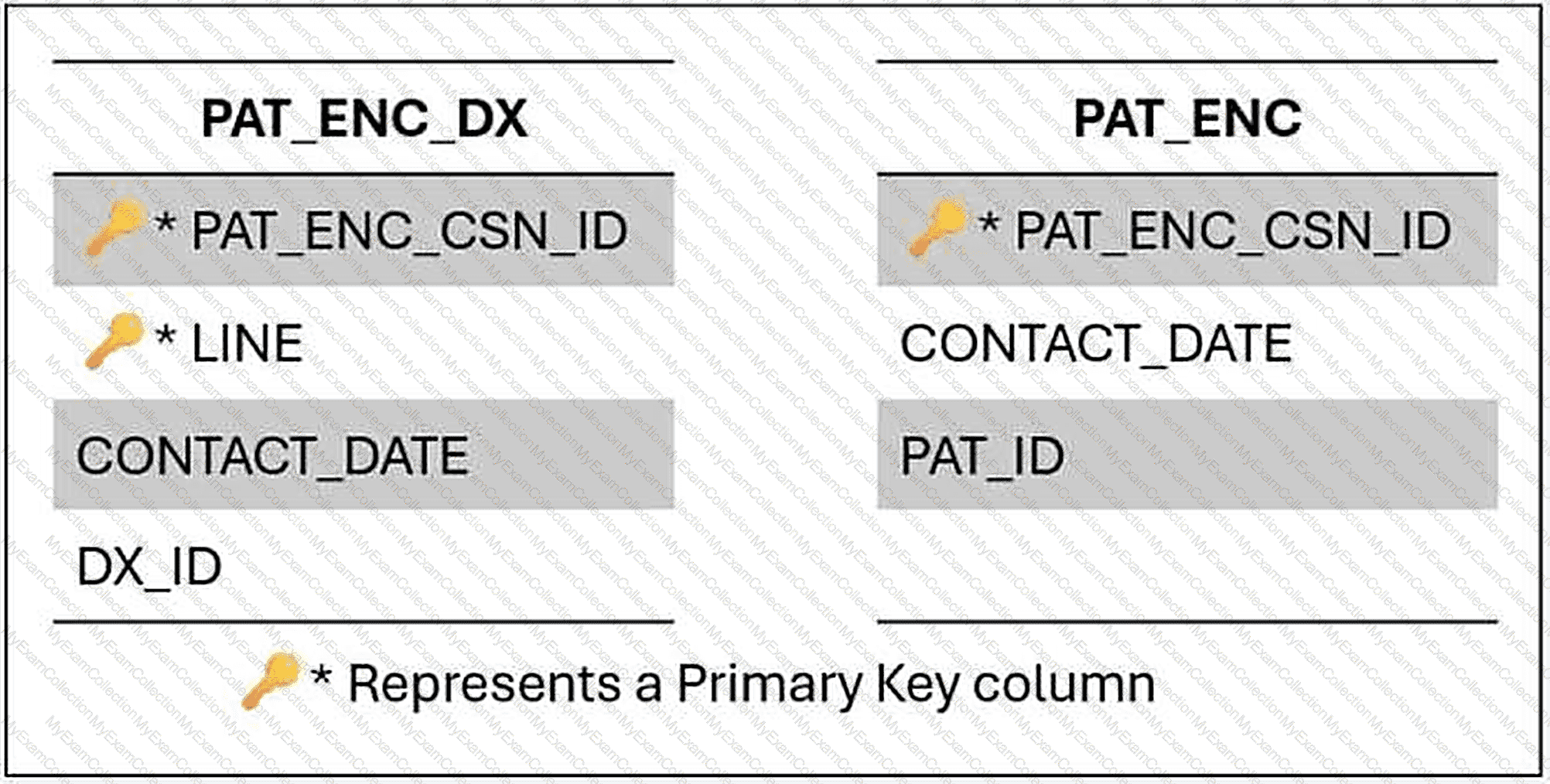
Select one of the following (1 PT)

A.

PAT_ENC_DX.PAT_ENC_CSN_ID = PAT_ENC.PAT_ENC_CSN_ID

B.

PAT_ENC.PAT_ID = PAT_ENC_DX. PAT_ID

C.

PAT_ENC_DX. CONTACT_DATE = PAT_ENC.CONTACT_DATE

D.

PAT_ENC_DX.DX_ID = PAT_ENC.PAT_ID

Full Access
Question # 5

Where is the Report Repository located?

A.

Epic Hyperspace

B.

Epic UserWeb under Documentation

C.

Epic Radar Wizard

D.

My Reports in Workbench

Full Access
Question # 6

A hospital needs to benchmark its patient satisfaction scores against Epic community data in a Radar dashboard, with drill-down to survey details, dynamic thresholds based on department, and export to external systems. Which configuration achieves this complex requirement?

A.

Use Dashboard Metrics with Epic ' s benchmarking database, configure a Hyperspace activity link, enable Department-Based Dynamic Thresholds, and add export in Component Settings.

B.

Create a SlicerDicer session with a benchmarking filter, enable drill-down, add department-based slices, and enable export in SlicerDicer.

C.

Build a Reporting Workbench report with community benchmarking, link to the dashboard, configure department-based targets, and enable export.

D.

Configure the Analytics Catalog to query Epic ' s Clarity database with drill-down, department filters, and export functionality.

Full Access
Question # 7

A Reporting Workbench report must calculate readmission rates by provider using Clarity data. How should this be set up?

A.

Use a Cogito SQL template with an aggregate function in Clarity.

B.

Create a SlicerDicer session with readmission filters.

C.

Configure a summary target in Chronicles.

D.

Assign a new Action Group for data access.

Full Access
Question # 8

To create an interactive dashboard with a component that launches a Hyperspace activity with context from a table row, such as loading a patient ' s chart and navigating to a specific section based on report data, what advanced parameter syntax in the link?

A.

Use activity descriptor with {column_name} for context vars and & section for navigation

B.

Simple & PAT_ID only

C.

Use SlicerDicer for context passing

D.

Dashboard param only

Full Access
Question # 9

In an advanced scenario, a dashboard with parameters linked to multiple components fails to update a metric component sourced from IDN when the parameter value changes to a non-standard value like a list of IDs. The metric definition uses a complex formula with dependencies on external resources. What could be the cause, and how to fix?

A.

The metric ' s query in IDN does not support list parameters; modify the definition to use IN clauses

B.

The dashboard parameter is not set to summary level; enable it in the Parameters form

C.

The component ' s data source is misconfigured; switch to Clarity for list handling

D.

User security class limits parameter propagation; assign advanced roles

Full Access
Question # 10

A SlicerDicer session in a dashboard component shows incomplete data for patient admissions. The session uses the Admissions data model. What could resolve this issue?

A.

Schedule regular ETL processes to update Caboodle.

B.

Switch the data source to real-time Chronicles data.

C.

Rebuild the session with new filters in Hyperspace.

D.

Assign a new Report Group to the component.

Full Access
Question # 11

What must be true before you can share a SlicerDicer session with another user?

A.

The other user must be logged into the same workstation

B.

The other user must have access to the same data model

C.

The session must be exported as a file

D.

The measure must be filtered

Full Access
Question # 12

What are Lines in the Chronicles database?

A.

Table names in Clarity

B.

SQL query paths

C.

Multiple responses stored in a single item

D.

Master file identifiers

Full Access
Question # 13

A dashboard component must display real-time patient triage data. Which data source and configuration ensure this?

A.

Chronicles; configure real-time extraction settings.

B.

Caboodle; schedule daily ETL processes.

C.

Clarity; enable summary targets.

D.

SlicerDicer; add a real-time triage filter.

Full Access
Question # 14

You ' re tasked with identifying patients with asthma who have had more than two ER visits in the last year. What ' s the most efficient setup?

A.

Criterion: asthma diagnosis + ER visit count > 2

B.

Slice by ER visits

C.

Use " Chart Review " tool

D.

Data model = Medications

Full Access
Question # 15

A Reporting Workbench report must calculate readmission rates by department using Clarity data. How should this be set up?

A.

Use a Cogito SQL template with an aggregate function in Clarity.

B.

Create a SlicerDicer session with readmission filters.

C.

Configure a summary target in Chronicles.

D.

Assign a new Action Group for data access.

Full Access
Question # 16

Jason adds filters to display only patients seen in Cardiology. What is the correct method?

A.

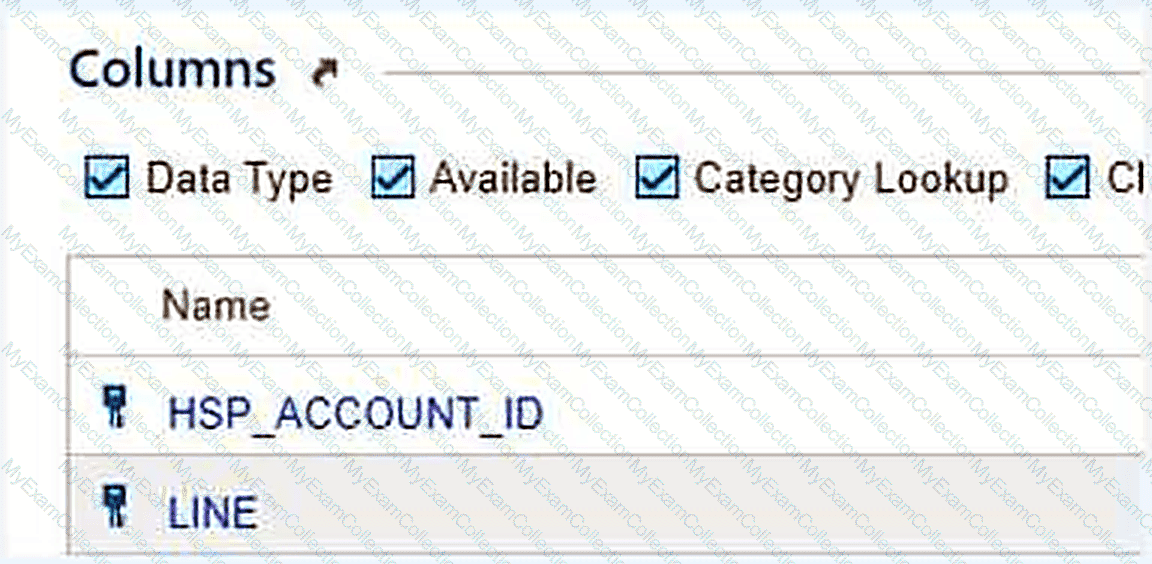
Use the Criteria tab

B.

Click the Filters toolbar button, select column, and apply value

C.

Manually sort columns and remove data

D.

Add a new parameter to the model

Full Access
Question # 17

What is a Filter in SlicerDicer?

A.

A tool to remove dashboard components

B.

A way to change the chart type

C.

A constraint applied to narrow down the population being analyzed

D.

A tool to control access to Caboodle data

Full Access
Question # 18

A Radar dashboard component displays incorrect patient satisfaction scores due to a SlicerDicer session pulling data from an outdated Caboodle extract. The session uses the Patients data model, and the dashboard is enabled. How should the analyst resolve this?

A.

Increase the frequency of ETL processes to update Caboodle and verify the session ' s data source.

B.

Rebuild the SlicerDicer session in Chronicles for real-time data.

C.

Assign a new Report Group to align the session with the dashboard.

D.

Update the component ' s security points to access current data.

Full Access
Question # 19

What are Criteria in SlicerDicer?

A.

A saved dashboard layout

B.

A guide for editing components

C.

Conditions that define who or what is included in your dataset

D.

Templates for link components

Full Access
Question # 20

A dashboard component ' s Hyperspace activity link works for administrators but not for standard users. What is the likely cause?

A.

Standard users lack security points for the activity.

B.

The component ' s data source is set to Clarity.

C.

The dashboard ' s Layout form restricts user interaction.

D.

The activity descriptor is not enabled in Chronicles.

Full Access
Question # 21

A Cogito SQL report, sourced from Clarity, groups ED visits by triage level and calculates multiple metrics (e.g., average wait time, patient volume), with a trace log. The report must be restricted to ED managers, support Epic benchmarking export, and allow dynamic filtering by shift. Which configuration is correct?

A.

Use Clarity, group via the Display tab, enable trace logging, assign a Report Group for ED managers, configure benchmarking export, and add a shift-based filter in Report Settings.

B.

Build in Chronicles, configure summary targets, disable ad hoc searches, set security points, and enable benchmarking in SlicerDicer.

C.

Create in SlicerDicer, add triage level slices, enable trace logging, restrict via Action Groups, and add shift-based filters.

D.

Use Caboodle, assign user roles in Hyperspace, configure Threshold Overrides, and enable benchmarking in Clarity.

Full Access
Question # 22

Who is responsible for maintaining the real-time operational database in Epic?

A.

Clarity Administrator

B.

Caboodle Developer

C.

Chronicles Administrator

D.

Cogito Business Analyst

Full Access
Question # 23

In an advanced dashboard with SlicerDicer and metric components, a parameter change updates SlicerDicer but lags for metrics. To synchronize in real-time for complex queries, what?

A.

Set both to use the same summary level parameter and enable propagation in IDN definitions

B.

Use separate parameters

C.

Manual refresh button

D.

Switch all to SlicerDicer

Full Access
Question # 24

What does " Response each time " refer to in an item ' s configuration?

A.

The item stores different responses across different contacts

B.

The item is part of a master file

C.

The item stores a unique response for each user

D.

The item only appears during patient registration

Full Access
Question # 25

A Radar dashboard component, linked to a SlicerDicer session using the Admissions data model, displays outdated patient admission data from Caboodle and lacks drill-down to admission details. Some users report inconsistent threshold indicators. How should the analyst resolve these issues?

A.

Increase ETL frequency to update Caboodle, configure a Hyperspace activity link for drill-down, and enable User-Specific Threshold Overrides in the Component Editor.

B.

Switch the session to Chronicles for real-time data, rebuild the session, and update security points for thresholds.

C.

Assign a new Report Group to align the session, rebuild in Clarity, and configure summary targets.

D.

Rebuild the session in Hyperspace, disable drill-down, and update the component ' s data source.

Full Access
Question # 26

A dashboard component must display a pie chart of patient demographics. Which configuration is required?

A.

Use Dashboard Resources and configure a pie graph in the Component Editor.

B.

Create a SlicerDicer session with demographic filters.

C.

Set the data source to Clarity and enable summary targets.

D.

Assign a new Report Group for chart access.

Full Access
Question # 27

What information do you need about an item in Chronicles to find its data in Clarity?

Select one of the following (1 PT)

A.

INI and item number

B.

Add type and response type of the item

C.

Primary key of the table

D.

Networked INI

Full Access
Question # 28

Which of the following is a way to allow a user to access a dashboard in Hyperspace? Select all that apply:

A.

Via user role in Dashboard Editor

B.

Via user type in Dashboard Editor

C.

By linking the dashboard in a user record or template

D.

By using a dashboard redirector

Full Access
Question # 29

A dashboard component must display real-time patient triage data with a link to the Triage Assessment activity and dynamic thresholds based on triage level. Which data source and configuration ensure this complex functionality?

A.

Chronicles; configure real-time extraction, a Hyperspace activity link, and Triage-Level Dynamic Thresholds in the Component Editor.

B.

Caboodle; schedule frequent ETL processes, enable summary targets, and add triage-level filters.

C.

Clarity; set aggregated data, link to a SlicerDicer session, and configure threshold overrides.

D.

SlicerDicer; add a real-time triage filter, configure Action Groups, and enable dynamic thresholds.

Full Access
Question # 30

A Radar dashboard component, linked to a SlicerDicer session using the Encounters data model, displays outdated patient discharge data from Caboodle and lacks drill-down to discharge summaries. Some users report inconsistent threshold indicators and no export capability. How should the analyst resolve these issues?

A.

Increase ETL frequency to update Caboodle, configure a Hyperspace activity link for drill-down, enable User-Specific Threshold Overrides, and add export in Component Settings.

B.

Switch the session to Chronicles for real-time data, rebuild the session, and update security points for thresholds and export.

C.

Assign a new Report Group to align the session, rebuild in Clarity, and configure summary targets for export.

D.

Rebuild the session in Hyperspace, disable drill-down, and update the component ' s data source for export.

Full Access
Question # 31

Maria wants to reuse a metric released by Epic in her own organization ' s dashboard. What should she do first?

A.

Clone the metric using SQL

B.

Build a custom metric with the same name

C.

Locate the metric in the Report Repository and review its summary

D.

Contact Epic Technical Services

Full Access
Question # 32

A dashboard component ' s colored indicators fail to reflect department-specific, acuity-adjusted thresholds for a table of ED metrics. The component uses Dashboard Resources and a SlicerDicer session. Some users report no drill-down to encounter details. Where should adjustments be made, and what enables drill-down?

A.

Enable Department-Acuity Dynamic Threshold Overrides in the Component Editor ' s Output Format form and configure a Hyperspace activity link for drill-down.

B.

Update the Summary Target Lookup Method to " Department-Acuity " in the Data Source form and rebuild the session.

C.

Reconfigure the SlicerDicer session with department and acuity slices and enable drill-down in SlicerDicer.

D.

Assign department-level security points in the dashboard ' s Access form and link to a Reporting Workbench report.

Full Access
Question # 33

A provider wants to see the number of diabetic patients across clinics. What would you use?

A.

A badge

B.

Measure: Clinic count + Slice: Clinic

C.

Slice by diagnosis + measure: average glucose

D.

Visualization only

Full Access
Question # 34

Which tool schedules and monitors the extraction of data from Chronicles to Clarity?

Select one of the following (1 PT)

A.

Record Viewer

B.

Data Dictionary

C.

Clarity Console

D.

Caboodle Console

Full Access
Question # 35

I EPT 16163 has an add type of no add and a response type of multiple. I EPT 19165 has an add type of response each time and a response type of multiple.

Part 1 of 2

Based on its add type and response type, which column(s) would you expect in the primary key of the table extracting item EPT 19165?

Select one of the following (2 PTS)

A.

Just a Record ID

B.

A Record ID and LINE

C.

A Contact Serial Number (CSN)

D.

A Contact Serial Number (CSN) and LINE

Full Access
Question # 36

When should you use a Pie Chart in SlicerDicer?

A.

To track changes over time

B.

To compare multiple numeric values

C.

To show proportions of a whole

D.

To identify outliers

Full Access
Question # 37

What ' s the benefit of using a Report Model over building from a template directly?

A.

It includes predefined logic and guidance from Epic to fill in local values

B.

It automatically fills in patient data

C.

It creates security access

D.

It prevents report expiration

Full Access
Question # 38

Which statement about grouping and summarization is FALSE?

A.

They allow data to be aggregated and compared

B.

Grouping can only be done on patient ID

C.

Incorrect summarization can misrepresent the data

D.

Grouping is based on shared data characteristics

Full Access
Question # 39

A provider wants to identify diabetic patients with A1C > 9.0 and break them down by clinic. What is the best configuration?

A.

Criterion for A1C + Slice by clinic

B.

Measure = A1C, Visualization = pie chart

C.

Data model = lab results, no filtering

D.

Slice by provider only

Full Access
Question # 40

A Reporting Workbench report, sourced from Chronicles, fails to execute for some users due to a custom filter for high-risk patients, despite a trace log and Ready for Use status. The report groups data by provider and calculates readmission risk, but some users report no benchmarking export. What are the issues, and how should they be resolved?

A.

Users lack access to the custom filter ' s security class and benchmarking export permissions; update their security settings and enable export in Report Settings.

B.

The report ' s data source is set to Clarity, and export is disabled; switch to Chronicles and enable export.

C.

The high-risk filter is not enabled in SlicerDicer, and the session is outdated; rebuild the filter and session.

D.

The report ' s Report Group is misaligned, and the dashboard is not enabled; update the Access form and enable the dashboard.

Full Access
Question # 41

A healthcare system wants to compare its ED triage times with Epic community benchmarks in a Radar dashboard. The component must allow drill-down to individual cases. Which configuration enables this?

A.

Use Dashboard Metrics with Epic ' s benchmarking database and configure a Hyperspace activity link.

B.

Create a SlicerDicer session with a benchmarking filter and enable drill-down.

C.

Build a Reporting Workbench report with community benchmarking and link to the dashboard.

D.

Configure the Analytics Catalog to query Epic ' s Clarity database with drill-down.

Full Access
Question # 42

What is the purpose of the Dashboard Editor in Epic?

A.

To customize user security roles and permissions

B.

To view only dashboards assigned by administrators

C.

To create and edit source dashboard records

D.

To reset user preferences to default settings

Full Access
Question # 43

A Cogito analyst is tasked with building a Radar dashboard to monitor patient no-show rates across clinics, using a SlicerDicer session based on the Appointments data model. The dashboard must include a component with drill-down to patient records, benchmark no-show rates against Epic community data, and restrict access to clinic administrators. The component fails to display in the Analytics Catalog, and some authorized users report inconsistent data. Which combination of steps resolves these issues and meets all requirements?

A.

Define the component ' s Display Title, configure a Hyperspace activity link, enable Epic benchmarking in Dashboard Metrics, assign a Report Group for administrators, and set the Summary Target Lookup Method to " Global. "

B.

Rebuild the SlicerDicer session in Clarity, enable ad hoc searches, set security points in Hyperspace, add the dashboard to the Analytics Catalog, and update user roles.

C.

Configure the component with Caboodle as the data source, add a benchmarking filter in SlicerDicer, restrict access via Chronicles, and enable user personalization.

D.

Link the component to a Reporting Workbench report, enable drill-down in SlicerDicer, assign Action Groups, and schedule nightly ETL processes.

Full Access
Question # 44

An analyst creates a Reporting Workbench report to track medication reconciliation errors, grouped by department and clinician, with a custom calculated column for error rates derived from Chronicles data. The report must be restricted to quality assurance leads, include a trace log, and allow export to Epic ' s benchmarking database. Which configuration ensures these requirements are met?

A.

Use a Cogito SQL template for the calculated column, assign a shared Report Group for quality assurance, enable trace logging, set Chronicles as the data source, and configure benchmarking export in Report Settings.

B.

Build the report in Clarity, restrict access via Action Groups, enable ad hoc searches, and link to a SlicerDicer session for benchmarking.

C.

Create a SlicerDicer session for errors, set security points for quality leads, configure summary targets, and disable trace logging.

D.

Configure the report in Caboodle, assign user roles in Hyperspace, enable benchmarking filters, and add a custom column in SlicerDicer.

Full Access
Question # 45

Operational reports must have which of the following characteristics? Select all that apply.

A.

Time-sensitive

B.

Easily accessible in Hyperspace

C.

Small and focused on individual users

D.

Run through the Clarity nightly batch process

Full Access
Question # 46

A women ' s health provider wants to identify all patients aged 50-75 who are overdue for mammograms. What would you do in SlicerDicer?

A.

Filter by gender, age, and screening status

B.

Use Output Format in the dashboard

C.

Access Radar and launch the badge viewer

D.

Export appointment data

Full Access
Question # 47

If a user can ' t view a particular SlicerDicer data model, what ' s likely the issue?

A.

Incorrect default chart type

B.

Visualization settings are not saved

C.

They lack the necessary security class or permissions

D.

Filters are applied incorrectly

Full Access
Question # 48

A Reporting Workbench report, sourced from Chronicles, fails to execute for some users due to a custom filter for high-cost patients, despite a trace log and Ready for Use status. The report groups data by department and calculates cost variance, but some users report no benchmarking export. What are the issues, and how should they be resolved?

A.

Users lack access to the custom filter ' s security class and benchmarking export permissions; update their security settings and enable export in Report Settings.

B.

The report ' s data source is set to Clarity, and export is disabled; switch to Chronicles and enable export.

C.

The high-cost filter is not enabled in SlicerDicer, and the session is outdated; rebuild the filter and session.

D.

The report ' s Report Group is misaligned, and the dashboard is not enabled; update the Access form and enable the dashboard.

Full Access
Question # 49

What happens when you change the measure in SlicerDicer?

A.

It changes the data model

B.

It changes the base population

C.

It updates what ' s being calculated for the population

D.

It resets all filters

Full Access
Question # 50

In a complex dashboard with metric-based components linked to Caboodle, a user reports intermittent data corruption despite valid Clarity extracts. The metrics are derived from custom resource definitions in IDN, and the issue occurs only for certain user roles during peak ETL loads. What advanced troubleshooting step would you recommend first?

A.

Review the Caboodle ETL logs for partial loads and optimize the Clarity extract schedules

B.

Check if the metric definitions in IDN have conflicting security classes affecting role-based access

C.

Validate the Chronicles master file for resource records to ensure no related groups are mismatched

D.

Use the Dashboard Editor to simulate proxy access and test metric refresh logic

Full Access
Question # 51

A healthcare system aims to benchmark its ED overcrowding metrics against Epic community data in a Radar dashboard, with drill-down to patient triage records and dynamic thresholds based on shift hours. Which configuration achieves this complex requirement?

A.

Use Dashboard Metrics with Epic ' s benchmarking database, configure a Hyperspace activity link, and enable Shift-Based Dynamic Thresholds in the Component Editor.

B.

Create a SlicerDicer session with a benchmarking filter, enable drill-down, and add shift-based slices for thresholds.

C.

Build a Reporting Workbench report with community benchmarking, link to the dashboard, and configure shift-based summary targets.

D.

Configure the Analytics Catalog to query Epic ' s Clarity database with drill-down and dynamic shift filters.

Full Access
Question # 52

A metric-based component on a Radar dashboard shows inconsistent data for users in different regions. The component uses Dashboard Resources and is configured with summary targets. What could cause this issue?

A.

Regional users lack the necessary security class for Reporting Workbench.

B.

The component ' s Summary Target Lookup Method is set to " User-Specific. "

C.

The SlicerDicer session is not synchronized with Caboodle.

D.

The dashboard ' s Access form excludes regional Report Groups.

Full Access
Question # 53

Which master file stores data values for metrics as they appear on a dashboard?

A.

IDK

B.

CSF

C.

IDN

D.

HGR

Full Access
Question # 54

What is an Item in Epic Chronicles?

A.

A batch of exported patient records

B.

A dashboard component used in Radar

C.

An item stores individual data within a record or contact

D.

A data model visualization field

Full Access
Question # 55

How do Report Groups affect report visibility?

A.

They set expiration times for reports

B.

They determine which templates a user can access

C.

They enable proxy access

D.

They define the output format of a report

Full Access
Question # 56

A Radar dashboard component, linked to a SlicerDicer session using the Patients data model, displays outdated vaccination rates from Caboodle and lacks drill-down to patient charts. Some users report inconsistent threshold indicators and no export capability. How should the analyst resolve these issues?

A.

Increase ETL frequency to update Caboodle, configure a Hyperspace activity link for drill-down, enable User-Specific Threshold Overrides, and add export in Component Settings.

B.

Switch the session to Chronicles for real-time data, rebuild the session, and update security points for thresholds and export.

C.

Assign a new Report Group to align the session, rebuild in Clarity, and configure summary targets for export.

D.

Rebuild the session in Hyperspace, disable drill-down, and update the component ' s data source for export.

Full Access
Question # 57

A dashboard component fails to open a linked Hyperspace activity for certain users, despite a correct activity descriptor and Dashboard Resources as the data source. The dashboard is accessible. What is the cause?

A.

The users lack security points for the Hyperspace activity in their security class.

B.

The component ' s data source is not aligned with the SlicerDicer session.

C.

The dashboard ' s Layout form restricts non-admin interactivity.

D.

The activity descriptor is not enabled in the Chronicles master file.

Full Access
Question # 58

A Reporting Workbench report omits data for a specific hospital wing. The report uses Chronicles. What is the issue?

A.

The wing ' s data is not in the Report Group.

B.

The report ' s filters use an incorrect data model.

C.

The data is not extracted to Caboodle.

D.

The report is not enabled in the Analytics Catalog.

Full Access
Question # 59

A user reports inability to interact with a Radar dashboard ' s annotation component, despite accessing the dashboard via the Analytics Catalog. The user has appropriate security roles, and the component is enabled. What should be modified?

A.

Add the user to the Annotators list in the Component Editor ' s Annotation settings.

B.

Assign a new Action Group to the user ' s Hyperspace profile.

C.

Enable the " Add Annotations " security point in the user ' s security class.

D.

Update the dashboard ' s Access form to include the user ' s Report Group.

Full Access
Question # 60

An analyst needs to ensure a Radar dashboard is only visible to clinical staff. Where should this be configured?

A.

The dashboard ' s Access form in the Report Group settings.

B.

The component ' s security points in Hyperspace.

C.

The SlicerDicer session ' s user permissions.

D.

The Analytics Catalog ' s visibility settings.

Full Access
Question # 61

A dashboard component displaying surgical case delays requires dynamic, surgeon-specific threshold indicators that adjust based on case volume. The component uses Dashboard Resources and is linked to a SlicerDicer session. Which configuration enables this advanced functionality?

A.

Enable Surgeon-Specific Dynamic Threshold Overrides in the Component Editor ' s Output Format form and verify the session ' s case volume data.

B.

Set the Summary Target Lookup Method to " Surgeon-Volume " in the Data Source form and rebuild the session.

C.

Configure the data source as Reporting Workbench and add case volume filters in Hyperspace.

D.

Add a case volume slice in the SlicerDicer session and enable user personalization.

Full Access
Question # 62

Why can ' t you view the data displayed by components in another user ' s dashboard while in Proxy Mode?

A.

Epic disables components in Proxy

B.

The user ' s data is deleted on logout

C.

Due to security and data access restrictions

D.

Proxy mode disables SQL rendering

Full Access
Question # 63

A Reporting Workbench report, sourced from Chronicles, fails to execute for some users due to a custom filter for chronic disease patients. The report includes a trace log and is Ready for Use. What could be the issue?

A.

Users lack access to the custom filter ' s security class; update their security settings.

B.

The report ' s data source is set to Clarity; switch to Chronicles.

C.

The chronic disease filter is not enabled in SlicerDicer; rebuild the filter.

D.

The report ' s Report Group is misconfigured; update the Access form.

Full Access
Question # 64

A user ran a report to list all geriatric patients. They now want to see only those who have arthritis. How can they do this without re-running the report?

A.

Add a new summary level

B.

Use the Filters tab and filter the " Medical Problem " column

C.

Export to Excel and filter there

D.

Create a new metric

Full Access
Question # 65

A SlicerDicer session in a dashboard component, using the Encounters data model, shows incomplete data for patient readmissions despite correct filters and a Ready for Use dashboard. The session is linked to Caboodle, and some users report no data visibility. What is the root cause, and how should it be resolved?

A.

The data is not extracted to Caboodle, and users lack Report Group access; schedule ETL processes and update the dashboard ' s Access form.

B.

The session uses real-time Chronicles data, and security points are misconfigured; switch to Caboodle and update user security classes.

C.

The Encounters data model is outdated, and the component ' s data source is misaligned; rebuild the session and align the data source.

D.

The session ' s filters are incorrect, and the dashboard is not enabled; rebuild the session and enable the dashboard.

Full Access
Question # 66

Who is responsible for maintaining and customizing Epic-Crystal reports?

A.

Clarity Administrator

B.

BOE (BusinessObjects Enterprise) Administrator

C.

Application Analyst

D.

Cogito Principal Trainer

Full Access
Question # 67

When designing a metric for advanced dashboarding that calculates rolling 30-day averages from Caboodle facts tables, but the component shows lagged data. What advanced ETL configuration might be the timeliness?

A.

The Caboodle load schedule is not intra-day; adjust to near real-time extracts from Clarity

B.

The metric definition in IDN has a fixed window; update to rolling

C.

Dashboard refresh is manual; set to auto

D.

User role limits real-time access

Full Access
Question # 68

When grouping by insurance type in a bar chart, which tool are you using?

A.

Filter

B.

Slice

C.

Chart format

D.

Measure

Full Access
Question # 69

A metric-based Radar dashboard component, linked to a SlicerDicer session, displays varying patient satisfaction scores across regions, despite using Dashboard Resources and a correctly configured session in Caboodle. The dashboard is enabled, but regional managers report discrepancies in colored threshold indicators. What configuration is likely causing this, and how should it be resolved?

A.

The Summary Target Lookup Method is set to " Region-Specific " ; change it to " Standard " and verify Threshold Overrides in the Component Editor ' s Output Format form.

B.

The SlicerDicer session is not synchronized with Caboodle; increase ETL frequency and rebuild the session.

C.

Regional managers lack Reporting Workbench security classes; update their security settings.

D.

The dashboard ' s Access form excludes regional Report Groups; add the missing groups.

Full Access
Question # 70

A user with appropriate security roles can view a Radar dashboard but cannot post to its collaborative feedback component, despite other users posting successfully. The dashboard is accessible via the Analytics Catalog, and the component is enabled. The user also reports no drill-down capability. What should the administrator do to resolve these issues?

A.

Add the user to the Feedback Authors list in the Component Editor ' s Collaborative settings and configure a Hyperspace activity link for drill-down.

B.

Assign a new Action Group to the user ' s Hyperspace profile and update the component ' s data source.

C.

Enable the " Post Feedback " security point and verify the dashboard ' s Layout form for interactivity.

D.

Update the dashboard ' s Access form to include the user ' s Report Group and rebuild the SlicerDicer session.

Full Access
Question # 71

What is the purpose of a graph or table component in Radar?

A.

To convert metrics to PDF

B.

To visualize data based on groupings and summaries

C.

To enter manual notes into patient charts

D.

To extract SQL scripts from Caboodle

Full Access
Question # 72

What is an Item in Chronicles?

A.

A type of form

B.

A data field within a record or contact

C.

A SQL keyword

D.

A patient medication list

Full Access
Question # 73

A Radar dashboard component is not appearing in the Analytics Catalog despite being enabled on an active dashboard. The dashboard is marked Ready for Use. What is the likely cause?

A.

The component lacks a Display Title in the Display form.

B.

The dashboard ' s Owning Application is not set to Cogito.

C.

The component ' s data source is set to Chronicles.

D.

The user lacks permissions to view the Analytics Catalog.

Full Access
Question # 74

Which of the following is NOT possible while using Proxy Mode?

A.

Running reports

B.

Viewing Library layout

C.

Viewing dashboard structure

D.

Verifying user preferences

Full Access
Question # 75

A Radar dashboard component, linked to a SlicerDicer session using the Admissions data model, displays outdated patient admission data from Caboodle and lacks drill-down to admission details. Some users report inconsistent threshold indicators and no export capability. How should the analyst resolve these issues?

A.

Increase ETL frequency to update Caboodle, configure a Hyperspace activity link for drill-down, enable User-Specific Threshold Overrides, and add export in Component Settings.

B.

Switch the session to Chronicles for real-time data, rebuild the session, and update security points for thresholds and export.

C.

Assign a new Report Group to align the session, rebuild in Clarity, and configure summary targets for export.

D.

Rebuild the session in Hyperspace, disable drill-down, and update the component ' s data source for export.

Full Access
Question # 76

What does Response Type determine for an item?

A.

Access group

B.

How many lines of data an item can store per instance

C.

Data source type

D.

Export options to Clarity

Full Access
Question # 77

A hospitalist wants to see how many inpatient encounters involved sepsis over the last 90 days and visualize it by day. What should they do?

A.

Criterion: Sepsis + Inpatient + Date range; Visualization: Line Chart

B.

Filter by " ICU only "

C.

Use Radar + add badge

D.

Export to SQL

Full Access
Question # 78

You want to return I EMP 14300: Default User Role and I EMP 600: Login Instant by your query.

Part 1 of 2

What tool would you use to look up the table and columns that extract these items?

Select one of the following (1 PT)

A.

Data Dictionary

B.

Clarity Console

C.

Record Viewer

D.

Item Editor

E.

Report Repository

Full Access
Question # 79

What is the responsibility of the Cogito Business Analyst?

A.

Manage the Clarity schema

B.

Configure Crystal Report servers

C.

Work with stakeholders to define reporting needs

D.

Write Caboodle ETL scripts

Full Access
Question # 80

In an advanced dashboard with multiple views, to switch views dynamically based on a parameter value (e.g., " detail " vs " summary " ), what configuration in the Layout form is required?

A.

Define multiple layouts and link to parameter-driven view selection

B.

Views are static

C.

Use separate dashboards

D.

Personalization for views

Full Access
Question # 81

What restrictions exist for the Chronicles items underlying the columns returned by a view?

Select one of the following (1 PT)

A.

All items must be from the same Master File

B.

All items must have the same add type and response type

C.

The items underlying the primary key must include a record ID or CSN

D.

None of the above

Full Access
Question # 82

What information can the Item Editor provide about a Chronicles item?

Select one of the following (1 PT)

A.

List of locations where the item is used in Hyperspace

B.

Clarity tables that extract the item

C.

How frequently the item is populated

D.

Add type and response type

Full Access
Question # 83

True or False: Only administrators with the right security can build a report from an unconfigured template.

A.

True

B.

False

Full Access
Question # 84

A Radar dashboard component, enabled and part of a Ready for Use dashboard, does not appear in the Analytics Catalog. The component uses Dashboard Resources and is linked to a SlicerDicer session. What is the most likely cause, and how should it be fixed?

A.

The component lacks a Display Title; define it in the Component Editor ' s Display form.

B.

The dashboard ' s Owning Application is not Cogito; update it in the dashboard settings.

C.

The SlicerDicer session is not extracted to Caboodle; schedule ETL processes.

D.

The user lacks Analytics Catalog permissions; update their security class.

Full Access
Question # 85

An analyst needs to restrict a Radar dashboard to specific user roles without affecting other dashboards. Where should this restriction be applied?

A.

The dashboard ' s Access form in the Report Group settings.

B.

The component ' s security points in Hyperspace.

C.

The SlicerDicer session ' s user permissions.

D.

The Analytics Catalog ' s visibility settings.

Full Access
Question # 86

A user modifies the display title and component order in their dashboard. What kind of record is created?

A.

Base record

B.

Personalization record

C.

Shared metadata

D.

Code template

Full Access
Question # 87

A Cogito SQL report, sourced from Clarity, groups ED visits by chief complaint and calculates multiple metrics (e.g., average wait time, patient volume), with a trace log for debugging. The report must be restricted to ED directors, support Epic benchmarking export, and allow dynamic filtering by triage level. Which configuration is correct?

A.

Use Clarity, group via the Display tab, enable trace logging, assign a Report Group for ED directors, configure benchmarking export, and add a triage-level filter in Report Settings.

B.

Build in Chronicles, configure summary targets, disable ad hoc searches, set security points, and enable benchmarking in SlicerDicer.

C.

Create in SlicerDicer, add chief complaint slices, enable trace logging, restrict via Action Groups, and link to Clarity for benchmarking.

D.

Use Caboodle, assign user roles in Hyperspace, configure Threshold Overrides, and add triage-level filters in SlicerDicer.

Full Access
Question # 88

What defines the granularity of a SlicerDicer population?

A.

Filters

B.

Visual option

C.

Data model

D.

Measures

Full Access
Question # 89

What would be a follow-up question to clarify a vague reporting request?

A.

What will this report be used for and how frequently?

B.

Should we call Epic support for this?

C.

Would you like pizza with that?

D.

Do you need print access configured first?

Full Access
Question # 90

What does the Dashboard Editor have?

A.

Has up to six forms that control the dashboard ' s content and its metadata.

B.

One form

C.

No forms

D.

Infinite forms

Full Access
Question # 91

An advanced Workbench template with custom criteria logic using NOT EXISTS subqueries for exclusions needs to be. To optimize for large result sets, what?

A.

Use joins instead of subqueries and ensure indexed columns for exclusions

B.

No optimization

C.

Use Caboodle

D.

Small sets only

Full Access
Question # 92

An analyst designs a Reporting Workbench report to monitor post-surgical complications, grouped by procedure type and surgeon, with a custom calculated column for complication rates using Chronicles data. The report must be restricted to surgical quality teams, include a trace log, support Epic benchmarking export, and allow dynamic filtering by hospital wing. Which configuration meets these requirements?

A.

Use a Cogito SQL template for the calculated column, assign a Report Group for quality teams, enable trace logging, set Chronicles as the data source, configure benchmarking export, and add a wing-based filter in Report Settings.

B.

Build the report in Clarity, restrict access via Action Groups, enable ad hoc searches, link to a SlicerDicer session for benchmarking, and disable trace logging.

C.

Create a SlicerDicer session for complications, set security points for quality teams, configure summary targets, and add wing-based slices.

D.

Configure the report in Caboodle, assign user roles in Hyperspace, enable benchmarking filters, and add a custom column in SlicerDicer.

Full Access
Question # 93

What is SlicerDicer for?

A.

Editing Hyperspace dashboards

B.

Creating personalized badge alerts

C.

Self-service reporting and exploring population health trends

D.

Resetting activity descriptors

Full Access
Question # 94

A user cannot add comments to a Radar dashboard ' s comment section component, despite accessing the dashboard via the Analytics Catalog. The user has appropriate security roles. What should be modified?

A.

Add the user to the Commenters list in the Component Editor ' s Comment settings.

B.

Assign a new Action Group to the user ' s Hyperspace profile.

C.

Enable the " Add Comments " security point in the user ' s security class.

D.

Update the dashboard ' s Access form to include the user ' s Report Group.

Full Access
Question # 95

A user ran a SlicerDicer session on a dashboard integrated with multiple parameters, but the data does not update when a summary-level parameter is changed. The session uses the Patients data model with criteria for high-risk patients and slices by department. To ensure the parameter affects the component, what advanced setting should be verified in the SlicerDicer session save window?

A.

Enable " Use dashboard parameters " and select the specific parameter

B.

Check the component ' s output format for parameter binding

C.

Verify the measure ' s data type matches the parameter summary level

D.

Hover over the parameter in the dashboard to see outlined components and confirm integration

Full Access
Question # 96

What is the purpose of Networking in items?

A.

To store multiple diagnosis codes

B.

To link items to other records or contacts in Chronicles

C.

To enable SlicerDicer access

D.

To secure the item with user access

Full Access
Question # 97

A Reporting Workbench report, sourced from Chronicles, fails to run for some users due to a custom filter for high-cost patients. The report includes a trace log. What could be the issue?

A.

Users lack access to the custom filter ' s security class; update their security settings.

B.

The report ' s data source is set to Clarity; switch to Chronicles.

C.

The high-cost filter is not enabled in SlicerDicer; rebuild the filter.

D.

The report ' s Report Group is misconfigured; update the Access form.

Full Access
Question # 98

What is the difference between a record and a contact?

A.

A contact is the same as a record, just for labs

B.

A record is a unique entity, and a contact is a snapshot in time for that entity

C.

A record stores user login info, a contact stores session data

D.

A contact holds demographic info; records hold visit info

Full Access
Question # 99

A hospital wants to benchmark its ICU length of stay against Epic community members. The data must be displayed in a Radar dashboard component. Which tool and configuration are required to achieve this?

A.

Dashboard Metrics; configure the component to query Epic ' s benchmarking database.

B.

SlicerDicer; add a benchmarking filter to the ICU session.

C.

Reporting Workbench; enable community benchmarking in the report ' s settings.

D.

Analytics Catalog; link the dashboard to Epic ' s Clarity database.

Full Access
Question # 100

A dashboard component fails to load due to a data source issue. The component uses a SlicerDicer session. What should be fixed?

A.

Align the component ' s data source with the SlicerDicer session ' s database.

B.

Update the component ' s security settings in Hyperspace.

C.

Rebuild the dashboard ' s Access form for user permissions.

D.

Modify the SlicerDicer session ' s filter settings.

Full Access
Question # 101

You want to analyze flu vaccination rates for patients aged 65+ during flu season. Which is the best approach?

A.

Criterion: Age ? 65, vaccination = flu; Slice = clinic

B.

Use Access Management

C.

Component record with multiple measures

D.

Export to Excel and calculate manually

Full Access
Question # 102

You want to view a population of hypertensive patients grouped by gender. What should you use?

A.

A filter

B.

A visualization setting

C.

A measure

D.

A slice

Full Access
Question # 103

A SlicerDicer session in a dashboard component, using the Encounters data model, returns no data despite correct filters and an enabled dashboard. The session is linked to Caboodle. What is the most likely issue?

A.

The data is not extracted to Caboodle; verify and schedule ETL processes.

B.

The session ' s Report Group is misaligned with the dashboard ' s Access form.

C.

The component ' s security settings block data access for users.

D.

The Encounters data model is not activated in Hyperspace.

Full Access
Question # 104

A dashboard component ' s colored indicators fail to reflect clinic-specific, volume-adjusted thresholds for a table of patient throughput metrics. The component uses Dashboard Resources and a SlicerDicer session. Some users report no drill-down to patient records. Where should adjustments be made, and what enables drill-down?

A.

Enable Clinic-Volume Dynamic Threshold Overrides in the Component Editor ' s Output Format form and configure a Hyperspace activity link for drill-down.

B.

Update the Summary Target Lookup Method to " Clinic-Volume " in the Data Source form and rebuild the session.

C.

Reconfigure the SlicerDicer session with clinic and volume slices and enable drill-down in SlicerDicer.

D.

Assign clinic-level security points in the dashboard ' s Access form and link to a Reporting Workbench report.

Full Access
Question # 105

How do you identify an item ' s characteristics in Hyperspace?

A.

Right-click and select " Show Details "

B.

Press F1 while hovering over the item

C.

Hold CTRL and left-click on the Hyperspace field

D.

View the item in Reporting Workbench ' s metadata tab

Full Access
Question # 106

A dashboard component must display real-time surgical schedule data with a link to the Surgical Case activity. Which data source and configuration ensure this functionality?

A.

Chronicles; configure real-time extraction and a Hyperspace activity link.

B.

Caboodle; schedule frequent ETL processes and enable summary targets.

C.

Clarity; set aggregated data and link to a SlicerDicer session.

D.

SlicerDicer; add a real-time schedule filter and configure Action Groups.

Full Access
Question # 107

You are troubleshooting a SlicerDicer session that uses a custom FDM data model extended with Clarity data not yet in Caboodle. The population shows inconsistent results when slicing by a custom criterion involving related groups from Chronicles. What advanced step to verify the data flow?

A.

Check the ETL mappings from Chronicles to Clarity, then to Caboodle for the related group item

B.

Use Record Viewer to inspect the master file contacts and lines for the related group

C.

Run a parallel Workbench report on the same source to compare

D.

Edit the FDM to add explicit joins for related groups

Full Access
Question # 108

You are asked to review data for Noah Shehulk ' s 11/22/2016 office visit. Which Master File and contact would you enter in Record Viewer?

A.

INI: ORD, Contact: Admission

B.

INI: EPT, Contact: Office Visit, 11/22/2016

C.

INI: CLP, Contact: Medications

D.

INI: ENC, Contact: None

Full Access
Question # 109

Which Epic tool is most commonly used for real-time operational reporting?

A.

Clarity Compass

B.

Radar metrics

C.

Reporting Workbench

D.

Caboodle SQL

Full Access
Question # 110

A Radar dashboard component shows incorrect data due to a SlicerDicer session mismatch with the dashboard ' s data source. How should this be fixed?

A.

Update the component ' s Data Source to match the SlicerDicer session ' s database.

B.

Rebuild the SlicerDicer session in Clarity.

C.

Assign a new Report Group to the dashboard.

D.

Enable real-time data in Chronicles.

Full Access
Question # 111

A user needs to benchmark a custom metric against Epic community averages, but the dashboard metric component shows no community data. The metric is defined in IDN with benchmarking enabled, but the issue is organization-specific configuration. What advanced setting in the metric administration should be verified?

A.

Ensure the metric is mapped to GPIN (Galileo Performance Improvement Network) standards

B.

Check if the organization ' s Caboodle is synced with the community warehouse

C.

Verify the IDK resources are linked to benchmarking groups

D.

Enable " Share with community " in the IDN record

Full Access
Question # 112

A custom component using Native SQL in Clarity fails to load on a dashboard for users with standard Radar security, but works for admins. The SQL queries a custom view joining multiple tables from different schemas, and error logs indicate permission denied on one schema. What advanced configuration in the component ' s Access form could resolve this?

A.

Assign specific report groups to the component that grant Clarity schema permissions

B.

Enable " Ready for use " and link to user types with extended security classes

C.

Set the data source to Caboodle to bypass Clarity permissions

D.

Modify the SQL to use dynamic parameters for schema access

Full Access
Question # 113

Why can views and derived tables deviate from the primary key pattern derived from Chronicles add types and response types?

Select all that apply (1 PT)

A.

They can combine data from Clarity tables that extract data from multiple master files

B.

They can apply SQL logic to aggregate data sets from existing Clarity tables

C.

Views and derived tables do not return data

D.

All views and derived tables share the same primary key structure

Full Access
Question # 114

How can you tell if a summary level parameter will affect a SlicerDicer component on a dashboard?

A.

Hover over the dashboard parameter and see which components have outlines around them OR Open the SlicerDicer session and check the settings in the " save " or " update " window to see which dashboard parameters are enabled.

B.

Check component ID

C.

Run the dashboard

D.

Edit the parameter

Full Access
Question # 115

What are the guiding principles when creating or editing Radar content?

A.

Any dashboard available to a user must work; Each component on a dashboard must work; All dashboards should have a defined target audience; Each user in that audience must have the security to use every component on the dashboard.

B.

Complex as possible

C.

Limit to one

D.

Ignore security

Full Access
Question # 116

A metric-based component on a Radar dashboard displays inconsistent data across user groups. The component uses Dashboard Resources with summary targets. What could be causing this issue?

A.

User groups have different Reporting Workbench security classes.

B.

The component ' s Summary Target Lookup Method is set to " Group-Specific. "

C.

The SlicerDicer session is not updated in Caboodle.

D.

The dashboard ' s Access form excludes certain user groups.

Full Access
Question # 117

What makes a report request " good " ?

A.

It includes SQL logic

B.

It specifies what data is needed, why it ' s needed, and how it will be used

C.

It includes only patient identifiers

D.

It must be requested by an Epic analyst

Full Access
Question # 118

What master file stores one record for every display column in Chronicles?

A.

HRX

B.

PAF

C.

IDB

D.

FDM

Full Access
Question # 119

Which of the following is true about working with SlicerDicer populations?

A.

Every SlicerDicer session automatically updates live with EHR data

B.

Populations are defined entirely by filters and visual styles

C.

Populations are built using base ? criteria ? slices ? measures

D.

Data must be exported before viewing

Full Access
Question # 120

A team leader wants to compare the rate of COVID-19 vaccinations across all PCPs in the network. How would you set this up?

A.

Criterion: vaccinated for COVID-19 + Slice by PCP

B.

Chart = Bar, No filter

C.

Launch Component Editor

D.

Access Caboodle SQL

Full Access
Question # 121

Where can you define thresholds to highlight results in a Table Component?

A.

Slicer tab in Preferences

B.

Visualization dropdown

C.

Component-level personalization options

D.

Access tab of Dashboard Editor

Full Access
Question # 122

A SlicerDicer session in a dashboard component shows stale data. The session uses Caboodle. What is the solution?

A.

Increase the frequency of ETL processes to Caboodle.

B.

Switch to Chronicles for real-time data.

C.

Rebuild the session with new filters in Hyperspace.

D.

Assign a new Report Group to the component.

Full Access
Question # 123

A Radar dashboard, enabled and Ready for Use, is not visible to a specific user group, despite containing SlicerDicer-based components and a valid Hyperspace activity link. The components are enabled but not interactive for some users. What should the administrator investigate first?

A.

The dashboard ' s Access form for the user group ' s Report Groups and the users ' security points for component interaction.

B.

The components ' Display Titles and data sources in the Component Editor.

C.

The SlicerDicer sessions ' data extraction to Caboodle and filter settings.

D.

The dashboard ' s Owning Application and the activity descriptor ' s registration.

Full Access
Question # 124

In advanced, when a personalization record for a component overrides the source ' s data source to a custom Clarity query, but changes don ' t persist across sessions. What setting in the Component Editor might be preventing this?

A.

The source component has " Disable personalization overrides " enabled on the Access form

B.

Personalization is not saved as persistent

C.

User role restricts overrides

D.

Data source locked

Full Access
Question # 125

What feature allows you to narrow a population down to only females aged 40-60?

A.

Slice

B.

Criterion

C.

Measure

D.

Visualization type

Full Access
Question # 126

A Radar dashboard component, linked to a SlicerDicer session, displays outdated patient admission data from Caboodle. The session uses the Admissions data model. How should this be resolved?

A.

Increase ETL frequency to update Caboodle and verify the session ' s data source.

B.

Switch the session to Chronicles for real-time admission data.

C.

Rebuild the session with updated filters in Hyperspace.

D.

Update the component ' s security points to access current data.

Full Access
Question # 127

In the Notification Editor, what does the General Tab do?

A.

Selects which metric and summary level the notification tracks

B.

Sets up the SQL query logic

C.

Defines the report layout

D.

Sends messages to the broadcast queue

Full Access
Question # 128

Which Epic database must data be extracted to in order for SlicerDicer to use it?

A.

Chronicles

B.

Clarity

C.

Caboodle

D.

Radar

Full Access
Question # 129

A Cogito SQL report, sourced from Clarity, groups inpatient stays by care unit and calculates multiple metrics (e.g., average length of stay, cost), with a trace log. The report must be restricted to unit managers, support Epic benchmarking export, and allow dynamic filtering by patient age group. Which configuration is correct?

A.

Use Clarity, group via the Display tab, enable trace logging, assign a Report Group for unit managers, configure benchmarking export, and add an age-group filter in Report Settings.

B.

Build in Chronicles, configure summary targets, disable ad hoc searches, set security points, and enable benchmarking in SlicerDicer.

C.

Create in SlicerDicer, add care unit slices, enable trace logging, restrict via Action Groups, and add age-group filters.

D.

Use Caboodle, assign user roles in Hyperspace, configure Threshold Overrides, and enable benchmarking in Clarity.

Full Access
Question # 130

True or False: Your Chronicles Administrator, Clarity Administrator, and Caboodle Administrator will always be three separate people.

A.

True

B.

False

Full Access
Question # 131

What is the fastest way to create a new dashboard?

A.

Dashboard Options > Create Dashboard

B.

Use Template manager

C.

Copy an existing dashboard and modify

D.

Build from scratch in Chronicles

Full Access
Question # 132

What must be selected for any user to open and view the dashboard?

A.

Ready for use

B.

Disabled

C.

Hidden

D.

Draft

Full Access
Question # 133

Which activity can be used to view all configured templates in Epic?

A.

Report Queue Viewer

B.

User Security Manager

C.

Template Manager

D.

Dashboard Editor

Full Access
Question # 134

Which forms control a dashboard ' s content and metadata in the Dashboard Editor?

A.

User Management, Roles, Views, Layout

B.

Dashboard Logs, Error Reports, Test Suites

C.

Basic Information, Layout, Content, Resource Settings, Parameters, Access

D.

Design Themes, Color Palette, User Preferences, Metrics

Full Access
Question # 135

A dashboard component with a Hyperspace activity link fails to open the Patient Summary activity for non-admin users, despite a valid activity descriptor and Dashboard Resources as the data source. The dashboard is enabled, and admins can access the link. What is the cause, and how should it be fixed?

A.

Non-admin users lack security points for the Patient Summary activity; update their security class to include the necessary permissions.

B.

The component ' s data source is misaligned with the SlicerDicer session; align the data source with Caboodle.

C.

The dashboard ' s Layout form restricts non-admin interactivity; enable interactivity for all users.

D.

The activity descriptor is not registered in the Chronicles master file; register the descriptor.

Full Access
Question # 136

True or False: A patient seen twice should have two records in the patient master file.

A.

True

B.

False

C.

Only if their insurance changed

D.

Depends on department settings

Full Access
Question # 137

A quality team is investigating readmission rates. They want to compare patients readmitted within 30 days by primary diagnosis. What should they use?

A.

Criterion = readmission in 30 days + Slice by diagnosis

B.

Filter = discharge disposition + View = table

C.

Line graph of readmits by month

D.

Use User Security to limit access

Full Access
Question # 138

A Native HTML component executes Clarity SQL with user-input params, but to prevent SQL injection in advanced use, what?

A.

Use prepared statements and bind user inputs

B.

Allow raw SQL

C.

Use Caboodle

D.

Validate in JS

Full Access
Question # 139

What master file stores SlicerDicer models?

A.

FDM

B.

IDM

C.

HRX

D.

PAF

Full Access
Question # 140

What type of visualization is most appropriate to show change over time?

A.

Line chart

B.

Pie chart

C.

Table

D.

Radar plot

Full Access
Question # 141

Use the screenshot below to answer the following question. What is true about HSP_ACCOUNT_ID?
Select one of the following (1 PT)

A.

It is one of two columns in the primary key of the table

B.

It is the surrogate key of the table

C.

It is the primary key of the table

D.

It is the durable key of the table

Full Access
Question # 142

Which of Epic ' s database contains real-time data?

A.

Chronicles

B.

Clarity

C.

Caboodle

Full Access
Question # 143

Where does Jason go to create a new report from a template in Hyperspace?

A.

Result Viewer

B.

Library tab in My Reports

C.

Epic Button > Utilities

D.

Reporting Module > Report Model Wizard

Full Access
Question # 144

A Cogito SQL report groups patient visits by procedure code with multiple summary functions and requires a trace log. Which configuration is correct?

A.

Use Clarity as the data source, group via the Display tab, and enable trace logging.

B.

Build in Chronicles, configure summary targets, and disable ad hoc searches.

C.

Create in SlicerDicer, add procedure code slices, and enable security points.

D.

Use Caboodle, assign Action Groups, and configure Threshold Overrides.

Full Access
Question # 145

Why is Indexing important for an item?

A.

Allows more user access

B.

Enables personalization

C.

Allows faster searching within Chronicles

D.

Encrypts the data

Full Access
Question # 146

A dashboard component must display real-time patient transfer data with a link to the Transfer Coordination activity and dynamic thresholds based on transfer type and urgency. Which data source and configuration ensure this complex functionality?

A.

Chronicles; configure real-time extraction, a Hyperspace activity link, and Type-Urgency Dynamic Thresholds in the Component Editor.

B.

Caboodle; schedule frequent ETL processes, enable summary targets, and add type-based filters.

C.

Clarity; set aggregated data, link to a SlicerDicer session, and configure threshold overrides.

D.

SlicerDicer; add a real-time transfer filter, configure Action Groups, and enable dynamic thresholds.

Full Access
Question # 147

Which of the following can be found in the Report Repository? Select all that apply

A.

Epic-released reports

B.

Epic-released dashboards

C.

Data models and filters

D.

SQL queries for Caboodle

Full Access
Question # 148

An analyst creates a Reporting Workbench report to monitor patient falls by ward, grouped by incident severity. The report must be restricted to safety officers and include a trace log. Which configuration achieves this?

A.

Assign a shared Report Group, enable trace logging in Report Settings, and use Chronicles as the data source.

B.

Build the report in Clarity, restrict access via Action Groups, and enable real-time data.

C.

Use a SlicerDicer session, set security points for safety officers, and disable trace logging.

D.

Configure the report in Caboodle, assign user roles in Hyperspace, and set summary targets.

Full Access
Question # 149

In Hyperspace, how do you find where a field is stored in Chronicles?

A.

Right-click and export

B.

Control + Left Click on the field

C.

Use the Security Matrix

D.

Ask the Clarity administrator

Full Access
Question # 150

A Reporting Workbench report, sourced from Chronicles, fails to execute for some users due to a custom filter for high-acuity patients, despite a trace log and Ready for Use status. The report groups data by care unit and calculates length of stay variance, but some users report no benchmarking export. What are the issues, and how should they be resolved?

A.

Users lack access to the custom filter ' s security class and benchmarking export permissions; update their security settings and enable export in Report Settings.

B.

The report ' s data source is set to Clarity, and export is disabled; switch to Chronicles and enable export.

C.

The high-acuity filter is not enabled in SlicerDicer, and the session is outdated; rebuild the filter and session.

D.

The report ' s Report Group is misaligned, and the dashboard is not enabled; update the Access form and enable the dashboard.

Full Access
Question # 151

A dashboard component requires dynamic threshold indicators for a table showing clinic performance metrics. Which setting in the Component Editor enables this?

A.

Enable Dynamic Thresholds on the Output Format form.

B.

Set the Summary Target Lookup Method to " Variable. "

C.

Configure the data source as Reporting Workbench.

D.

Add a slice in the SlicerDicer session.

Full Access
Question # 152

Who can view a public report in the Library?

A.

Only users with reporting admin access

B.

Any user who can see the template it was built from

C.

Only the original creator

D.

Only users with Radar access

Full Access
Question # 153

How is the Analytics Catalog different from the Reporting Workbench Library?

A.

The Catalog stores only SQL-based reports

B.

The Catalog spans multiple Epic tools, while the Library shows only reports accessible to the user

C.

The Library includes SlicerDicer, while the Catalog does not

D.

The Catalog replaces the Report Repository

Full Access
Question # 154

You switch from " Count of Patients " to " Encounters per Patient " . What did you change?

A.

Criterion

B.

Data Model

C.

Measure

D.

Filter

Full Access
Question # 155

How do you create a SlicerDicer population?

A.

Open Radar and select " Link Component "

B.

Use the Component Editor and add Data Source = Caboodle

C.

Choose a data model, apply filters, and criteria to define your population

D.

Use Chart Search and access User Security

Full Access
Question # 156

What does Selectable Summary Levels control?

A.

SQL permissions on the report

B.

What summary levels users can choose in a metric dashboard

C.

A list of default Clarity tables

D.

Benchmark formatting tools

Full Access
Question # 157

A Radar dashboard component, part of an enabled and Ready for Use dashboard, is not visible in the Analytics Catalog and fails to load data for authorized users. The component uses Dashboard Resources, is linked to a SlicerDicer session, and has a valid Hyperspace activity link. What are the likely causes, and how should they be addressed?

A.

The component lacks a Display Title and has a misaligned data source; define the Display Title and align the data source with the SlicerDicer session ' s database.

B.

The dashboard ' s Owning Application is not Cogito, and the session is not extracted to Caboodle; update the Owning Application and schedule ETL processes.

C.

The user lacks Analytics Catalog permissions, and the session uses Clarity; update security settings and switch to Caboodle.

D.

The component ' s security points are misconfigured, and the activity link is invalid; update security and verify the activity descriptor.

Full Access
Question # 158

An analyst needs to restrict a Radar dashboard to administrative staff. Where should this be configured?

A.

The dashboard ' s Access form in the Report Group settings.

B.

The component ' s security points in Hyperspace.

C.

The SlicerDicer session ' s user permissions.

D.

The Analytics Catalog ' s visibility settings.

Full Access
Question # 159

True or False: A new Reporting Workbench Security Class must be created for each user.

A.

True

B.

False

Full Access
Question # 160

You want to return I EMP 14300: Default User Role and I EMP 600: Login Instant by your query.

Part 2 of 2

You find that I EMP 35 extracts to the CLARITY_EMP table which has a primary key of USER_ID. You find that I EMP 600 extracts to the EMP_LOGIN_HX table which has a primary key of USER_ID and LINE.

How would you join these two tables in your query?

Select one of the following (2 PTS)

A.

EMP_LOGIN_HX.LINE = CLARITY_EMP.USER_ID

B.

EMP_LOGIN_HX.USER_IDAND CLARITY_EMP.USER_STATUS_C = EMP_LOGIN_HX.LINE

C.

EMP_LOGIN_HX.USER_ID = CLARITY_EMP.PROV_ID

D.

EMP_LOGIN_HX.USER_ID = CLARITY_EMP.USER_ID

Full Access
Question # 161

Which of the following can you do in the Criteria tab of the Report Settings window? Choose 3 answers.


A.

Configure the date range of the report

B.

Specify the data points used in the search

C.

Add highlighting to certain rows in your report results

D.

Configure the logic used between criteria

Full Access
Question # 162

Components require a defined Display title on the Display form.

A.

True

B.

False

Full Access