Question # 4
The BIM Execution Plan (BEP) has just been completed for a new project. To ensure all multidisciplinary team members review and understand their roles and responsibilities, what is the most effective way to distribute the BEP before the project starts and ensure it remains accessible to everyone throughout the project?
Question # 5
A federated model has been created for a multidisciplinary project, but clashes are being reported in areas where coordination should already be resolved. Upon investigation, the BIM manager finds that some models were exported with outdated links and local coordinates.
What is the most appropriate next step before proceeding with coordination analysis?
Question # 6
The BIM manager is coordinating a multi-building project in which each building must maintain a unique internal coordinate system but share a common origin point for site-wide references.
Which two actions are required to correctly manage the coordinate setup in this scenario? (Select two.)
Question # 7
A new project being set up requires consistency across all floor plans. However, because of variations in floor-to-floor heights, the project team needs a different View Range for each level.
What is the most efficient way to accommodate this?
Question # 8
A project team has been ignoring their model warnings, and from talking with the team, it is apparent that they are intimidated by the number of warnings and unwilling to tackle resolving them.
What steps can the BIM manager take to educate the team and alleviate their reluctance to address these issues?
Question # 9
The BIM manager is working on a mixed-use project in which consultants are on different platforms and delivery timelines. The client requires COBie-compliant data handover and weekly coordination uploads.
What is the best approach to ensure project-specific BIM processes are effectively implemented from the outset?
Question # 10
The BIM manager receives an external lighting CAD file to link into the Architectural model and realizes the link is not vertically or horizontally aligned.
What fix needs to happen to resolve this misalignment?
Question # 11
During a project onboarding meeting, the client provides their current BIM standards and templates to the BIM manager. The project will involve multiple consultants across different regions and is being delivered under a fast-track schedule with a high volume of design iterations. The client has also indicated that they plan to use a new collaboration platform not previously piloted on similar project types.
The BIM manager must evaluate whether the client’s materials are sufficient and aligned with digital-delivery expectations, collaboration goals, and coordination requirements.
Given these factors, which two of the client’s BIM resources must be prioritized for review to evaluate their ability to support digital delivery and coordination across regions, teams, and time constraints? (Select two.)
Question # 12
A project model, which includes multidisciplinary and DWG links, has been exhibiting problematic behavior. It takes a long time to save and synchronize, or crashes unexpectedly. Even though there are no imported DWGs, a scan of the model reveals a large number of IMPORT line patterns that typically come from DWG imports and links and are a possible cause of model-performance loss.
To remedy and prevent a repetition of this situation, the BIM manager is attempting to mentor the team on best practices for preparing DWGs for linking to a Revit model.
Which workflow steps will optimize the DWG files and prevent inefficiencies and loss of productive time due to repeated poor DWG-linking practices?
Question # 13
Refer to the exhibits.
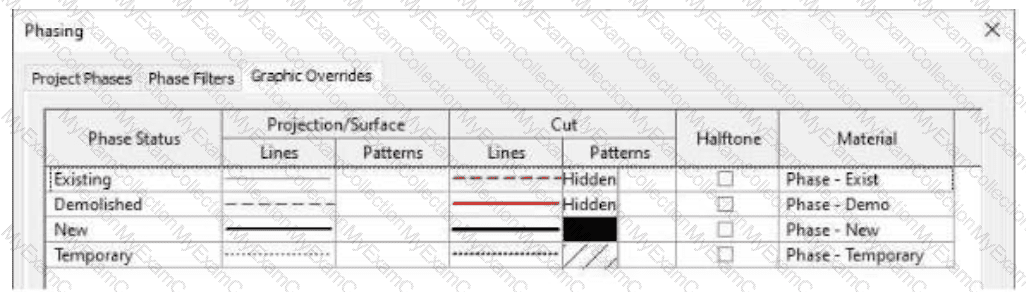
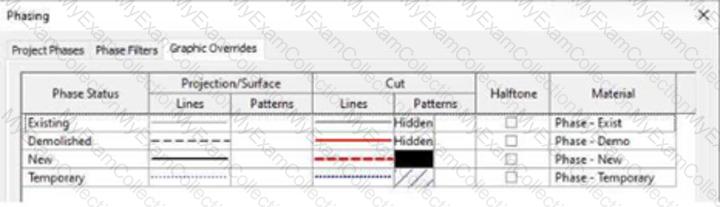
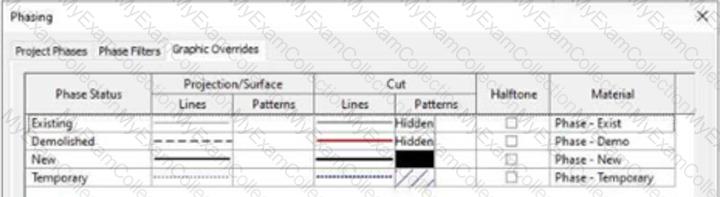
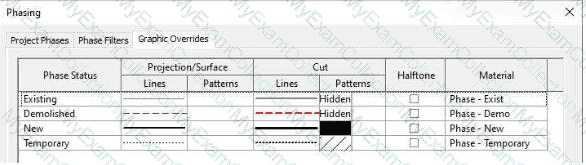
The firm’s technical group would like to show demolished elements as dashed red in all future projects. The BIM manager is updating the Revit template to meet this new standard.
Which Phase Graphic Override will accomplish this?




Question # 14
The BIM manager received a subcontractor’s 3D model containing specialty equipment to be integrated into the federated model. Upon review, they observe that:
Many elements lack consistent object styles and category assignments.
Some components are modelled with excessive detail, affecting performance.
Embedded data does not follow the project’s naming conventions outlined in the BEP.
What is the most appropriate next step when evaluating this geometry and content?
Question # 15
An AEC company has received a design model from the Architect of Record to begin creating construction documentation. The BIM Execution Plan identifies a fast-track delivery schedule, and the project team includes new consultants with limited exposure to the client’s preferred toolset and workflows. The BIM manager must determine how best to prepare the delivery team and assess the model’s compatibility with internal systems.
As the BIM manager prepares for the Project Kickoff meeting, which two pieces of information are most critical to avoid issues related to digital compatibility? (Select two.)
Question # 16
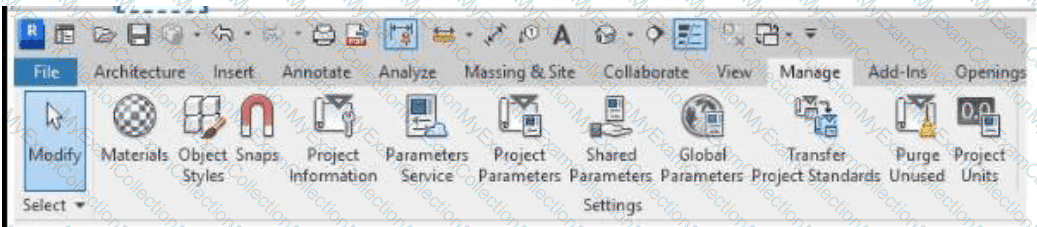
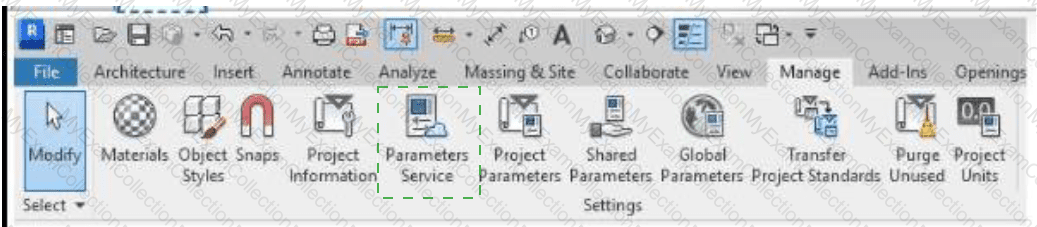
A client has provided a resource model with many custom shared parameters required to meet the project data-management requirements across all of its projects with the firm. The BIM manager has extracted those parameters to the Parameters Service for wider firm access.
Which tool should a team member use to load the new shared parameters into a project model? (Select the correct tool on the image.)
Question # 17
A Revit model has become very slow for the team immediately after a regularly scheduled file distribution across all disciplines.
What two steps can the BIM manager take to review issues across the connected files? (Select two.)