Question # 4
You have a Microsoft Foundry project that contains an incident triage agent.
You have a Model Context Protocol (MCP) server registered in the organizational tool catalog. The MCP server exposes two tools named docs_search and deployment_delete.
You need to ensure that the agent can only invoke docs_search.
What should you configure?
Question # 5
You have a Microsoft Foundry multi-agent solution.
A developer publishes a new version of a specialist agent. Once the agent goes live in production, the solution starts mishandling requests.
You need to restore the previous behavior as quickly as possible
What is the fastest way to roll back the agent?
Question # 6
You have a Microsoft Foundry multi-agent solution that includes a orchestrator and agents named Agent1 and Agent2. The solution has the following characteristics:
• The orchestrator routes tasks to both agents.
• The agents invoice Model Context Protocol (MCP)-hosted tools.
• Agent? sends model-generated JSON parameters directly to tool endpoints.
• The agents use a shared managed identity that has contributor access to the resource group that contains the tool-backed Azure resources.
You need to implement a guardrail strategy for tool calls. The solution must meet the following requirements:
• Prevent invalid or out-of-range tool parameters from reaching the tool endpoints.
• Scope each agent ' s permissions to its assigned tools
• Limit Agent? to refund-processing tools only.
• Log tool invocations for audit purposes.
What should you do?
Question # 7
You need to design a solution to resolve the Scheduling agent issue.
What should you include in the design?
Question # 8
You need to modify claim Approval to prevent the prompt injection issue. Which guardrail should you use?
Question # 9
You need to implement the business rule for claim Approval. Which workflow node should you use?
Question # 10
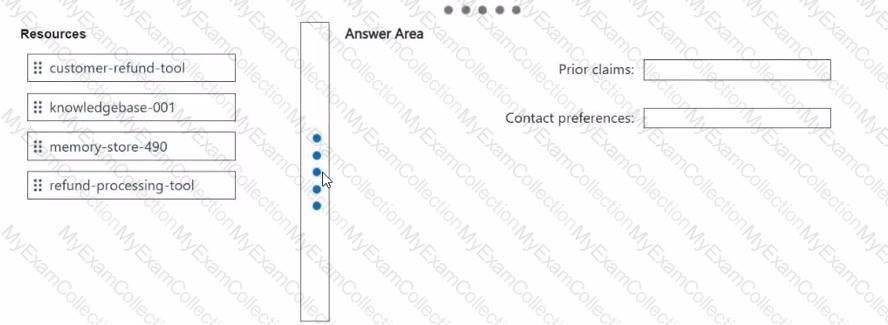
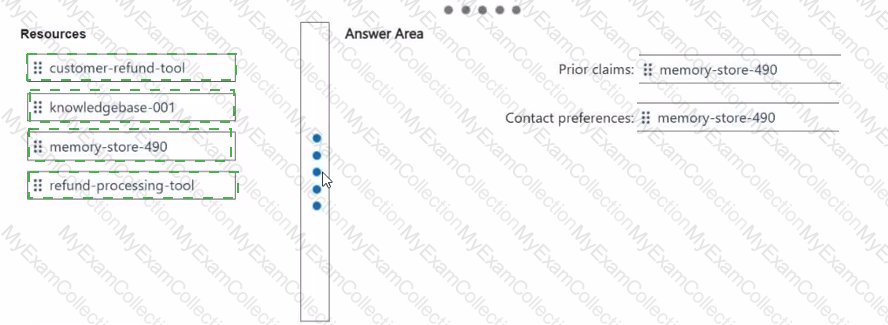
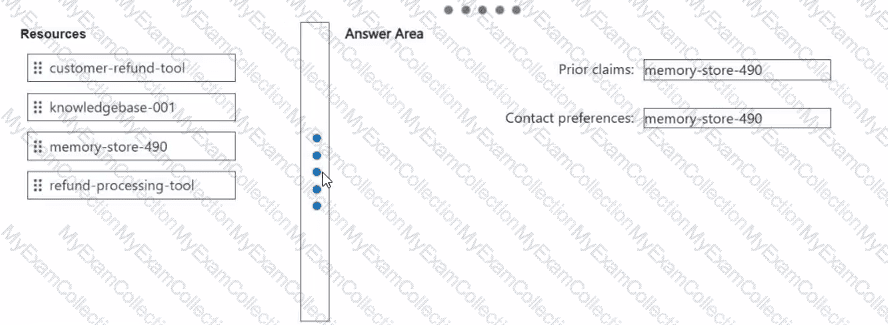
You need to recommend a memory retrieval strategy to support the planned changes for claim Approval.
What should you recommend? To answer, drag the appropriate resources to the correct requirements. Each resource may be used once, more than once, or not at all. You may need to drag the split bar between panes or scroll to view content.
NOTE: Each correct selection is worth one point.
Question # 11
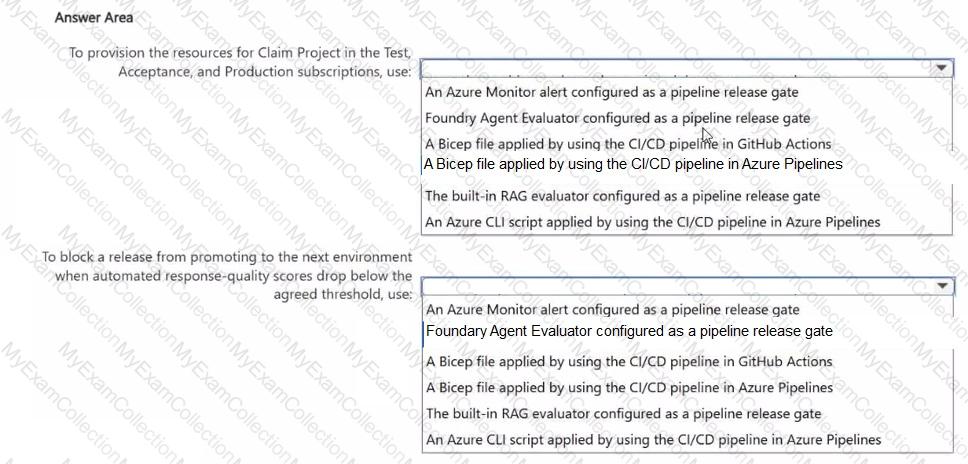
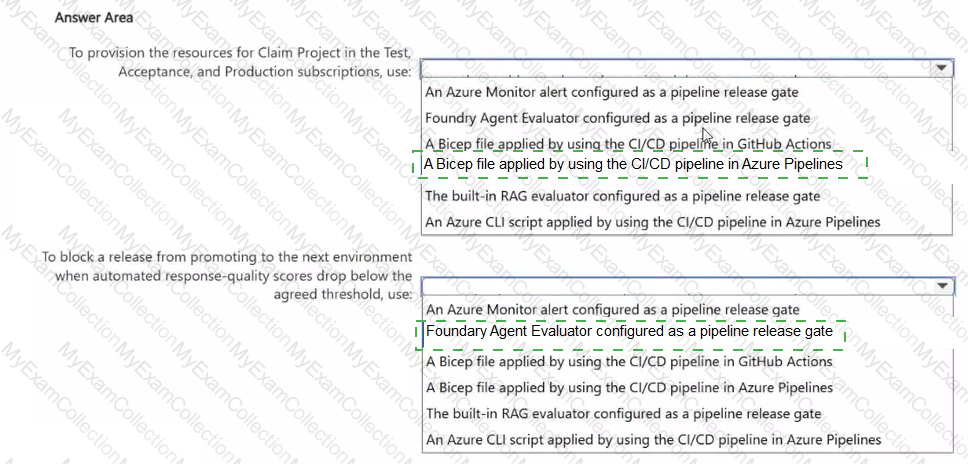
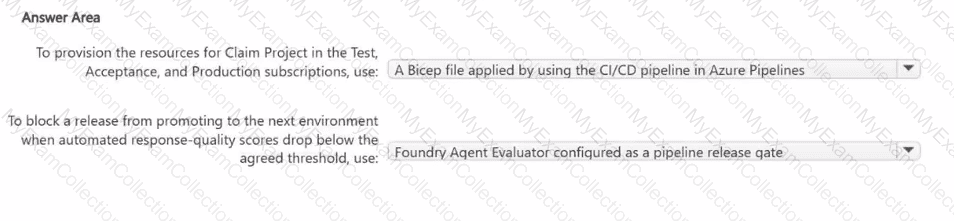
You need to recommend an end-to-end release lifecycle for claim Approval. The solution must meet the technical requirements.
What should you recommend for each requirement? To answer, drag the appropriate recommendations to the correct requirements. Each recommendation may be used once, more than once, or not at all. You may need to drag the split bar between panes or scroll to view content.
NOTE: Each correct selection is worth one point.
Question # 12
You need to recommend changes to decrease the Claim Approval duration without breaking any existing functionality.
What should you recommend?
Question # 13
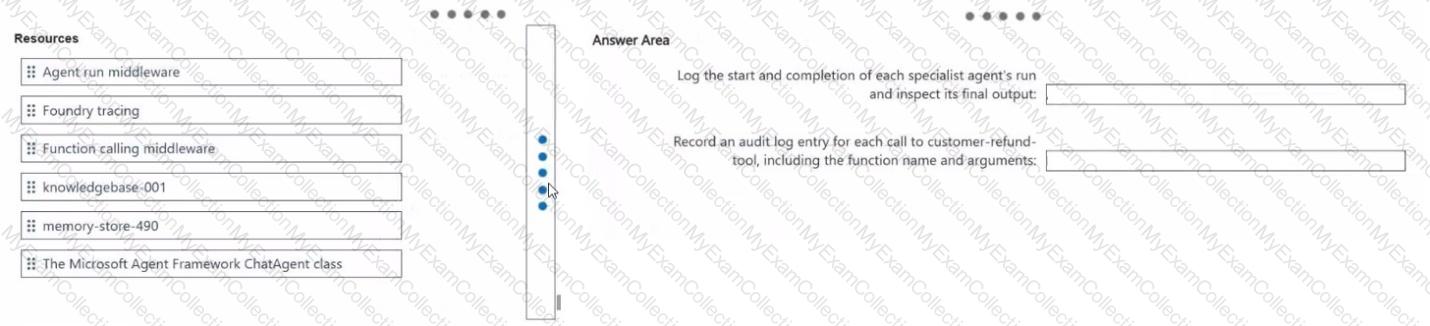
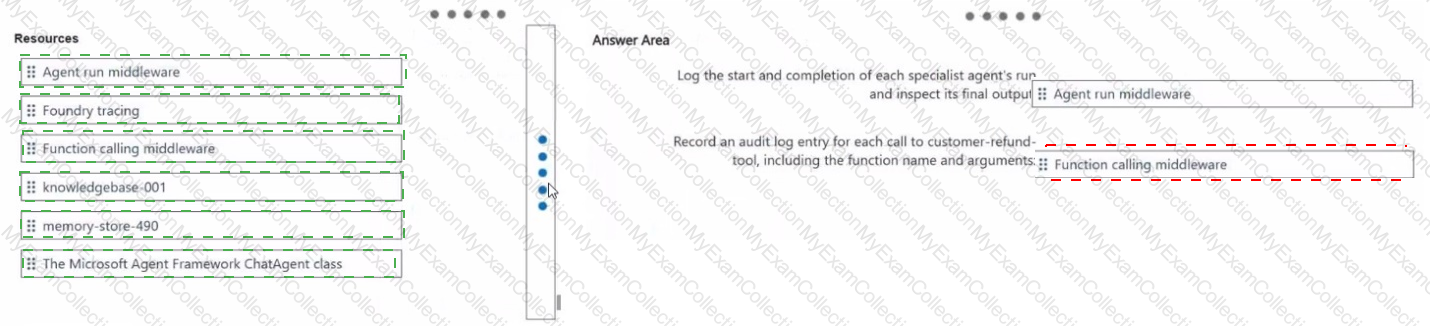
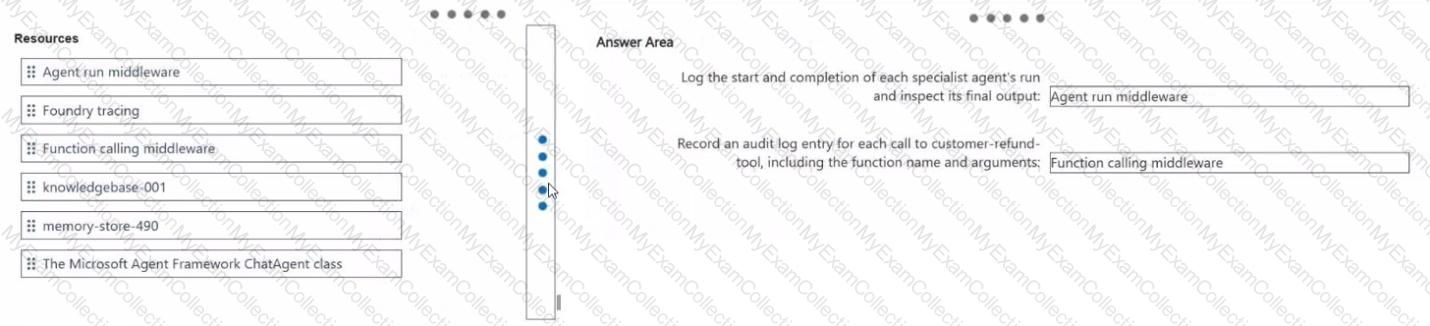
You need to implement a logging solution for claim Approval.
What should you use for each process? To answer, drag the appropriate resources to the correct processes. Each resource may be used once, more than once, or not at all. You may need to drag the split bar between panes or scroll to view content.
NOTE: Each correct selection is worth one point.
Question # 14
You are designing a multitenant software as a service (SaaS) platform that uses multiple agents. Users will send latency-sensitive inference requests to the platform by using a shared API.
Initially, there will be 20 tenants, and the platform will expand to 200 tenants.
You need to identify the compute component for a production agent runtime. The solution must meet the following requirements:
Isolate workloads for each tenant by using containerization.
Dynamically scale based on demand.
Minimize administrative effort.
What should you use?