Question # 4
You need to secure an Azure OpenAI resource so that it is only reachable from your virtual network and not from the public internet.
What should you configure?
Question # 5
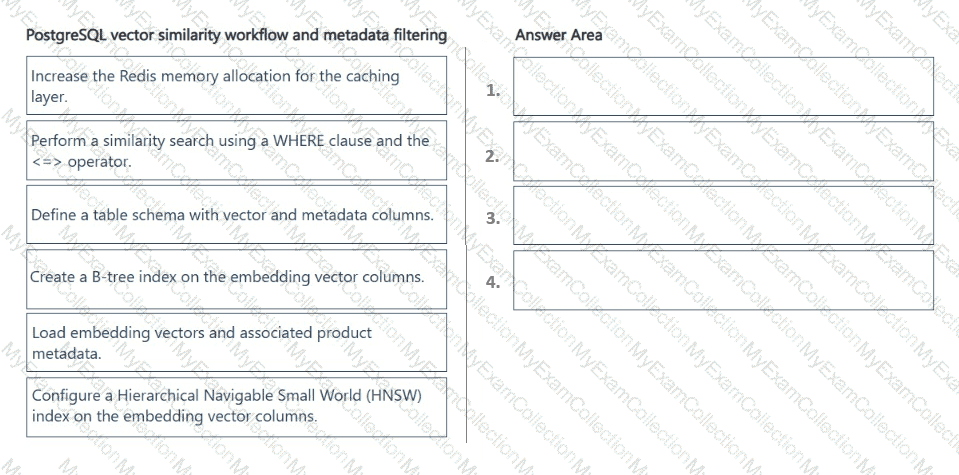
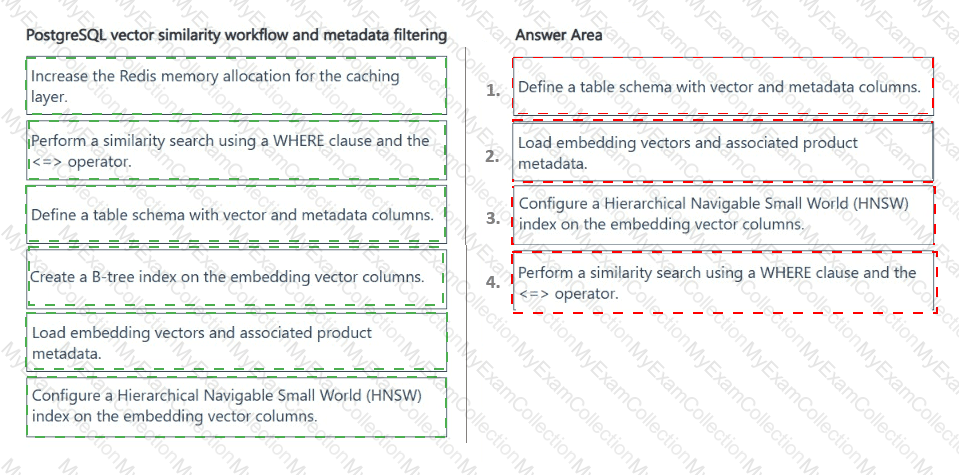
You need to implement the semantic retrieval workflow for the recommendation engine to meet the technical and performance requirements of Fabrikam Inc.
Which four actions should you perform in sequence? To answer, move the appropriate actions from the list of actions to the answer area and arrange them in the correct order.
Question # 6
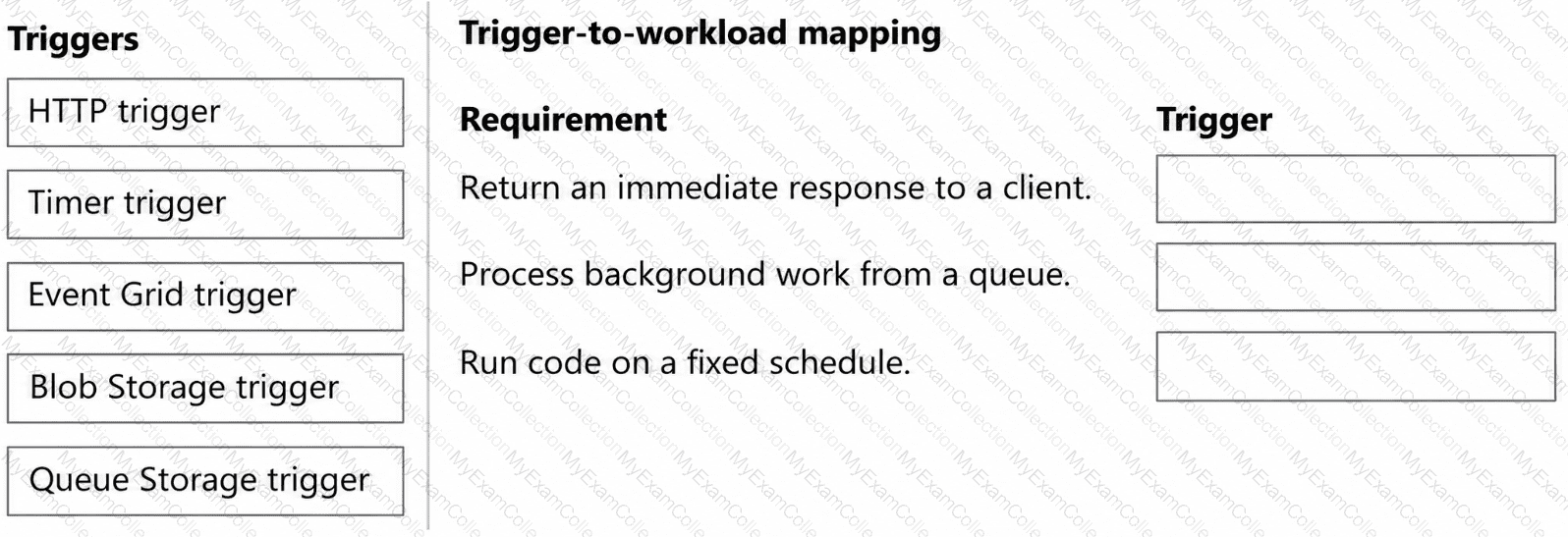
You are designing Azure Functions for three different backend workloads.
Each workload requires one of the following dispatching models:
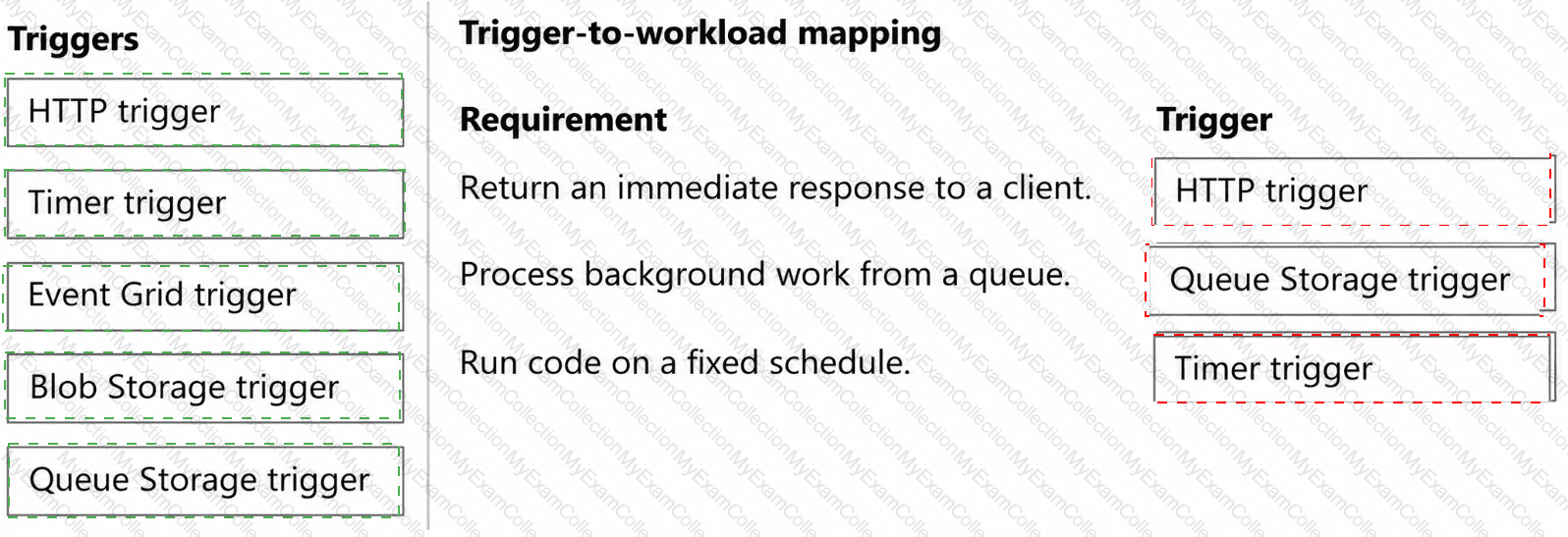
- Return an immediate response to a client.
- Process background work from a queue.
- Run code on a fixed schedule.
You need to select the trigger for each requirement.
Which triggers should you select? To answer, move the appropriate triggers to the correct requirements. You may use each trigger once, more than once, or not at all. You may need to move the split bar between panes or scroll to view content.
NOTE: Each correct selection is worth one point.
Question # 7
An application deployed to AKS depends on an internal API hosted in the same cluster. All pods are healthy and report Ready status, but requests between the services time out.
You need to determine whether the issue is related to Kubernetes service configuration or application code.
What should you do first?
Question # 8
You plan to deploy a container to an Azure App Service API app named api1. You host the source code for api1 in a GitHub repository. The container uses the API key at runtime to connect to a backend service.
The container must be able to retrieve the API key at runtime without exposing it in the source repository or Git commit history. The API key must not be stored in application configuration directly. The API key must be accessed securely from Azure Key Vault.
You need to ensure that the API key is stored securely in Azure Key Vault and is available to the container at runtime without being exposed in source control or Git commit history.
Solution: Embed the API key as a hardcoded environment variable in the Dockerfile.
Does the solution meet the goal?
Question # 9
You need to deploy a batch embedding workload according to the planned application architecture.
What should you use?
Question # 10
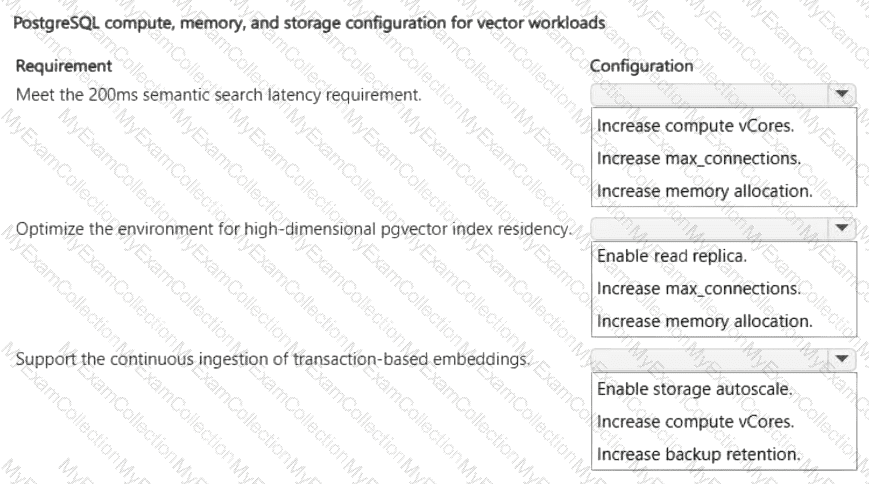
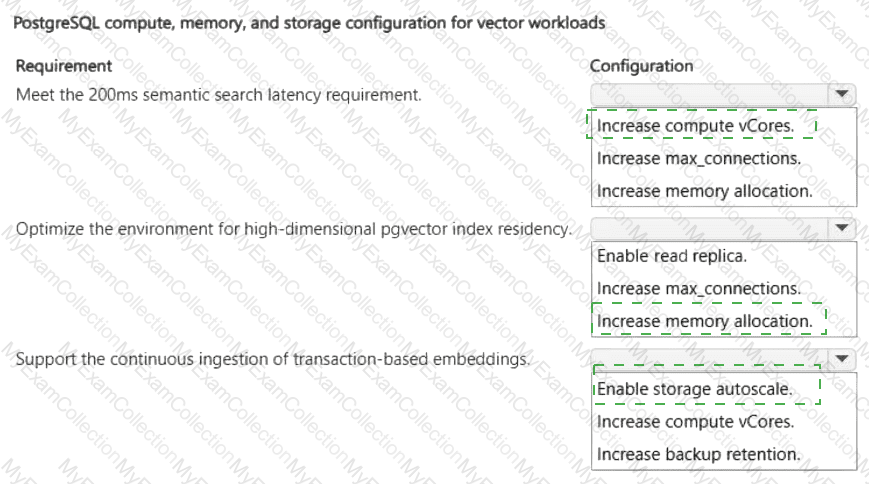
You need to configure the database resources for the Azure Database for PostgreSQL instance.
How should you complete the configuration to meet the business and technical requirements? To answer, select the appropriate options in the answer area.
NOTE: Each correct selection is worth one point.
Question # 11
You manage an Azure Cosmos DB for a NoSQL API account named account1. The account contains a database named db1, which contains a container named container1. You configure account1 with a session consistency level.
You plan to develop an application named App1 that will access container1. Individual instances of App1 must perform reads and writes. App1 must allow multiple nodes to participate in the same session.
You need to configure an object to share the session token between the nodes.
Which object should you use?
Question # 12
You need to improve throughput for concurrent application requests to PostgreSQL.
What should you implement?
Question # 13
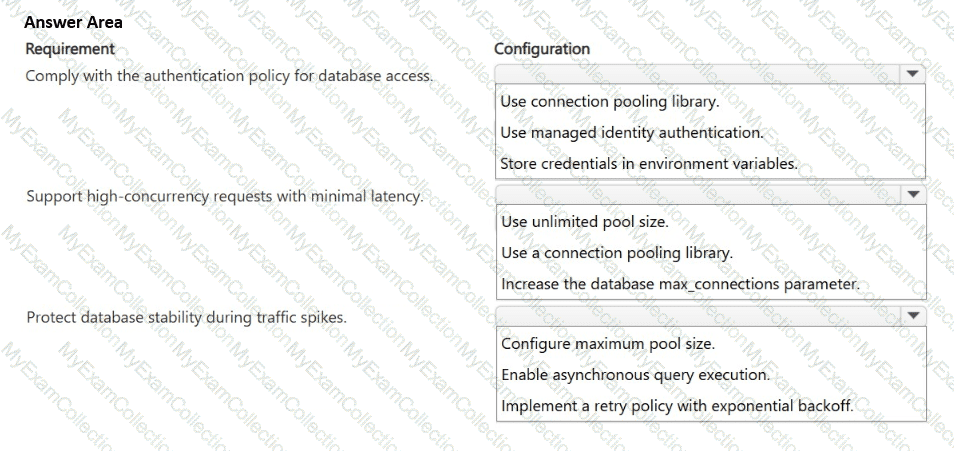
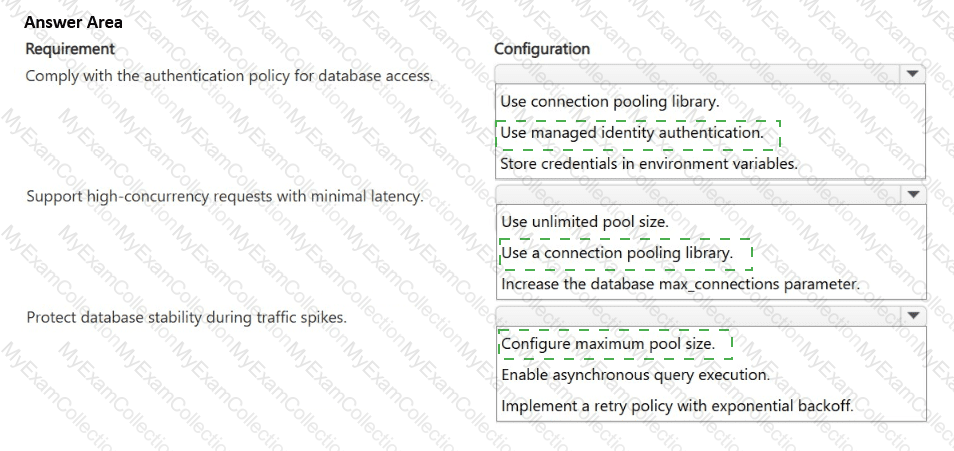
You need to optimize secure database connectivity from the containerized Recommendation API.
How should you configure the application?
Question # 14
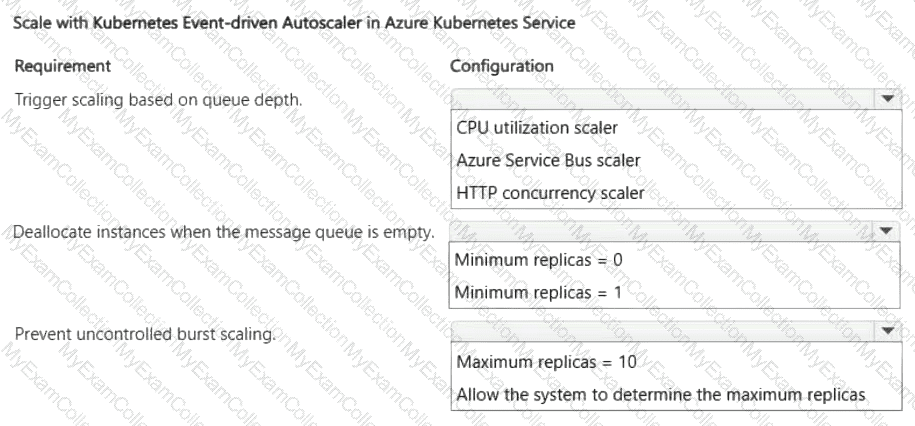
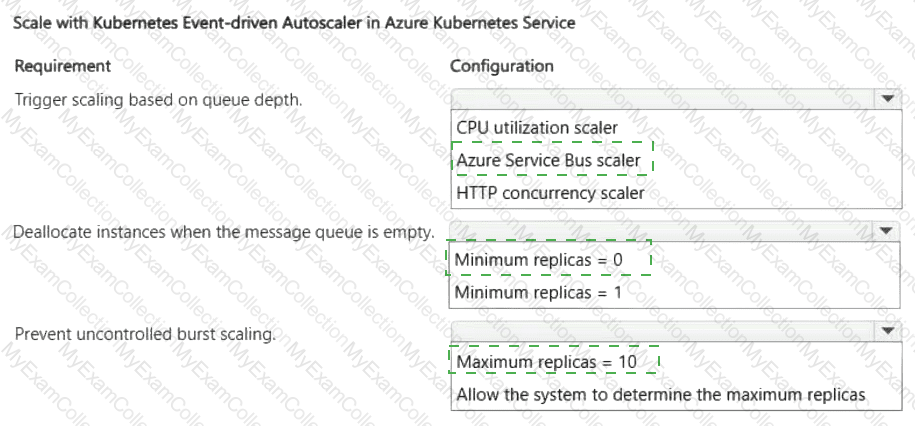
You need to deploy a batch retraining workload.
How should you complete the scaling configuration? To answer, select the appropriate options in the answer area.
NOTE: Each correct selection is worth one point.
Question # 15
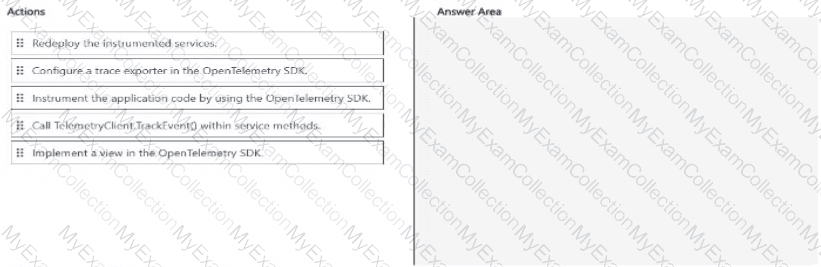
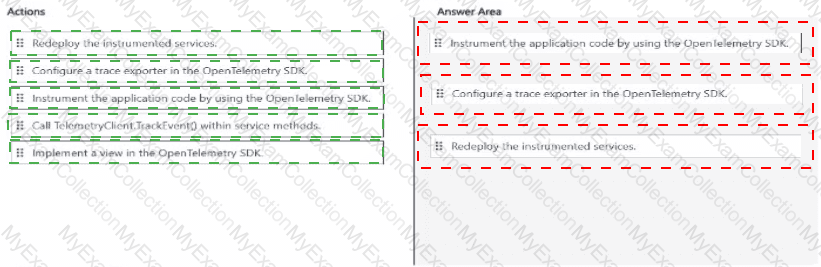
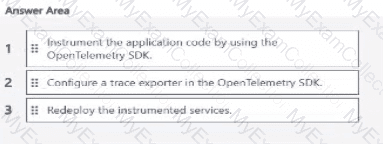
You need to implement trace correlation according to the business requirements.
Which three actions should you perform in sequence? To answer, move the appropriate actions from the list of actions to the answer area and arrange them in the correct order.
NOTE: More than one order of answer choices is correct. You will receive credit for any of the correct orders you se lect.
Question # 16
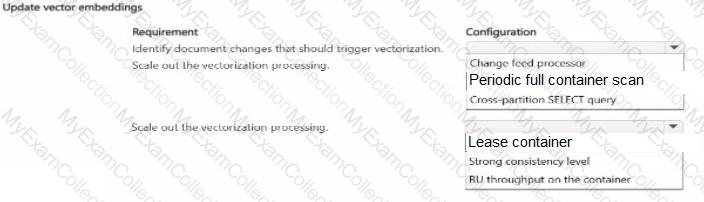
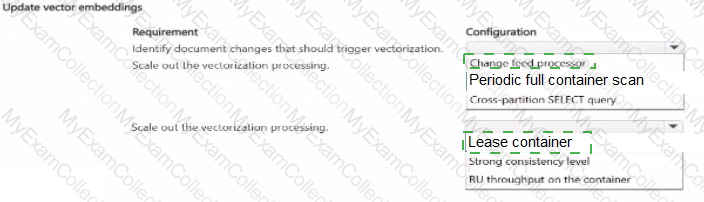
You need to configure vector embedding updates according to the business and technical requirements.
Which information should you use? To answer, select the appropriate option in the answer area.
NOTE: Each correct selection is worth one point.

Question # 17
You need to address the known issue resulting from vector similarity queries.
Which two actions should you perform? Each correct answer presents part of the solution. Choose two.
NOTE: Each correct selection is worth one point.
Question # 18
You need to deploy Azure function resources and apps by using an automated, version-controlled CI/CD pipeline that supports declarative infrastructure deployment. What should you use?
Question # 19
You need to deploy Azure Function resources and apps to meet the business and technical requirements.
What should you use?
Question # 20
You need to configure a connection string for the partner-facing service according to the technical requirements.
What should you use?
Question # 21
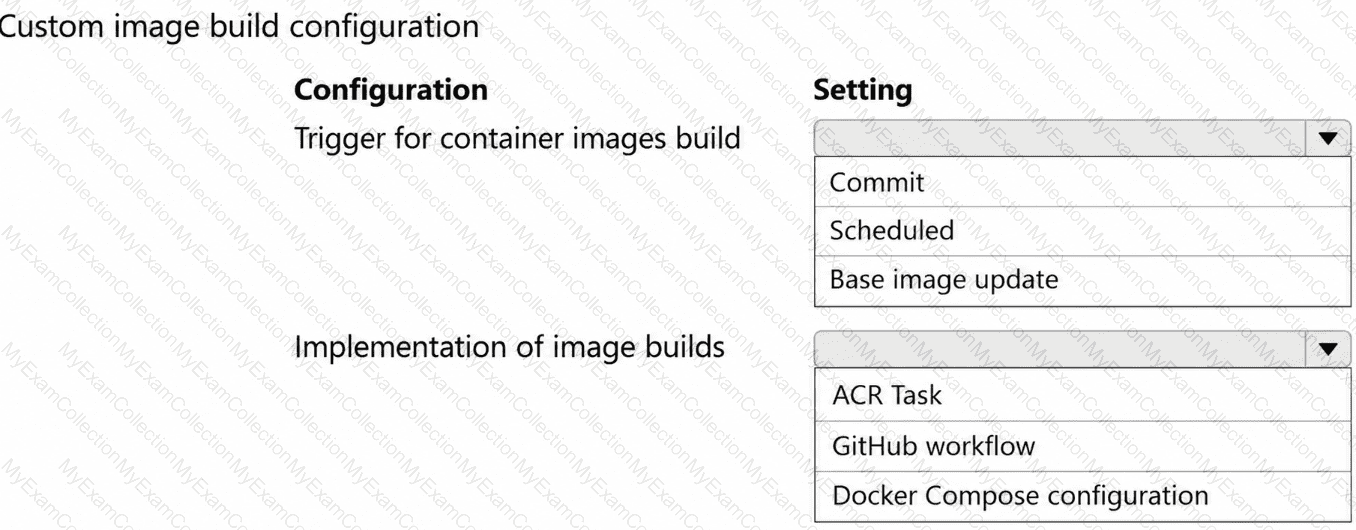
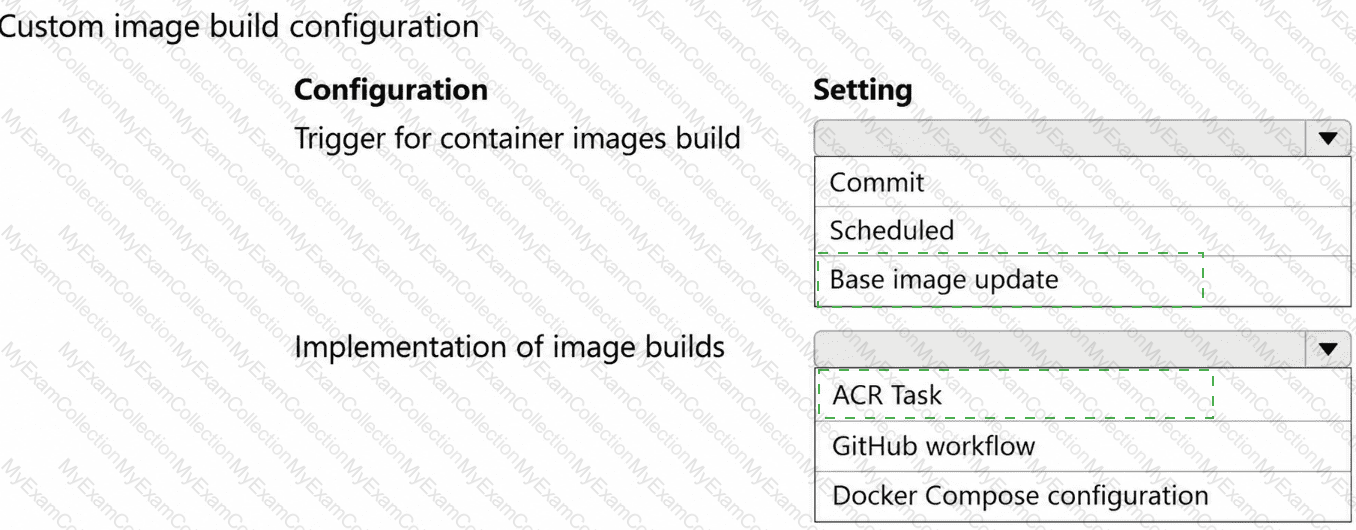
You need to configure image build automation based on the technical requirements.
Which settings should you configure? To answer, select the appropriate options in the answer area.
NOTE: Each correct selection is worth one point.